

Evening Gowns for Women: Create a Look for Your Formal Event
Evening gowns for women bring together a long silhouette, considered details, and styling suited to a formal celebration. To choose yours, start with the invitation, then decide how much structure, movement, and decoration you want. A gown for a seated gala dinner may call for a different combination than one worn through a wedding reception or prom.
The most useful starting point is a complete outfit idea. Picture the dress with your shoes, jewelry, and evening layer, rather than choosing each piece separately. This makes it easier to select formal gowns that feel coherent and suit the way you plan to spend the evening.
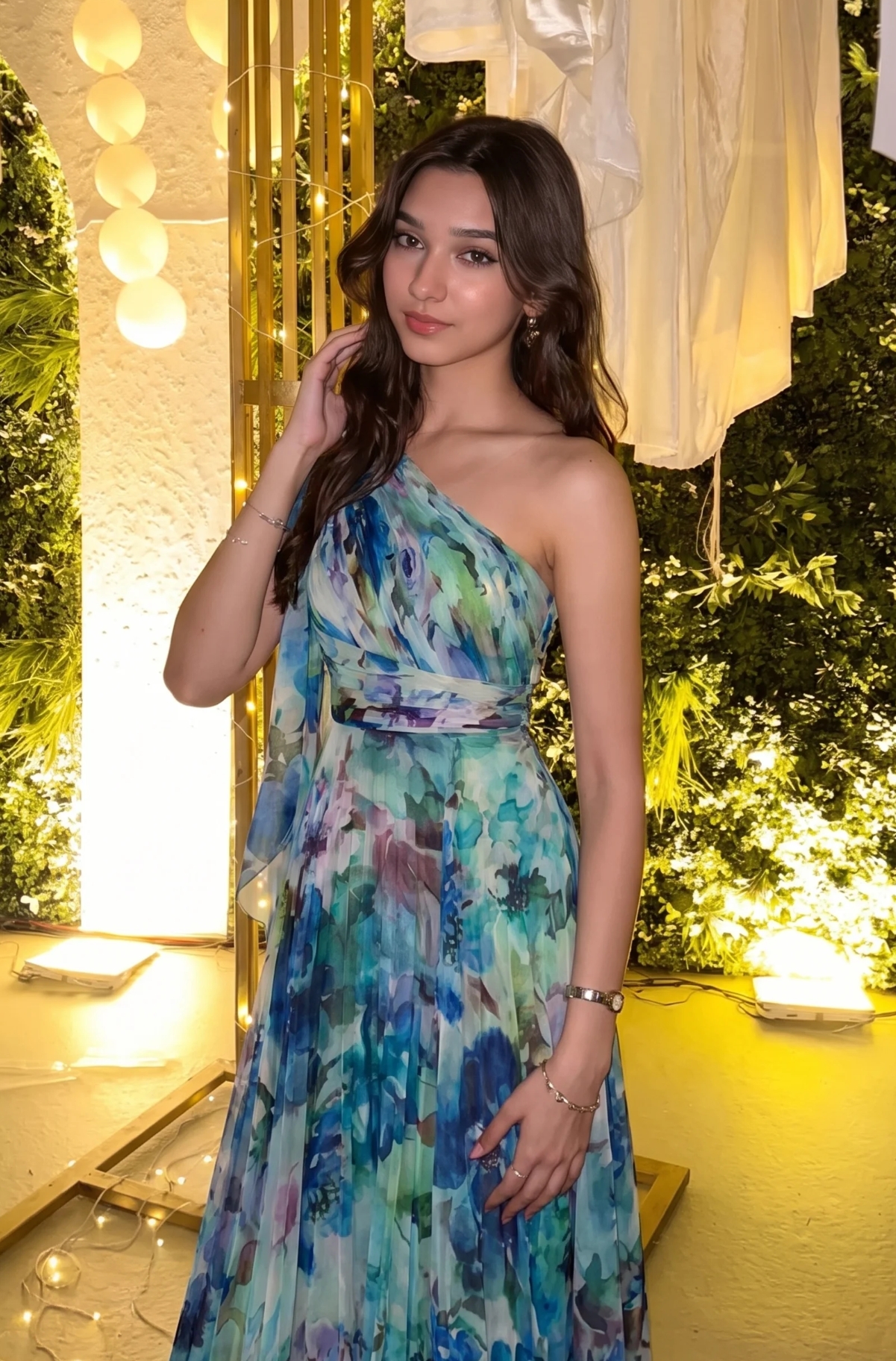
SHOP THE LOOK: Lost In It Multi Floral Print One Shoulder Pleated Maxi Dress
What Makes a Long Dress Feel Like an Evening Gown?
An evening gown is generally a long dress intended for formal occasions. Its character comes from the combination of cut, fabric, construction, and detail. Length contributes to the effect, but a casual maxi dress and a formal gown can share a similar hemline while creating very different impressions.
Look at how the design is composed. A shaped bodice, a deliberate neckline, a flowing skirt, or carefully placed embellishment can give a long dress an evening focus. A simple gown may rely on proportion and drape, while a decorated design may center on lace, embroidery, or sequins.
Evening dresses are a broader category that can include shorter dressy styles. If your invitation leaves the choice open, consider the host’s expectations before committing to a full-length gown. For that specific decision, see our guide to black-tie optional attire for women.
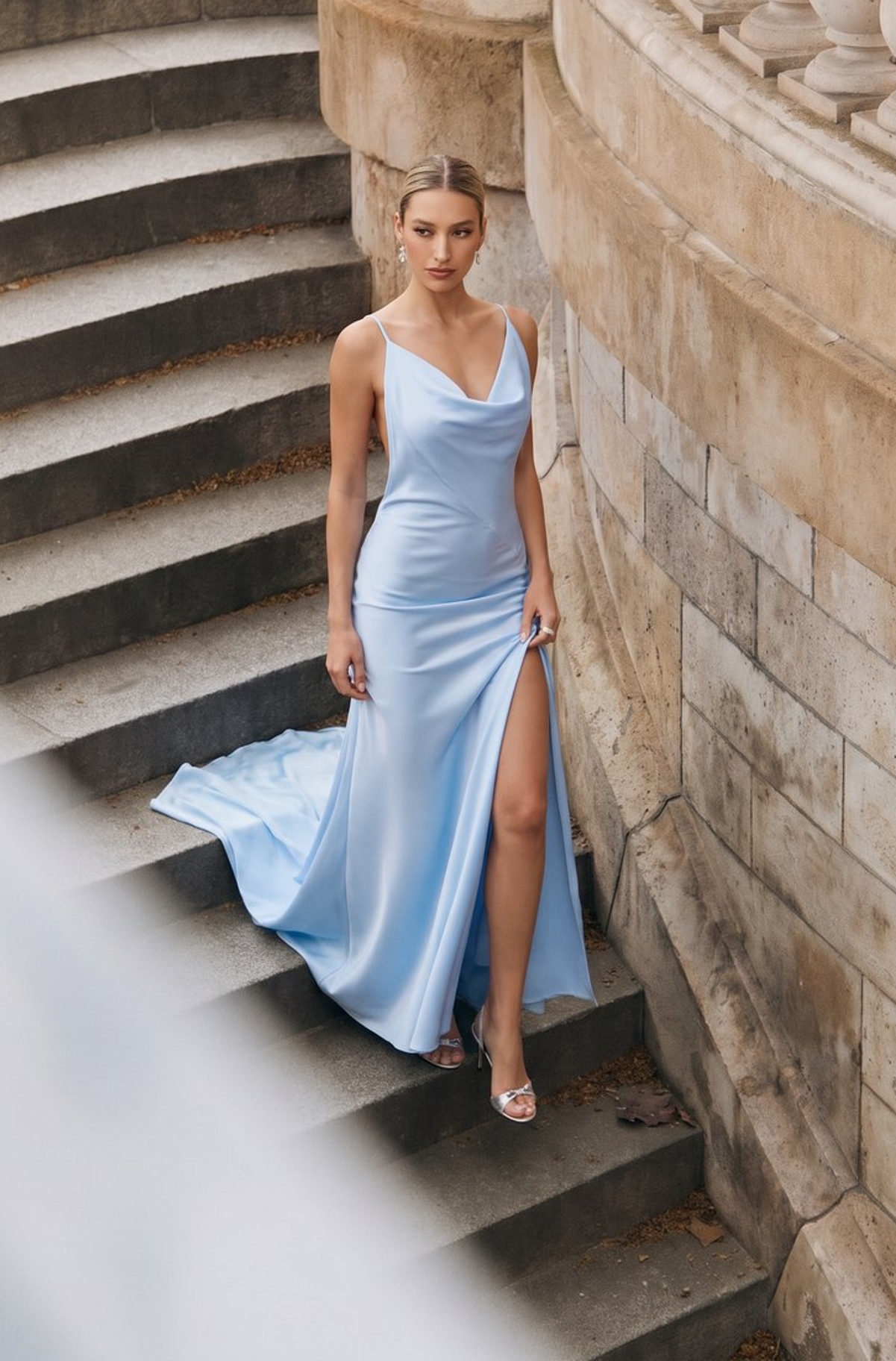
SHOP THE LOOK: Simply Stunning Blue Cowl Neck High Slit Satin Maxi Dress
Build Your Evening Look Around One Main Feature
A clear focal point helps the dress and accessories work together. Decide whether you want the skirt shape, neckline, or surface detail to lead the outfit.
An A-Line Skirt for a Defined Waist and Expanding Shape
An A-line gown widens from the waist toward the hem. Choose this silhouette when you like a distinct waistline with a skirt that extends away from the body.
The amount of volume changes its character. A softly flared skirt creates a restrained outline, while a fuller version makes the skirt a more prominent part of the look. Pair either with accessories that support the shape without adding unnecessary detail around the waist.
For a dinner-centered event, consider how the skirt will sit around your chair. For dancing, check that its length and construction allow the movement you need.
A Column Silhouette for a Continuous Line
A column gown follows a relatively straight line through the body and skirt. It can create a clean evening look when you prefer less skirt volume.
With this shape, small design details become more noticeable. A draped section, an asymmetric neckline, or a defined shoulder can provide interest without changing the overall outline.
Check the room available for walking and sitting, especially when the skirt is narrow. A close silhouette should still allow you to participate comfortably in the event.
A One-Shoulder Neckline as the Focal Point
A one-shoulder gown draws attention to the upper part of the outfit through asymmetry. It is worth considering when you want a distinctive neckline with a relatively simple skirt.
Try earrings before adding a necklace, allowing the neckline to remain visible. Check how a wrap or jacket rests over the shoulder detail, particularly if the design includes a bow, ruffle, or embellishment.
Browse one-shoulder dresses to compare how different necklines change the balance of a long evening silhouette.
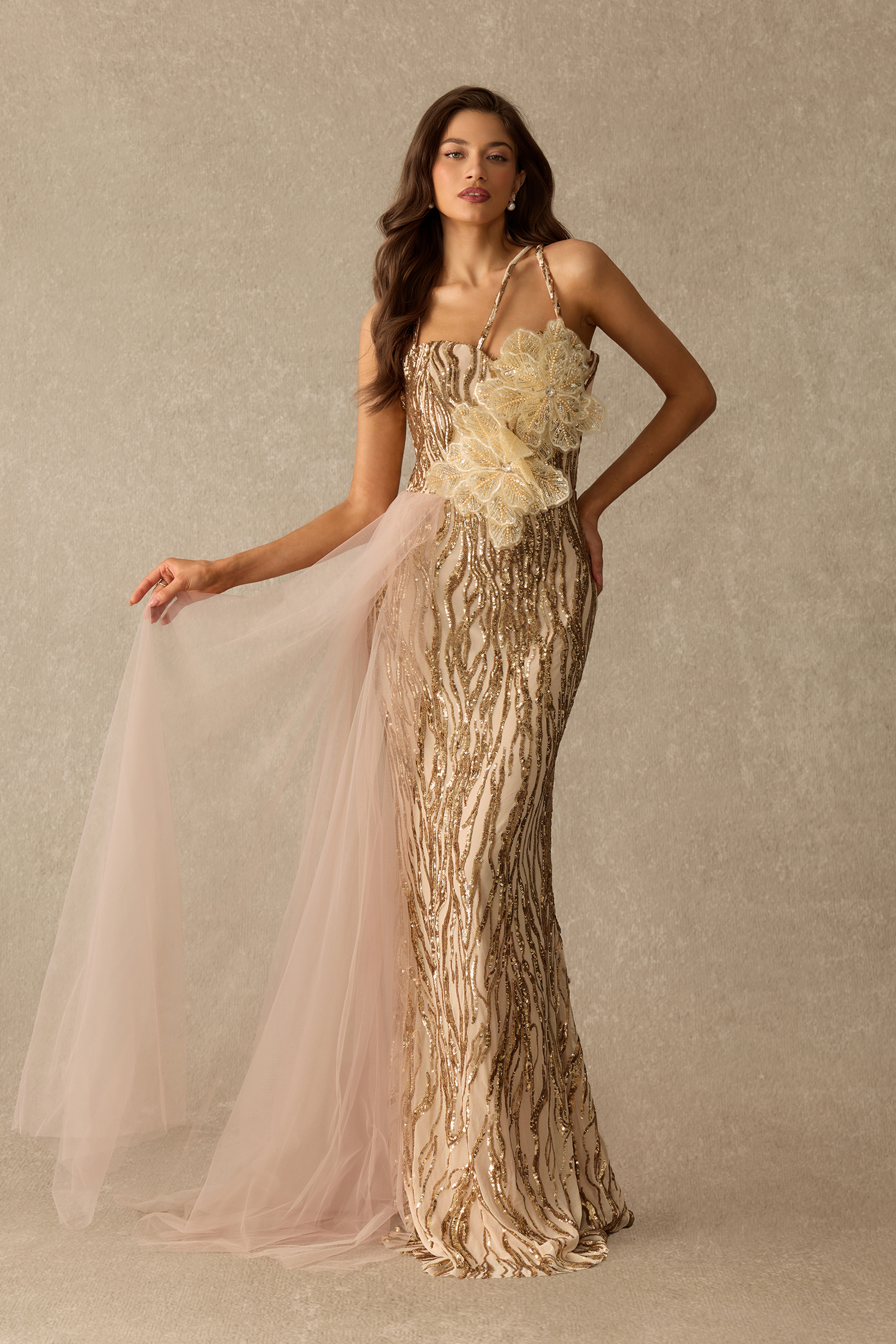
SHOP THE LOOK: Luxe In Bloom One Shoulder Floral Applique Sequin Maxi Dress
Choose Fabric for the Shape You Want to Create
Fabric affects the gown’s appearance, but its name alone cannot establish fit, comfort, or coverage. Consider the actual construction, lining, and composition alongside the visual effect.
Chiffon for Layered Movement
Consider chiffon when you want a skirt with visible movement or a softly layered appearance. Examine how the outer fabric falls over the lining, particularly around the hem and any slit.
A gown with a fluid skirt can be styled with a more defined bodice or neckline to give the outfit a clear point of structure. When browsing chiffon dresses, check each design’s coverage rather than assuming every layer is opaque.
Lace for Pattern and Detail
Lace introduces pattern into the gown itself. Decide where you want that detail to appear: around the neckline, across the bodice, through the sleeves, or over the skirt.
An all-over lace design may need little additional decoration. A gown with a smaller lace panel leaves more room for statement earrings or another accessory.
Look closely at the relationship between lace and lining. Sheer areas can be intentional design features, so evaluate them against your preferred coverage and the event.
Jersey for a Draped Direction
Jersey can be an option when you like an evening gown with folds or a closer, draped outline. Check the individual fabric’s stretch and the garment’s lining before deciding how fitted to go.
Pay attention to where the draping begins. Folds at the shoulder create a different emphasis from gathering at the waist or hip. Choose their placement according to the part of the design you want to highlight.
Taffeta for a More Structured Appearance
If you are considering a taffeta gown, look at how its construction supports pleats, folds, or skirt volume. A structured shape can become the main feature of the outfit, leaving less need for elaborate accessories.
Consider the space that shape needs during the event. A pronounced skirt may appeal for a formal entrance, while a smaller silhouette may better suit closely arranged dinner seating.
Sequins for Surface Detail
A sequin gown places decoration across the surface of the dress. Decide whether you prefer a concentrated embellished area or an all-over finish.
Keep nearby accessories simple enough to let that detail remain visible. During a try-on, check the neckline and arm openings for comfort, particularly where your skin touches the decorated fabric.
These fabric options describe different design directions; availability and construction should be checked on each product page.

SHOP THE LOOK: Enchanting Romantic Brown Cap Sleeve Ruched Knit Maxi Dress
Adapt Formal Gowns to the Celebration
The event should determine how you combine the gown’s shape, color, and accessories. Avoid assuming that every evening occasion calls for the same level of formality.
For a Gala Dinner
For a formal gala, consider a gown with one clear statement: a sculpted neckline, a full skirt, or an embellished surface. Keeping the remaining elements restrained can make that statement easier to appreciate.
Think about the seated portion of the evening as well as the arrival. Waist details, bodice structure, and skirt volume should work with a dining chair. If you expect to move between rooms, test the hem with your chosen shoes.
For a Formal Wedding Guest
When attending as a wedding guest, use the invitation and venue to guide the outfit. Consider the ceremony’s coverage expectations as well as the reception’s setting.
A long gown may suit a formal celebration, but assess the complete design, including its neckline, sheer sections, slit, and train. Choose details you can comfortably wear through both parts of the day.
Explore formal wedding guest dresses once you have established the celebration’s requirements.
For Prom
For prom, decide which feature you most want in photographs: a dramatic skirt, a striking color, or an expressive neckline. That gives you a useful direction when comparing styles.
Also plan for the parts of the night between photographs. Check whether you can sit in your transportation, walk normally, and dance in the gown. If you intend to change into lower shoes, test the skirt length with those too.

SHOP THE LOOK: Isabella Crystal Embellished Square Neck Maxi Dress
Use Color to Support the Gown’s Design
Black, blue, purple, and red offer different directions for an evening outfit. Choose a color you enjoy wearing, then consider how it interacts with the dress’s texture and detail.
Black can provide a consistent backdrop for lace, draping, or embellishment. Look at whether the design’s details remain visible in the lighting you expect.
Blue offers a broad range of possibilities. Compare navy with brighter shades, and decide whether the color or the silhouette should be the first thing someone notices.
Purple can add depth to a restrained gown or reinforce a more expressive design. Keep the accessories within a small palette if the dress already combines color and decoration.
Red can serve as the outfit’s main statement. Before adding contrasting shoes or jewelry, try a simpler combination and assess whether the gown already provides the emphasis you want.
There is no need to select a color solely because it is described as popular. Its relationship with the gown and your personal preferences provides a more useful basis for choosing.
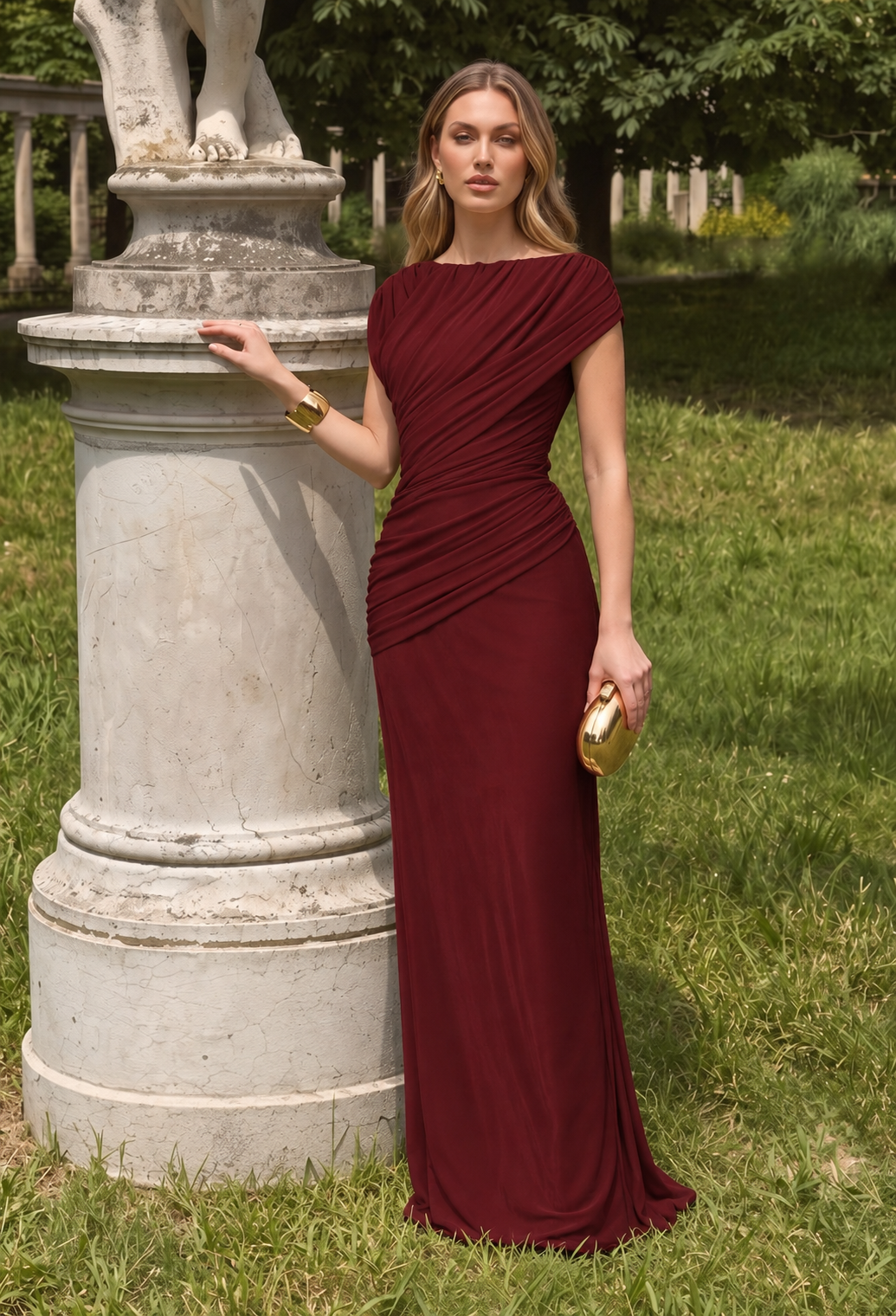
SHOP THE LOOK: Made to Shine Burgundy Off Shoulder Ruched Maxi Dress
Finish the Outfit Without Crowding the Dress
Accessories work best when their scale and placement relate to the gown.
A detailed neckline may pair well with earrings and a simple bracelet. A clean bodice may leave room for a necklace. Raised decoration at the shoulder or waist should also be considered alongside the straps and edges of your bag.
Choose shoes early enough to assess the gown’s length. A skirt that works with one heel height may need adjustment for another. Walk, turn, and use a step during your try-on rather than evaluating the hem only while standing still.
For an evening layer, consider a wrap or jacket that rests comfortably over the dress. Check it with the actual neckline and sleeves so that the layers sit together as intended.
Your bag should accommodate the essentials you plan to carry. Try holding it with the complete outfit to check its size, color, and any contact with delicate details.
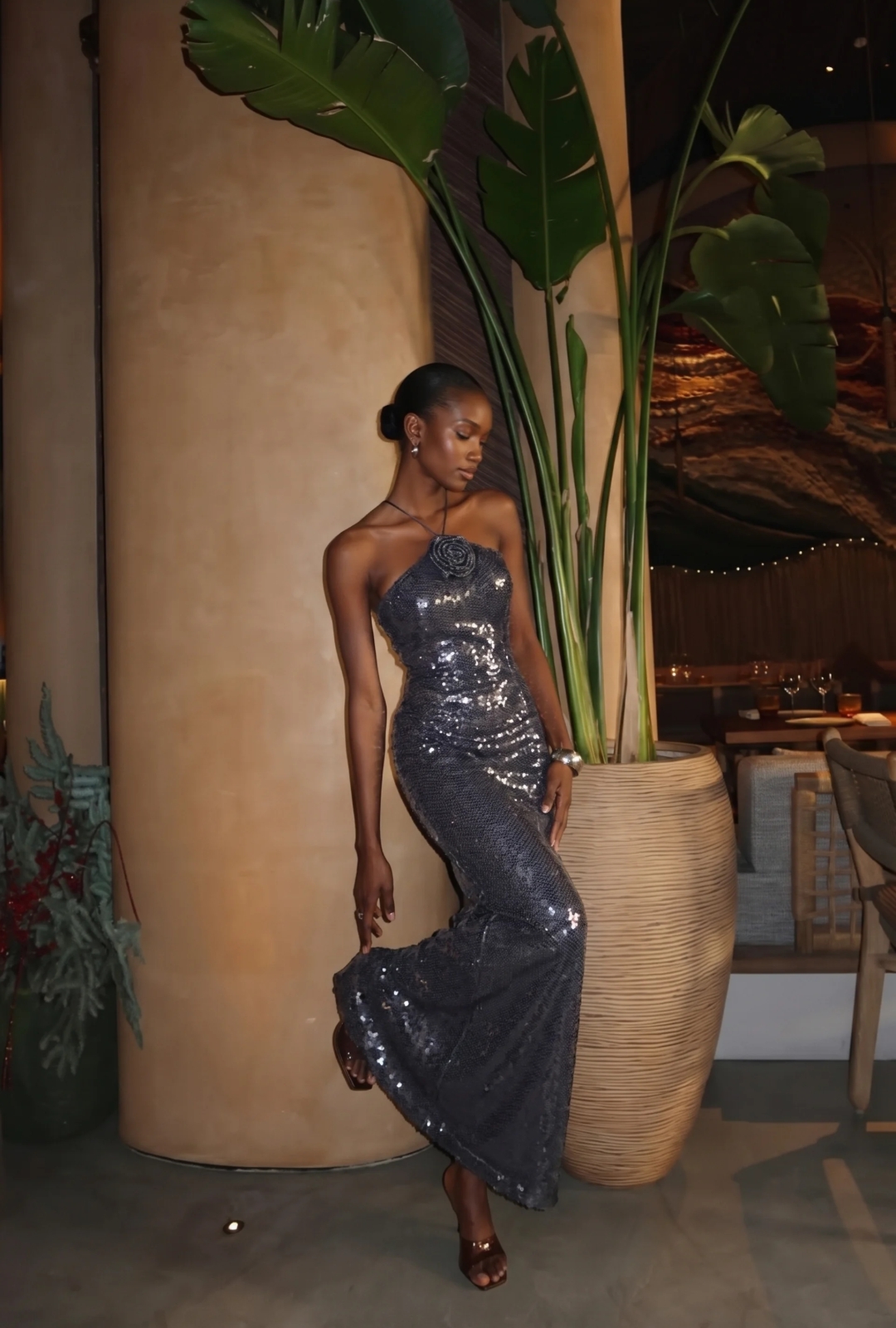
SHOP THE LOOK: Glow All Night Grey Floral Applique Sequin Maxi Dress
Choose a Gown You Can Enjoy Wearing
A useful shortlist contains gowns that satisfy the invitation and create the evening look you want. Compare them with your planned shoes and accessories, then check the individual measurements, fabric details, and care instructions.
Before placing an order, review the current delivery information and return conditions. Allow time for a complete try-on and any alterations you may need.
For your next special event, browse sunfere’s formal dresses with a clear direction: your preferred silhouette, one main design feature, and an outfit that works throughout the celebration.

SHOP THE LOOK: Midnight Desire Black Sheer Lace Floral Applique Maxi Dress
FAQs About Evening Gowns for Women
How do I choose evening gowns for women for different seasons?
Consider fabric weight, lining, and sleeve coverage when choosing a gown for the season. Lighter constructions can suit warm evenings, while heavier fabrics and an evening layer may be more practical in cooler weather.
Which evening gown styles offer a minimalist or embellished look?
Minimalist evening gowns emphasize clean lines, while beads and rhinestone embellishments add sparkle and decorative detail. A-line, ball gown, and empire-waist designs offer different proportions; professional alterations can refine the fit where the construction allows.
What colors and necklines should I consider for formal evening gowns?
Black, navy, and champagne offer classic color options, while jewel tones such as deep blue, green, and purple bring richer color to evening wear. Strapless necklines emphasize the shoulders, racer necklines create a sporty geometric line, and short sleeves add coverage and another design detail.
