
Can a Printed Dress Be Formal? 6 Details That Make Prints Look Elegant
You have found a printed dress you love, but the invitation says cocktail, formal or black tie. Suddenly, the pattern that first caught your attention raises another question: does it look elegant enough for the event?
Yes, a printed dress can be formal. A print does not decide the dress code on its own. The fabric, finish, silhouette, construction, length, color balance and setting all shape the final impression.
Statement prints may be receiving renewed attention, but the practical question remains the same: what separates an elegant printed dress from one that feels better suited to an ordinary daytime outing? The answer becomes clearer when you evaluate the complete design rather than judging the pattern in isolation.
.jpg?w=1080&h=1557)
SHOP THE LOOK: Feel the Sun Yellow Floral Print Sweetheart Maxi Dress
The Short Answer: Can a Printed Dress Be Formal?
A printed dress can work for a formal event when its overall design carries the right level of polish. It may be considered formal attire when the fabric, silhouette and finish create a refined overall effect.
Consider two floral dresses. One is an unlined cotton mini with a loose shape and casual detailing. The other is a lined chiffon maxi with a defined waist, controlled draping and a considered neckline. They may both feature flowers, but they do not communicate the same degree of formality.
The reverse is also true. A solid color does not automatically make a dress formal. A plain jersey sundress may still feel more casual than a beautifully constructed printed gown.
Before deciding, examine six elements:
-
Fabric and finish
-
Silhouette and construction
-
Length and proportion
-
Print scale and spacing
-
Background color and contrast
-
The event and its dress code
The strongest formal printed dresses bring several of these elements together.
.jpg?w=1450&h=1920)
SHOP THE LOOK: Alessia Floral Print Ruffle Cuff Maxi Dress
1. Fabric and Finish Usually Matter More Than the Print
Fabric establishes the visual tone before the details of a pattern are fully noticed.
Chiffon can give a print movement and dimension, especially when it is lined and shaped through pleats, draping or a defined waist. Satin and satin-like finishes reflect light and can make floral or abstract designs feel more appropriate for evening. Organza creates controlled volume, while velvet introduces depth that works particularly well in cooler seasons.
Decorative finishes also matter. Metallic threads, sequins, lace, fine embroidery and controlled shimmer can move a printed dress further into occasionwear territory when they support rather than overwhelm its silhouette.
A floral pattern on a loose cotton dress may feel appropriate for lunch or a casual garden gathering. Place a similarly expressive floral design on lined chiffon with a high neckline and considered sleeves, and the result may suit a formal dinner or wedding reception.
The important question is not simply, “What is the print?” but “How does the fabric present the print?”
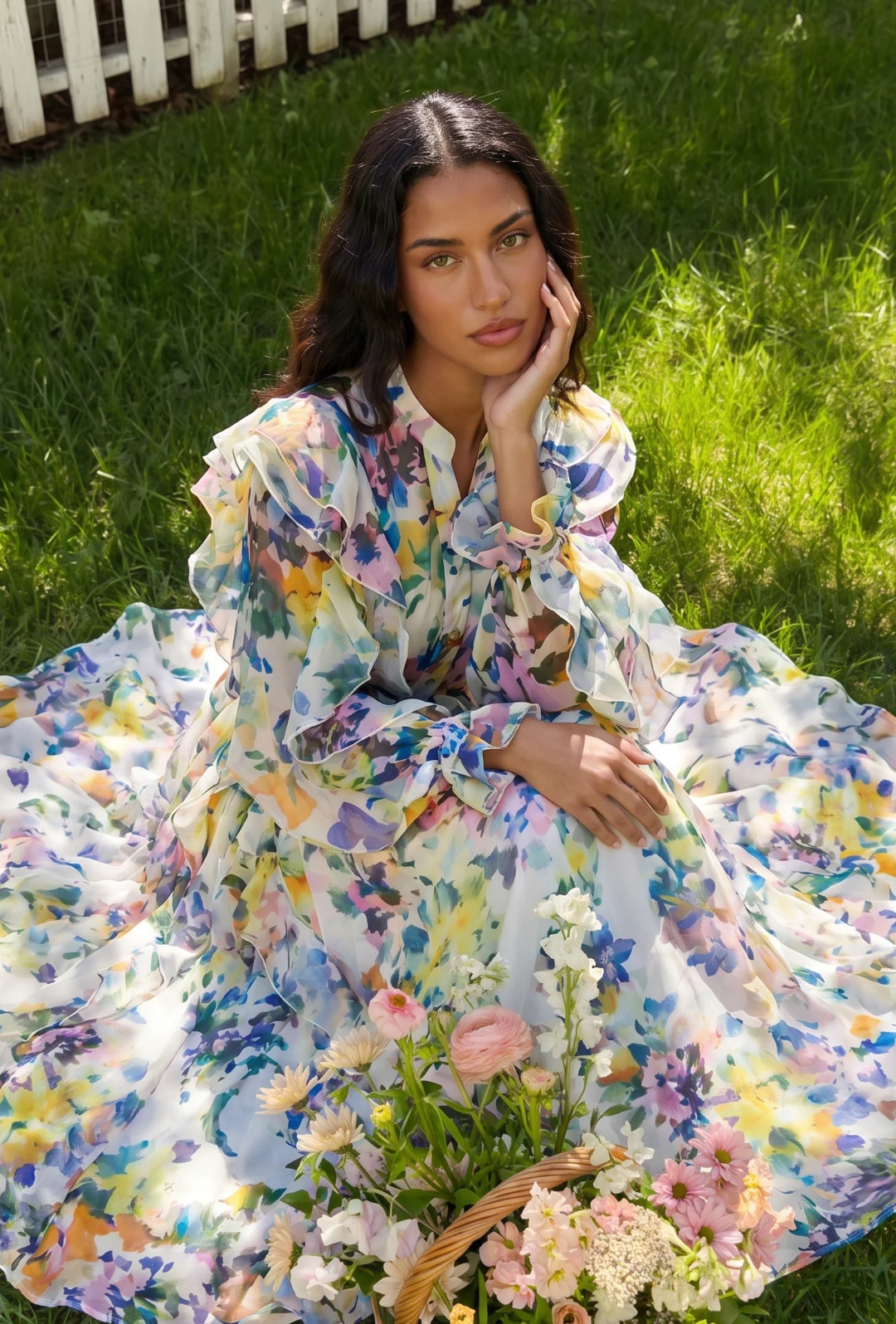
SHOP THE LOOK: In Full Bloom Multi Floral Ruffle Long Sleeve Maxi Dress
2. Silhouette and Construction Create Formality
A bold print becomes easier to wear at an elegant event when the silhouette looks deliberate.
A defined waist gives the pattern a clear visual structure. Pleating controls movement, while a fitted or carefully shaped bodice creates contrast with a fuller skirt. Draping, asymmetric necklines, formal collars and sculpted sleeves can make a print feel integrated into the design rather than applied to a casual base.
Details that often contribute to a formal impression include:
-
A defined or belted waist
-
A structured or pleated bodice
-
Controlled skirt volume
-
Considered sleeves
-
A high, asymmetric or sculpted neckline
-
Full or partial lining
-
Finished closures and hems
A dress can be flowing without looking shapeless and dramatic without appearing overloaded. This balance is often what allows an expressive pattern to enter a formal setting confidently.
3. Length Helps, but a Maxi Dress Is Not Automatically Formal
Length is an important clue, but it is not a complete answer.
Printed Maxi Dresses
A maxi dress creates presence and is usually the easiest printed length to adapt to formal occasions. Floor-skimming lines give a pattern more room to develop and can make a large floral, paisley or abstract composition feel intentional.
However, a beach maxi remains a beach maxi even when the hem reaches the floor. Lightweight construction, casual straps, an unlined finish or a very relaxed shape may keep it from meeting a formal dress code.
For black tie, a floor-length gown remains the safer direction, but its fabric and construction should still communicate eveningwear.
Printed Midi and Knee-Length Dresses
A printed midi can be a strong choice for cocktail attire and semi-formal events. The length feels polished without necessarily becoming gown-like.
A knee-length dress may also work when it has a tailored silhouette, refined fabric and polished finish. Look for a defined bodice, elegant sleeves, controlled pleating or a skirt that maintains its shape.
Shorter printed dresses allow more flexibility at cocktail parties and evening celebrations, but they are generally less suitable for black-tie or white-tie dress codes.

SHOP THE LOOK: Lost In It Multi Floral Print One Shoulder Pleated Maxi Dress
4. Print Scale and Spacing Change the Mood
The size of a print matters, but there is no universal rule that small prints are casual and large prints are formal.
Large placement prints can create a dramatic, editorial effect. They often work well on longer dresses because the design has enough space to appear as a complete composition.
Small, densely repeated prints can feel softer or more traditional. On an everyday fabric, they may suggest daytime dressing. Combined with a structured shape, rich color palette or evening finish, however, they can still look polished.
Spacing is equally important. Visible space between motifs gives the eye somewhere to rest and can make a multicolored design feel more composed. A dense pattern may benefit from a cleaner silhouette, while a spacious print can accommodate more draping or decorative detail.
Florals, abstract designs, polka dots and paisley patterns can all move between casual and formal settings. Their effect depends on scale, color, fabric and construction.
For a detailed wedding-specific answer, read Can You Wear Polka Dots to a Wedding?.
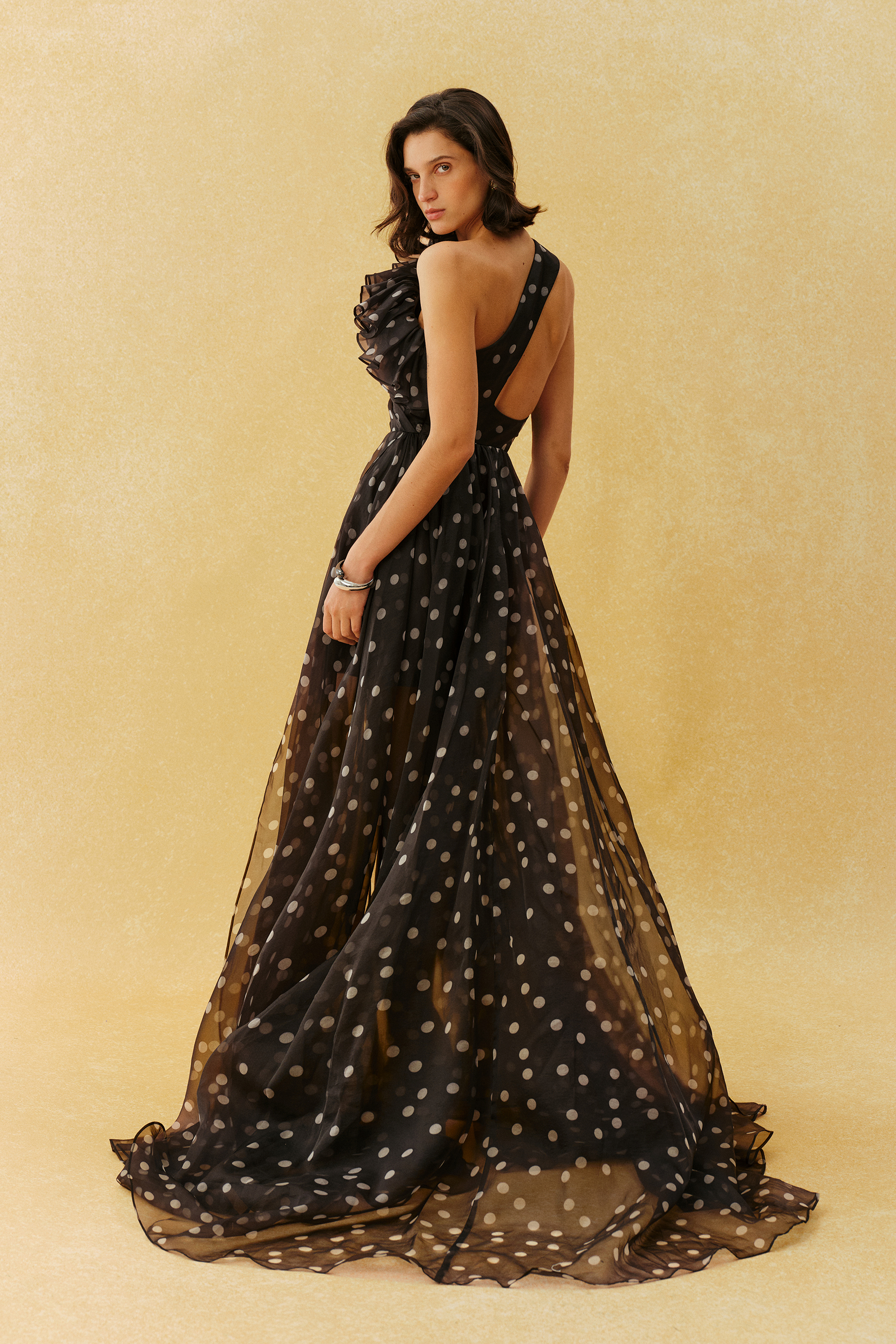
SHOP THE LOOK: Playful Elegance Black Polka Dot Ruffle Neck Maxi Dress
5. Background Color and Contrast Affect Formality
Background color often influences how easily a printed dress moves from daytime to evening.
Darker backgrounds in navy, burgundy, forest green, chocolate or deep purple can ground a bright print and help it transition more naturally into an evening setting. They allow floral, metallic or abstract details to stand out without making the complete design feel uncontrolled.
Tonal prints create a quieter result. A design combining several shades from the same color family can feel expressive while maintaining a clear sense of visual order.
High-contrast patterns make a stronger statement. They can work well for cocktail attire, fashion events and formal dinners when the silhouette remains controlled. If the colors, neckline, sleeves and embellishment are all equally dramatic, however, the dress may begin to feel visually crowded.
Light backgrounds are not automatically casual. Pale floral dresses can suit garden celebrations, daytime formal events and selected cocktail occasions when the fabric and construction are sufficiently polished.
For weddings, look at the dress from a distance and consider how it appears in photographs. If it looks predominantly white rather than clearly printed or colored, choosing another option may be safer. This is a wedding-specific consideration rather than a rule for every formal event.
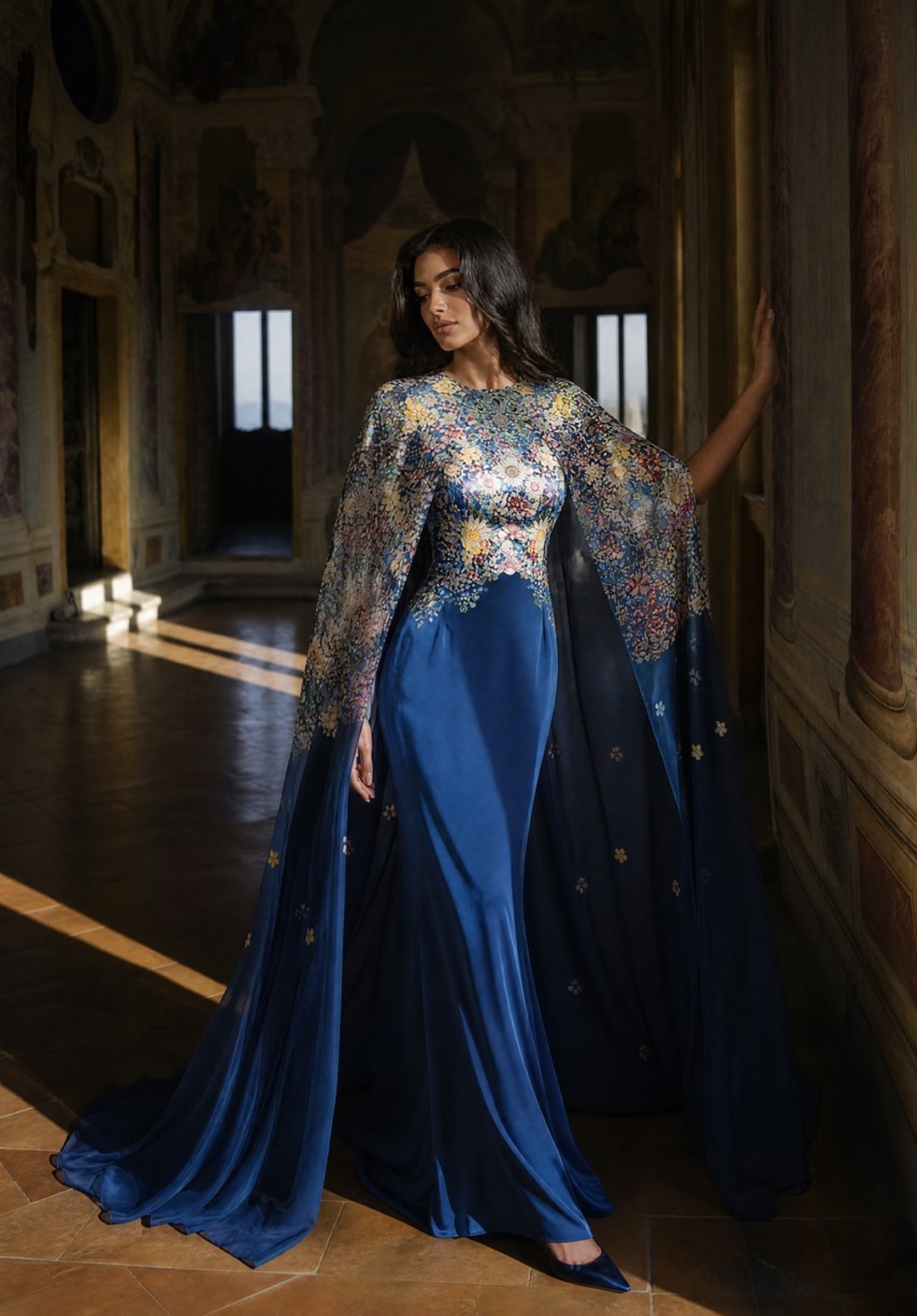
SHOP THE LOOK: Signature Look Blue Floral Embroidery Sleeveless Maxi Dress With Cape
6. Match the Printed Dress to the Event
The same printed dress will not work equally well everywhere. Let the stated dress code lead the decision.
| Event or Dress Code | Safest Printed-Dress Direction | Details That Add Formality | What May Look Too Casual |
|---|---|---|---|
| Cocktail | Refined midi or sleek maxi | Draping, defined waist, polished neckline or subtle sheen | Beach fabrics or very relaxed sundress shapes |
| Semi-Formal | Structured midi or flowing lined maxi | Pleats, elegant sleeves and balanced print | Everyday cotton, jersey or overly casual styling |
| Formal Wedding | Lined midi or maxi in an occasion fabric | Controlled volume, sophisticated neckline and balanced color palette | White-dominant prints, resort shapes or unlined fabric |
| Black Tie | Floor-length printed gown | Evening finish, formal construction and a coherent statement print | Casual maxi dresses or short daytime silhouettes |
| Gala or Evening Dinner | Statement gown or polished maxi | Metallic details, sequins, formal sleeves or architectural shape | Fabrics and cuts associated primarily with beachwear |
| Garden Celebration | Floral or botanical midi/maxi | Chiffon movement, defined waist and appropriate lining | Assuming every floral sundress satisfies a formal invitation |
White tie offers the least flexibility. Unless the printed dress is a true floor-length gown with exceptional fabric and formal construction, a solid evening gown is usually the more reliable choice.
If your event is specifically a wedding, use the invitation as the starting point. The wedding guest dress-code guide can help you compare formal, semi-formal and outdoor celebrations in more detail.
A Quick Formality Test for Any Printed Dress
Before buying or wearing a printed dress, ask:
-
Does the fabric look like occasionwear rather than everyday or beachwear?
-
Does the dress have a deliberate silhouette?
-
Is the length suitable for the stated dress code?
-
Does the print feel balanced within the shape of the dress?
-
Is the dress lined and properly finished where necessary?
-
Does the color palette suit the time and setting?
-
Would the dress still look polished without relying on accessories?
-
For a wedding, does the color balance respect the occasion?
If most answers are yes, the dress is likely suitable for an elegant event.
If the answers are mixed, it may work better for cocktail or semi-formal attire than for black tie. If most answers are no, the dress is probably better suited to a daytime or casual setting, regardless of its length.
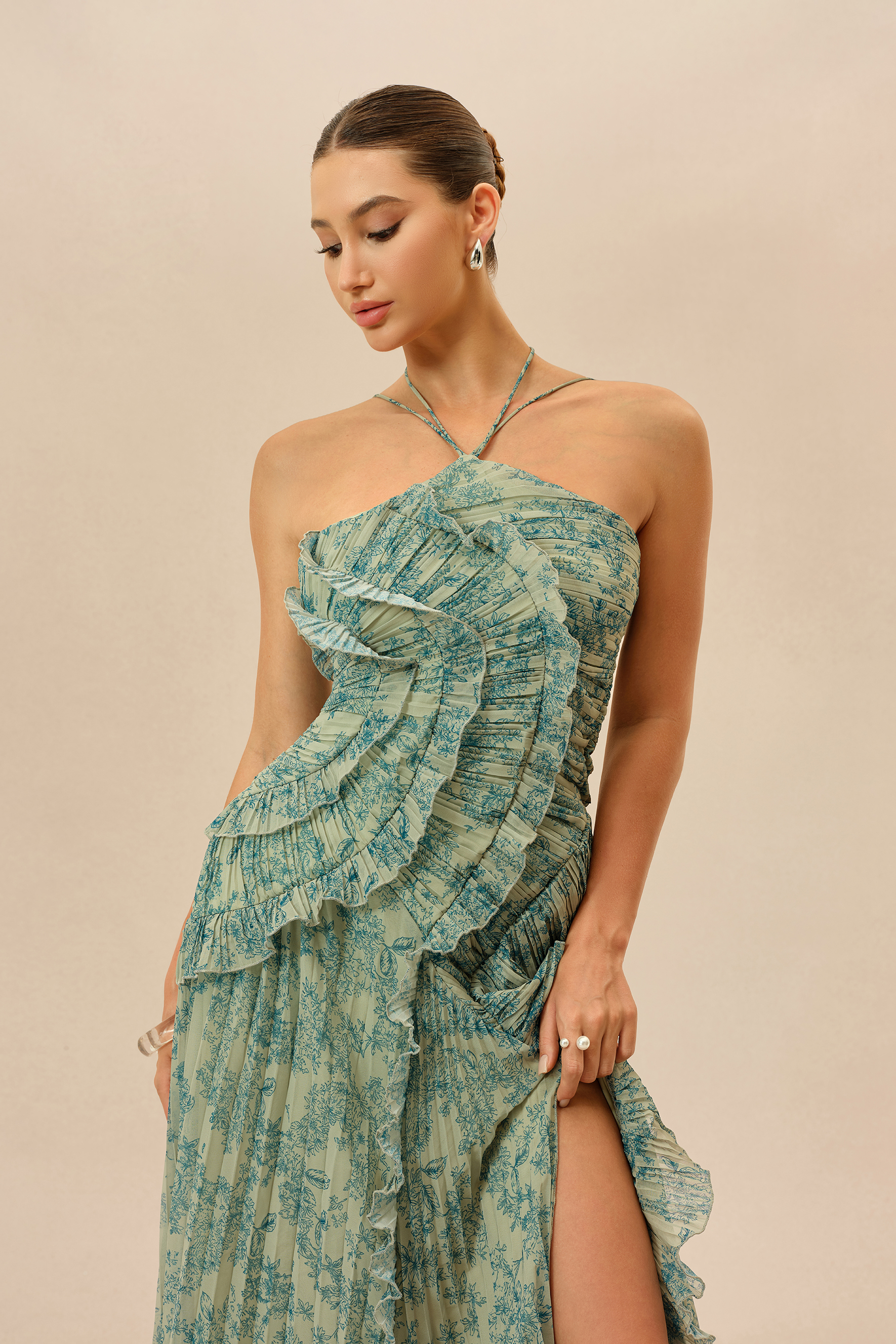
SHOP THE LOOK: First Impression Dark Green Floral Print Ruffle Trim Maxi Dress
How to Keep a Statement Print Looking Elegant
Once the print is already the focal point, the rest of the look does not need to compete with it.
Choose a compact, polished bag and jewelry that works with the neckline rather than covering it. If the dress combines a bold pattern with embellished cuffs, dramatic sleeves or a metallic finish, one or two restrained finishing details may be enough.
Fit also matters. Adjust the waist correctly, check that the bodice sits securely and make sure the hem works with your height. A considered fit can do more for formality than adding several decorative accessories.
For more detail on balancing artistic patterns, read How to Style Abstract Print Dresses.
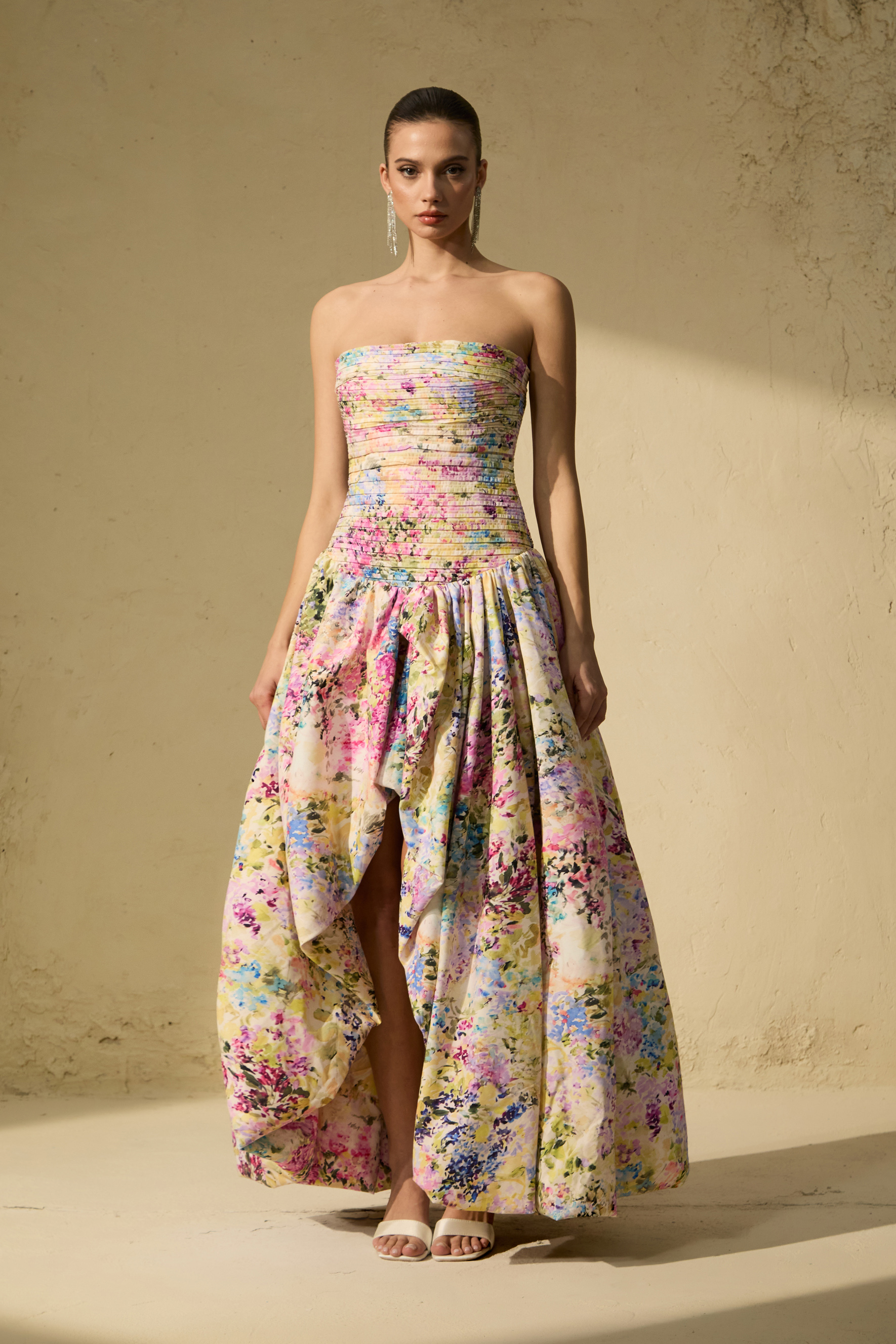
SHOP THE LOOK: Belle Of The Hour Multi Floral Print Bubble Hem Maxi Dress
Printed Dresses That Show How Formality Works
Metallic Finish: Aitana Metallic Print Puff Sleeve Maxi Dress
The Aitana Metallic Print Puff Sleeve Maxi Dress demonstrates how finish can change the character of a print. Metallic jacquard chiffon, a stand collar, diamante buttons and long puff sleeves give the relaxed maxi silhouette a clear evening direction. The belt also allows the waist to be defined when the occasion calls for more structure.
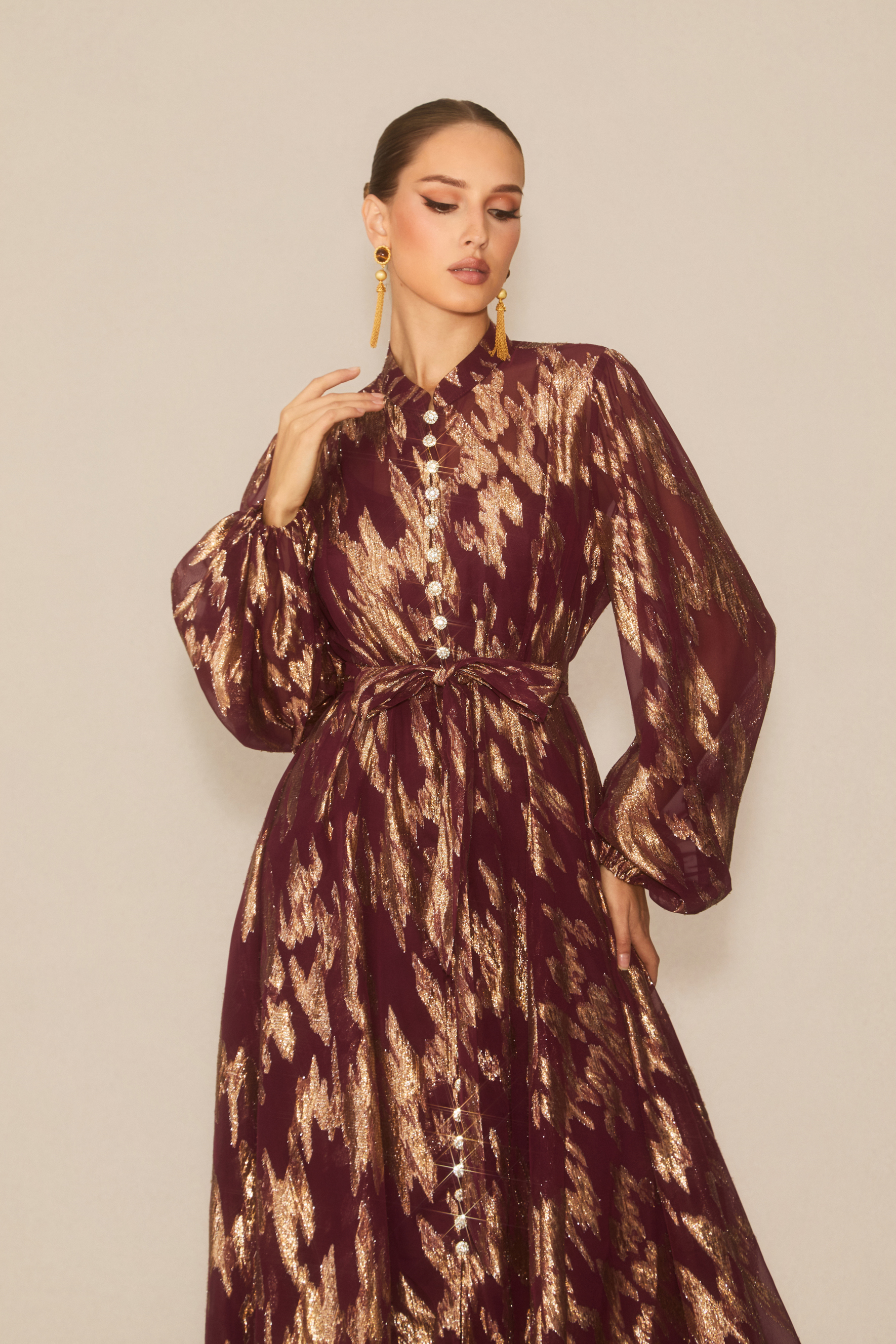
SHOP THE LOOK: Aitana Metallic Print Puff Sleeve Maxi Dress
Dark Background: Dark Charm Black Floral Print Cape Collar Maxi Dress
The Dark Charm Black Floral Print Cape Collar Maxi Dress shows how a dark background can give a floral pattern greater evening depth. Its cape collar, long sleeves, lined chiffon construction and self-tie waist create a composed full-length silhouette suitable for formal events and refined celebrations.
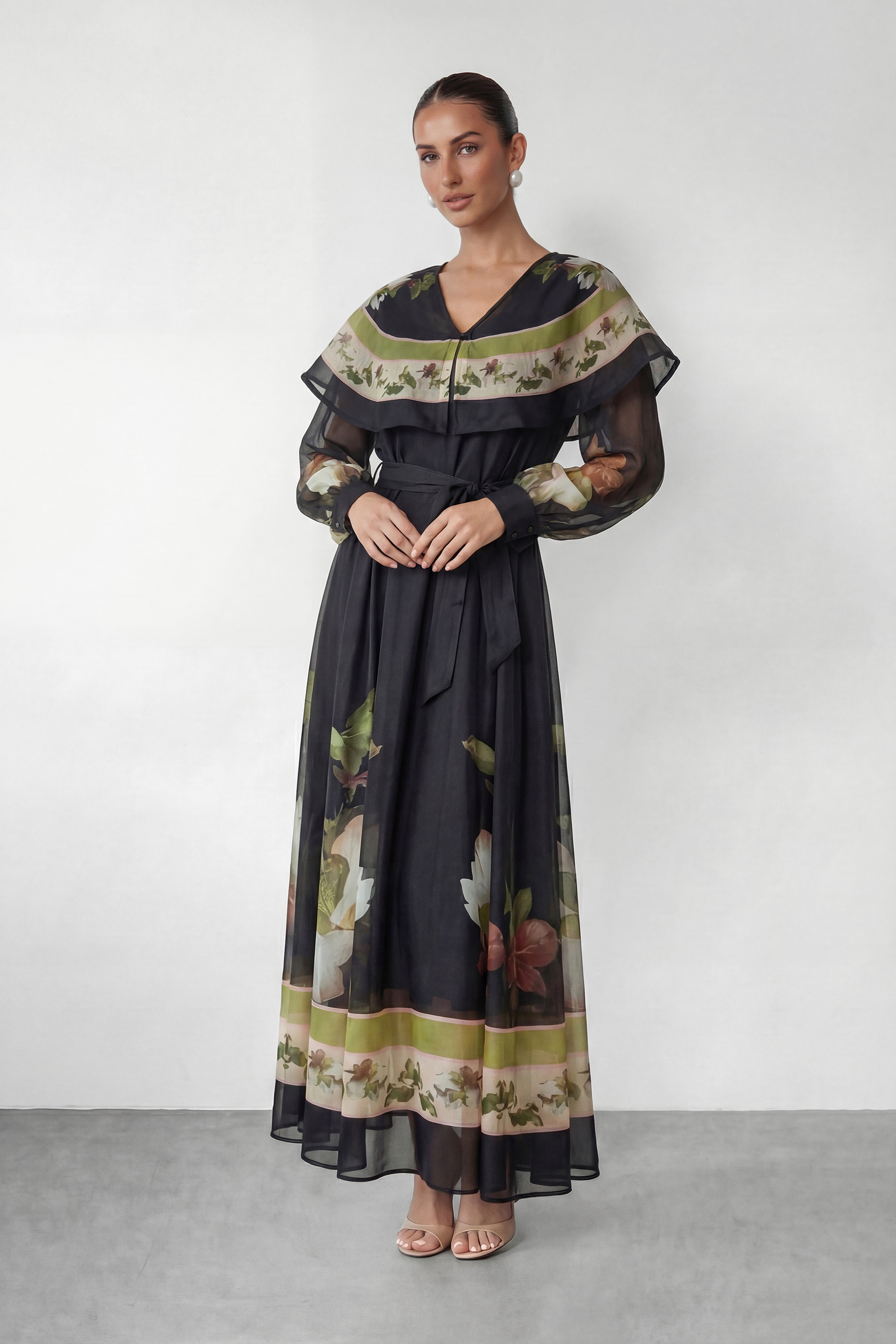
SHOP THE LOOK: Dark Charm Black Floral Print Cape Collar Maxi Dress
Structured Pleating: Zora Abstract Print Pleated Maxi Dress
The Zora Abstract Print Pleated Maxi Dress shows how construction can organize a more expressive pattern. Its pleated bodice, sweetheart neckline and matching belt give the abstract floral print a defined framework, making the design suitable for creative evening events, destination celebrations and selected cocktail occasions.
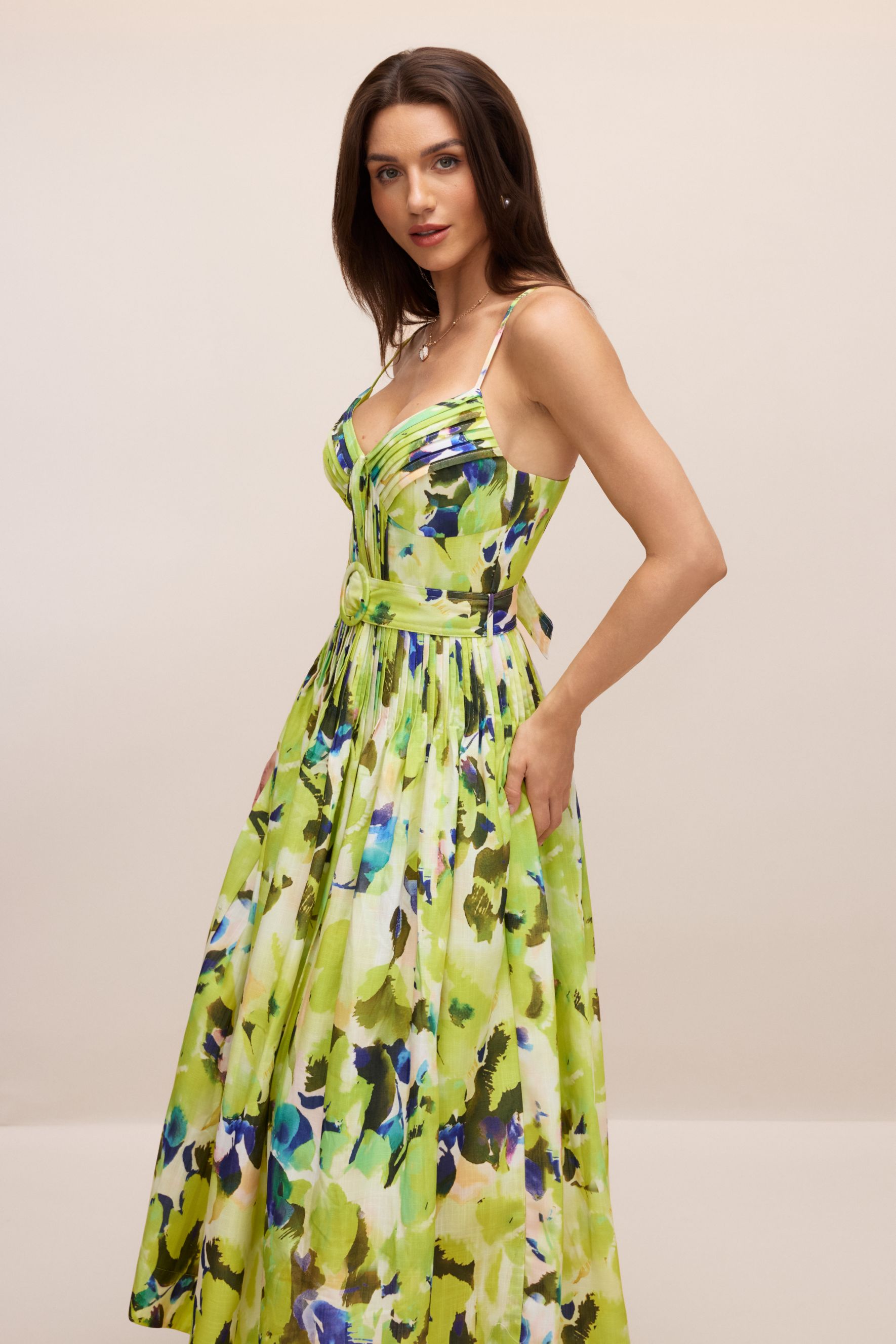
SHOP THE LOOK: Zora Abstract Print Pleated Maxi Dress
Final Verdict: A Print Can Be Formal When the Whole Dress Works
A print does not automatically make a dress casual. Nor does a maxi length, dark color or satin finish guarantee that a dress is formal.
The most reliable approach is to assess how the pattern works with the fabric, construction, silhouette, length and color palette. Then compare the complete design with the invitation and setting.
For cocktail events, there is room for expressive midis and polished maxis. Formal weddings usually require more considered fabric and construction, while black-tie and gala settings call for the strongest overall evening finish.
If every part of the dress works toward the same level of formality, the print can become one of its most elegant features.
Explore more printed dresses, compare refined formal dresses, or discover the latest occasion styles in New In.
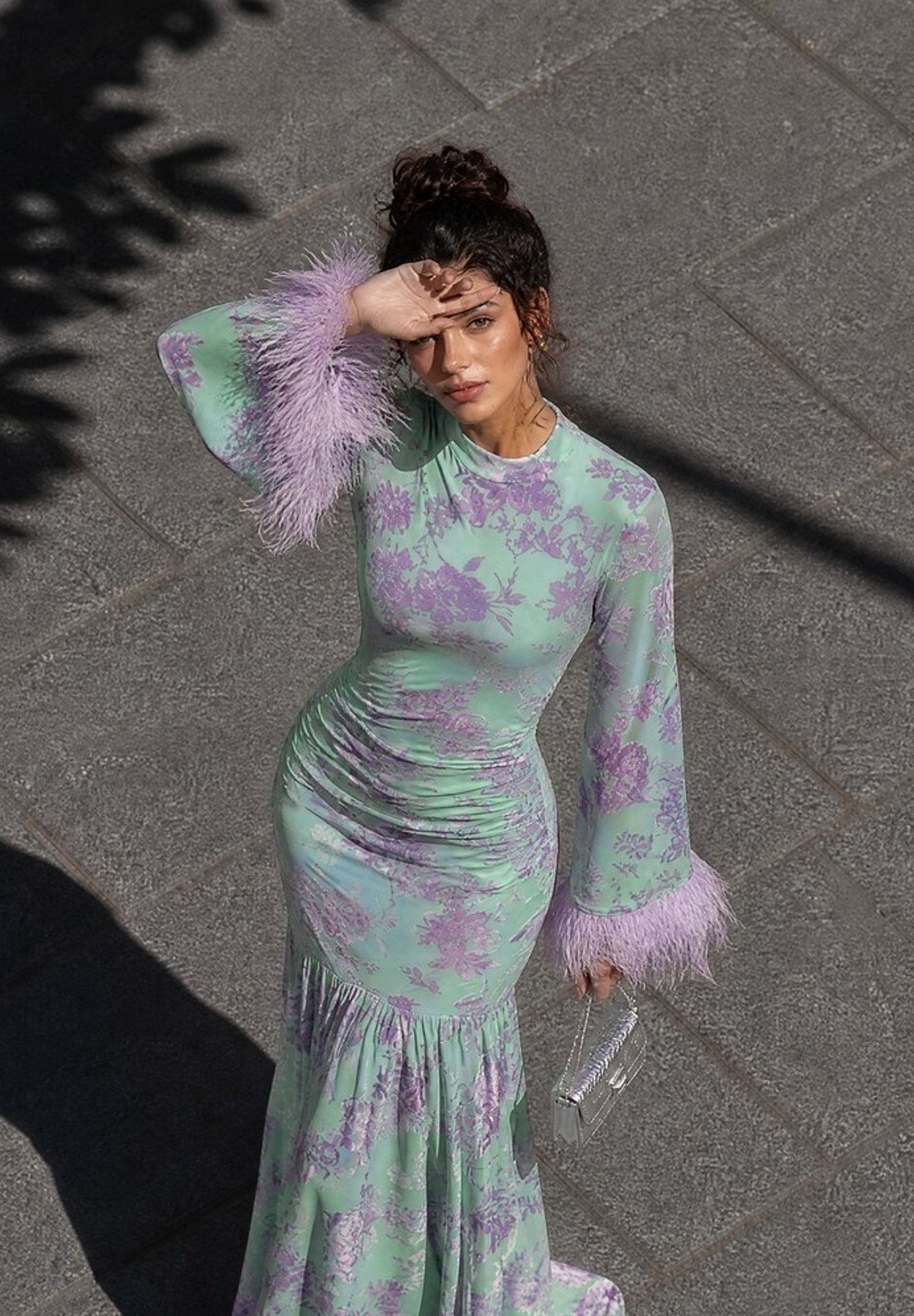
SHOP THE LOOK: Glamorous Feeling Multi Floral Print Feather Cuff Maxi Dress
FAQ
Can a floral dress be formal?
Yes. A floral dress can be formal when it is made in an occasion-appropriate fabric and has a polished silhouette. Lined chiffon, satin-like finishes, pleating, defined waists and full-length skirts can all give a floral print greater formality. The complete design matters more than the presence of flowers.
Can you wear a printed dress to a formal wedding?
A printed dress may be suitable for a formal wedding if its length, fabric and construction match the invitation. Choose a lined midi or maxi with a considered silhouette, and check that the color balance does not appear predominantly white. The venue and time of day should also guide the decision.
Are printed dresses appropriate for black-tie events?
They can be, but the standard is higher. Look for a floor-length printed gown with formal construction, an evening fabric and a coherent color palette. A casual printed maxi will not become black-tie appropriate simply because it is long.
Do large or small prints look more formal?
Neither scale is automatically more formal. Large placement prints can look dramatic and editorial, while smaller prints can feel refined when paired with rich color and structured construction. Spacing, contrast, fabric and silhouette determine how the scale is perceived.
Does a maxi length make a printed dress formal?
Not by itself. Maxi length creates presence, but fabric, lining, construction and detailing still matter. A relaxed beach maxi may remain casual, while a pleated or embellished printed maxi can work for a formal evening.
What colors make a printed dress look more elegant?
Black, navy, forest green, burgundy and other deep backgrounds often help a print transition into evening. Tonal combinations can also look composed. Light and colorful prints may still be elegant when the fabric and silhouette provide sufficient polish.
-a652d452-38f8-414d-8e1b-4a9d0478a294.jpg?w=1883&h=1060)