

How to Tell If a Dress Slit Is Too High When You Sit Down
Treat a dress slit as too high for your plans when sitting normally exposes more than you intend, reveals your underwear, or requires you to hold the opening closed. Try the dress in your actual undergarments and shoes, then check it from the front and side at seated eye level. When comparing Sunfere midi dresses, apply the same test to each design. A longer hem alone should not decide whether the opening works for you.
Use the routine below to make one of three decisions: wear the dress as it is, request a specific alteration, or choose a different cut. The tests are practical fitting suggestions, not a universal modesty standard or a promise that a particular dress will pass. Your own coverage preference and the event's stated requirements set the boundary. You should be able to follow that boundary without planning every movement around the skirt.
SHOP THE LOOK: Miss Charming Contrast Trim Textured Knit Midi Dress
Check whether the dress slit is too high with a seated fitting
Start with the complete outfit and an ordinary chair
Put on the underwear, slip, shapewear, and shoes you intend to wear. Fasten the dress fully and let the waist sit where the design places it. Avoid pulling the bodice down to lower the slit during the check. Place a full-length mirror where you can see your lap and side, or use a private phone recording. Choose a normal dining chair before testing a lower sofa or car seat. Begin with the chair you are most likely to use during the event.
Sit all the way back, with your feet resting comfortably and your knees in your usual position. Let go of the skirt. Look at the top of the opening, the overlap between its edges, and any visible underwear. Then stand and sit again without carefully arranging the fabric first. Give yourself an honest result: if the dress only looks acceptable after a special tug, record that adjustment instead of treating the first arranged photograph as a pass.
Check from the viewpoint of another seated guest
Position the camera or mirror view approximately across from your lap, rather than looking straight down from standing height. Check the front and the side nearest the slit. Keep any photos private and delete them when you no longer need them. You are assessing the opening, not judging your body. Decide beforehand what you want covered so that you can compare the actual result against a clear personal preference.
For a dinner, try reaching toward an imaginary plate and turning to someone beside you. If you expect to cross your legs, check that position too. You do not need to force unfamiliar poses simply to make the dress fail. The useful question is whether your ordinary movements work. Repeat any movement that produces unwanted exposure and note whether the whole skirt shifts upward or only the opening separates. That distinction gives a tailor a more useful starting point.
Include the moments between sitting and standing
Walk across the room at a comfortable pace, turn, and sit again. Try a normal step onto a stable stair if stairs will be part of the evening. For a car, sit first and bring your legs in together if that feels natural; assess the position before planning to wear the outfit for travel. Skip any test that feels unsafe or inaccessible. Adapt the routine to the movements and seating you actually use, including mobility equipment when relevant.
Use a simple pass rule: the dress stays within your chosen coverage boundary, permits your normal stride, and does not need repeated hand adjustments. A brief flash of leg may be intentional and comfortable for one wearer and unwelcome for another. Record your preference rather than labeling every visible thigh a wardrobe problem. For wedding guest dresses, add the ceremony's actual dress requirements to your personal check, and choose a clearly non-bridal color unless the couple requests otherwise.
SHOP THE LOOK: Gilded Glory Abstract Sequin Pattern Tulle Maxi Dress
Choose the right fix for a dress slit that opens too far
|
What you observe |
First action to try |
When to choose another dress |
|---|---|---|
|
The waist and skirt climb upward together |
Recheck the overall fit before changing the slit |
The dress keeps shifting during ordinary movement |
|
The dress stays in place but the opening exceeds your preference |
Ask a tailor whether the slit can be shortened |
Closing it would prevent a comfortable stride |
|
Only one seated position causes concern |
Check how often that position occurs during the event |
Avoiding it would require constant attention |
|
The opening exposes underwear despite careful fitting |
Review the cut and alteration options |
A reliable alteration is unavailable before the event |
Separate a fit problem from a slit problem
Sunfere's size chart describes body measurements, not the finished dimensions of each garment, and directs shoppers to the product measurements in the individual description.
Use the Sunfere size chart alongside the specific product information. Measure your body according to the instructions provided, then compare the relevant bust, waist, and hip entries. Do not automatically buy a larger size just to lower an opening. Check whether that change would leave the neckline, shoulders, or waist loose. If you are between sizes, ask for garment measurements or fit guidance before ordering, especially when the skirt is fitted and the fabric information does not confirm stretch.
During a try-on, look for a waist seam that will not stay where intended, pulling across the hip area, or a skirt you repeatedly drag downward. These are reasons to review the whole fit with a fitter. Avoid diagnosing the cause from one photograph alone. Take front and side views while standing and sitting, and explain what happens as you move. A useful request is, "The skirt rises when I sit and stays there when I stand. Can we check the fit before closing the slit?"
Ask for a movement-tested alteration
If the dress fits elsewhere, ask a tailor to show how the opening would look with part of it temporarily closed during a fitting. Wear the same undergarments and shoes. Walk and sit before agreeing to the final position. Ask whether the fabric, seam construction, and available material support the alteration. Give the tailor your preferred seated coverage rather than requesting an arbitrary number of inches taken off the slit. The goal is an opening you can wear comfortably through the actual event.
Discuss the visible result as well as movement. Ask whether the new closure will look like part of the original seam, whether reinforcement is needed, and whether the hem or lining needs attention. If the proposed change feels restrictive in the fitting, reconsider the dress. Do not approve a substantial closure solely because it looks tidy while standing. Keep enough time for a second try-on after the work, especially if the event includes stairs, dancing, or sitting through a ceremony.
Use temporary fixes only within their limits
Treat fashion tape as a limited styling aid for a compatible fabric, following its instructions and testing an inconspicuous area first. Do not make tape the sole reason a dress passes your coverage check. If you need to pull the edges together under tension, seek a fitting solution instead. Avoid placing an exposed safety pin where it could contact your skin, and do not cut, glue, or permanently alter a dress you may return. Check the seller's current return terms before making any changes.
Try a slip only when you want an intentional additional layer and it works with the dress. Check its hem while seated and walking, along with the appearance through the slit. Shapewear shorts may satisfy your own coverage preference, but decide whether you are comfortable with them being visible. Neither choice should be presented as an invisible correction without testing it. For a ceremony with a specific coverage rule, ask whether the completed outfit meets that rule rather than assuming an underlayer settles the question.
SHOP THE LOOK: Secret Affair Green Leaf Applique Featherer Cuff Maxi Dress
Compare alternative dresses without repeating the same mistake
Review the opening before the hem length
When shopping again, examine the slit position, the amount of overlap, the skirt shape, and any available movement video. Request a side view or clarification when the opening is hidden in the product images. Compare midi and longer designs by the same seated criteria. Keep a short note beside each option: where the opening begins, whether the product description gives garment measurements, and which question remains unanswered. An attractive front photo should begin the shortlist, not finish the fitting decision.
If you want a smooth evening silhouette, compare satin dresses with a lower opening, an overlapping skirt, or no visible slit in the available images. Confirm the construction on the actual product page before selecting one. Do not assume every satin style is stretchy or lined. Prefer the option whose measurements and photographs answer your fit questions, even if another design has a more dramatic pose in the listing. The useful replacement solves the problem you found in the fitting.
Match the replacement to the event
For a formal invitation, browse formal dresses with the dress code in mind and narrow the options by both coverage and movement. A higher neckline does not answer a concern about the skirt opening; assess those features separately. For a daytime celebration, a fuller skirt may be worth trying if you want less attention on the slit. Use the same chair and camera position for the replacement so that you are comparing the dresses under similar conditions, rather than changing the test until one passes.
Set a practical decision deadline before the event. Leave time for delivery, a proper fitting, and any agreed alteration. If the dress remains uncomfortable at that deadline, choose the option that already works. Avoid packing several emergency products to compensate for an unresolved fit problem. Take only a small repair item you know how to use, and arrange somewhere to store an outer layer if needed. Your backup plan should not require holding the skirt closed throughout dinner.
SHOP THE LOOK: Simply Stunning Blue Cowl Neck High Slit Satin Maxi Dress
Record the result and make a clear decision
Check a wrap opening and a sewn slit differently
For a wrap-style opening, inspect the overlap with the ties or fastening in the position you intend to use. Repeat the seated check after standing and turning, then confirm the overlap still covers your preferred area. For a sewn slit, focus on the opening above the finished hem and whether the surrounding skirt stays in place. Tell the tailor which construction you have. Do not ask to stitch a wrap closed without first checking how you will put the dress on and move in it. If you are shopping online, request a photograph of the closure when the construction is unclear.
Write down the dress, size, undergarments, shoes, seat type, and result of the fitting. Use plain descriptions such as "underwear visible from the side when sitting" or "comfortable after the proposed alteration." Measurements are useful when taken on your actual dress; label them with the unit and the starting point. Do not turn your personal result into a universal slit-height rule for other people. This short record also helps if you ask a tailor or customer service team a follow-up question.
Wear the dress when it passes your ordinary seated and walking checks. Alter it when there is a specific, feasible change that you can test before the event. Replace it when it requires constant adjustment or compromises comfortable movement. Those are the decisions that matter more than a generic measurement from a styling article. Keep the final outfit assembled after the fitting, including the underlayers, so you do not accidentally change the conditions that made the dress work.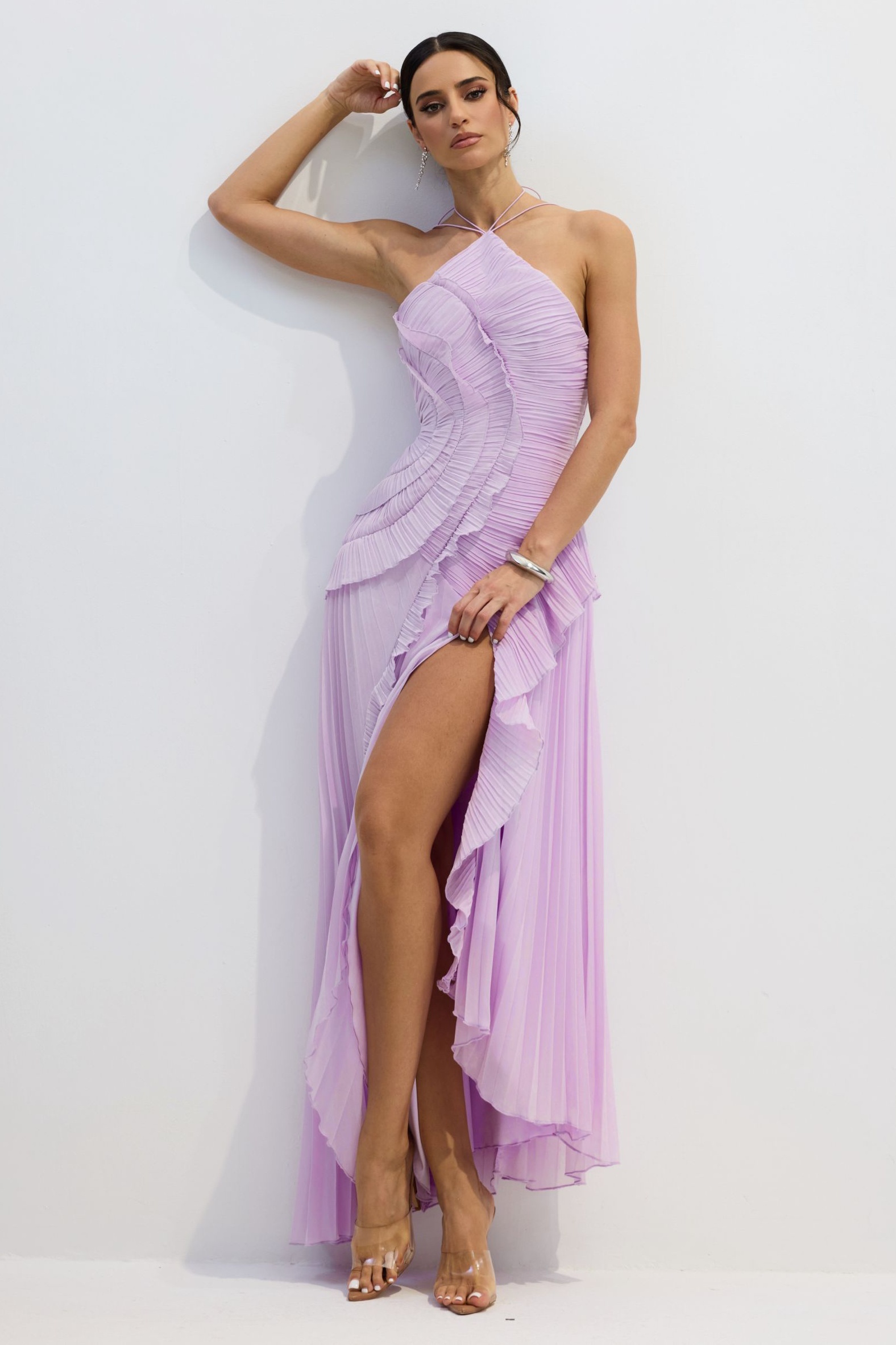
SHOP THE LOOK: Nina Asymmetry Pleated Halterneck Midi Dress
Frequently asked questions
How many inches above the knee is too high for a slit?
Use your seated coverage and the event's requirements rather than a fixed inch limit. This guide does not establish a universal cutoff. The opening must work on your body during the movements you expect to make.
Can a long dress still have a slit that feels too high?
Yes. Assess the opening separately from the hem. A floor-length skirt should still undergo the same seated, walking, and transition checks before you decide to wear it.
Should I size up to fix a high slit?
Size up only if the overall fit supports that change. Compare the product measurements and check the bodice and waist as well as the skirt. Ask a fitter when a larger size creates new fit problems.
What should I tell a tailor?
Tell the tailor which movement creates the coverage problem, then request a temporary fitting of the proposed closure. For example, explain that the slit opens beyond your preference while seated and ask to test walking before final stitching.
