
Satin vs. Chiffon for a Hot Outdoor Wedding: What to Check Before Buying
For a hot outdoor wedding, neither satin nor chiffon is automatically the cooler choice. Compare the complete dress: its fiber composition, lining, number of layers, weight, and room for movement. A floaty chiffon overlay does not tell you how the lining underneath will feel, and a satin finish does not tell you how heavy the fabric is.
If you want soft movement, chiffon is a useful starting point. If you prefer a smooth, lustrous finish, consider satin. Then check whether the actual construction suits the hours you will spend outside.
The most useful question is not simply “Which fabric is better?” It is “Which of these two dresses gives me the right balance of coverage, comfort, and formality?”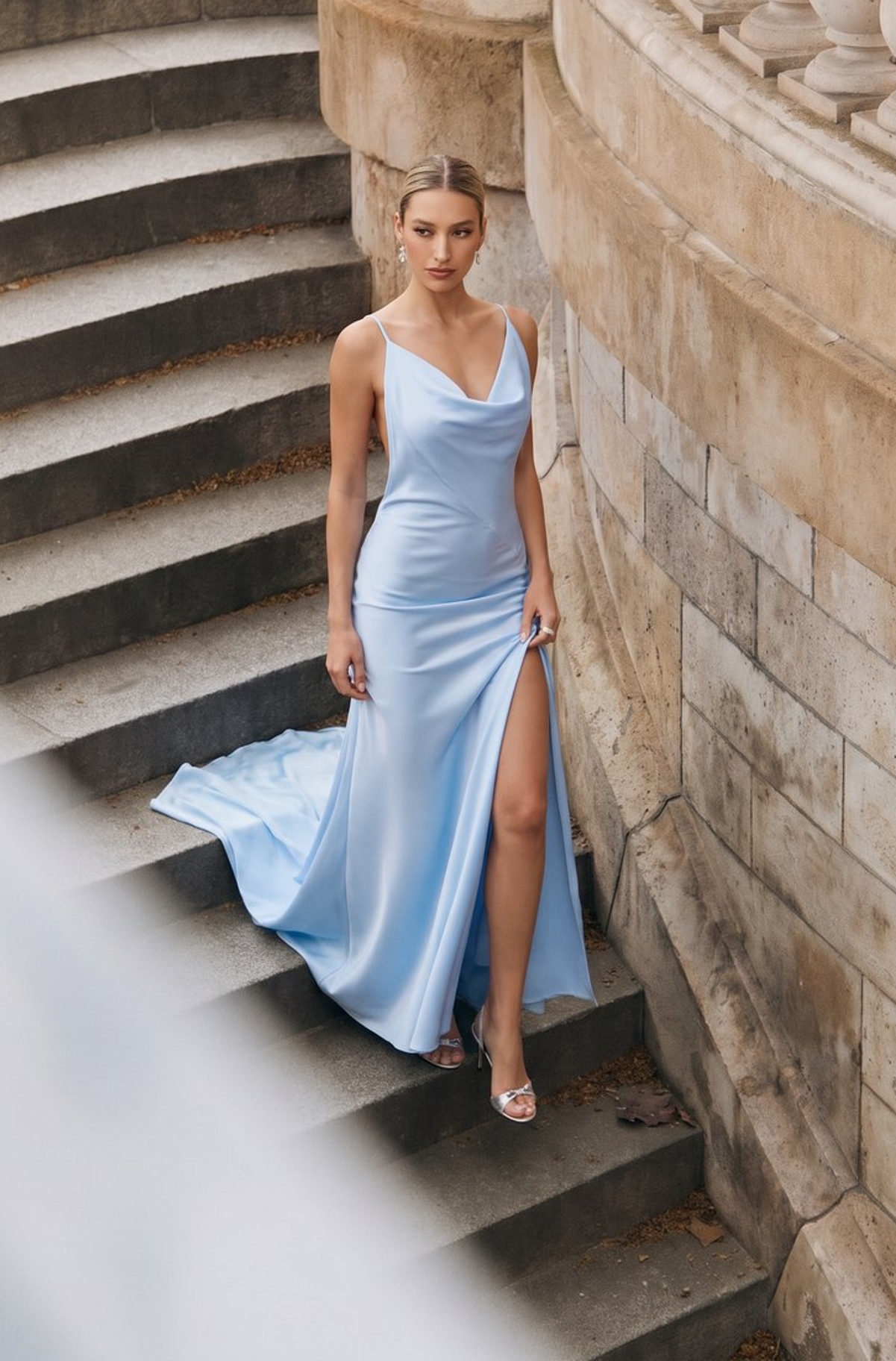
SHOP THE LOOK: Simply Stunning Blue Cowl Neck High Slit Satin Maxi Dress
What Is the Difference Between Satin and Chiffon?
Satin and chiffon describe fabric constructions rather than a complete fiber composition. The product label still needs to tell you what the fabric is made from.
Satin is associated with a smooth, lustrous surface. Chiffon is typically lightweight and sheer, with a softer, less reflective appearance. Seamwork’s fabric guide explains these structural differences and notes that satin fabrics can vary in weight.
That distinction matters when shopping online. “Satin dress” does not necessarily mean silk, and “chiffon dress” does not guarantee that the whole garment is light or breathable.
|
Buying consideration |
Satin dress |
Chiffon dress |
|
Visual effect |
Smooth surface with reflected light |
Sheer texture and soft movement |
|
First detail to check |
Fabric weight and how closely the dress fits |
Lining composition and the number of layers |
|
Coverage question |
Does this particular fabric need lining or another underlayer? |
Which areas are lined, and is the lining sufficiently opaque? |
|
Movement question |
Can you sit and walk without pulling across the body? |
Do the outer fabric and lining both allow comfortable movement? |
|
Common buying mistake |
Assuming all satin is heavy or unsuitable for summer |
Assuming a sheer outer layer makes the entire dress cool |
Use the fabric name to narrow the look you want. Use the construction details to decide whether to buy.
SHOP THE LOOK: Extraordinary Charm One Shoulder Floral Applique Pleated Maxi Dress
Is Chiffon Always Cooler Than Satin?
No. Chiffon’s lightweight appearance is only one part of the comparison. A dress with several chiffon layers, a fitted lining, and a structured bodice can be a very different garment from a simple chiffon skirt over a light lining.
Likewise, satin varies in weight and construction. Dismissing every satin dress could rule out an option that fits your event and feels comfortable during a try-on.
CottonWorks explains that resistance to airflow depends on fabric construction, fiber content, and finishing. Appearance alone cannot establish how much air will pass through a fabric.
For shopping purposes, this means you should compare two specific dresses rather than give either fabric category a universal “cooler” rating.
SHOP THE LOOK: Playful Elegance Black Polka Dot Ruffle Neck Maxi Dress
Check These Five Details Before Buying
1. Read the Shell and Lining Composition Separately
The shell is the outer fabric. The lining is the layer underneath, often in direct contact with your body.
Look for separate composition details for both. If a listing only says “chiffon” or “satin,” you still do not know the fiber content. If it lists the shell but leaves out the lining, part of the comfort question remains unanswered.
Ask the retailer:
“What are the outer fabric and lining made from, and is the dress fully or partially lined?”
Fiber information helps you understand what you are buying, but it should be considered alongside weight, construction, and fit. A single fiber percentage is not a complete comfort rating.
2. Count the Layers Where They Matter
A dress can look minimal from the front while containing multiple layers through the bodice or skirt.
Check for:
- A separate slip beneath the dress.
- Several full skirt layers.
- Lining beneath both the bodice and sleeves.
- Dense gathering or overlapping fabric at the waist.
- Additional panels used to create volume or coverage.
These features may be exactly what you want visually. The point is to account for them before choosing a dress for several hours outdoors.
When browsing chiffon dresses, look past the moving outer layer and inspect the garment beneath it. The lining may determine where the dress fits closely and how much room you have to sit.
3. Check Weight Without Guessing From Shine or Transparency
A shiny surface does not tell you how heavy satin is. A sheer surface does not tell you the total weight of a lined chiffon dress.
If fabric weight is not provided, product videos and detailed descriptions may offer useful clues about structure and movement. They still cannot confirm breathability.
Ask whether the dress is lightweight or substantially structured, and whether there is a separate lining or built-in support. Treat vague terms such as “airy” or “summer-ready” as descriptions to investigate rather than performance guarantees.
4. Look for Comfortable Room Through the Bodice and Hips
A dress that fits while standing may feel different during dinner or a seated ceremony.
Check the bust, waist, and hip measurements against the product-specific size guide. Read whether the measurements refer to the body or the garment, and confirm any stated stretch.
For satin, inspect whether the fabric pulls across the hips or waist. For chiffon, check the lining as carefully as the outer layer. A generous overlay can conceal a much narrower skirt underneath.
Do not automatically size up for comfort. Compare your measurements, the intended silhouette, and the retailer’s fit guidance before deciding.
5. Plan the Complete Outfit, Including Underlayers
A dress may seem suitable for heat until you discover that you want an extra slip, coverage shorts, or another layer beneath it.
Check opacity with your intended undergarments during a try-on. Look at the bodice and skirt in daylight, including areas where the fabric stretches or separates as you move.
The practical goal is sufficient coverage with an outfit you feel comfortable wearing. Choosing an unlined dress and then adding several layers may not deliver the simple summer outfit you expected.
SHOP THE LOOK: Sibley Halterneck Tiered Ruffle Maxi Dress
Which Details Matter Most for Your Wedding Schedule?
“Outdoor wedding” can mean a short ceremony before an indoor reception or an entire afternoon and evening outside. Make the comparison against the actual schedule.
A Daytime Ceremony Followed by Several Hours Outdoors
Prioritize clear information about lining, layers, fit, and coverage. You will want to know how the dress behaves while seated as well as standing for photographs.
A loose chiffon overlay may suit the look you want, but check that its lining is comfortable. A satin option still deserves consideration if its weight and construction suit you.
If you cannot get basic garment information, consider an alternative with a more complete description rather than relying on the fabric name.
A Short Outdoor Ceremony and an Indoor Dinner
Both fabrics may work. You have more reason to weigh your preferred finish and the wedding’s dress code alongside the outdoor portion.
Satin may appeal if you want a smooth evening look. Chiffon may appeal if you prefer visible movement. Neither choice needs to be reserved exclusively for a particular venue.
For broader outfit planning, our garden wedding guest guide covers the surrounding decisions, including the setting and footwear.
An Outdoor Reception With Walking and Dancing
Check the skirt underneath the styling details. Can you take a normal stride, sit comfortably, and stand without rearranging the dress?
Look for manageable hem length and enough room through the lining. A slit or wrap opening also needs a seated coverage check.
Your preferred fabric should support the way you expect to move throughout the event.
SHOP THE LOOK: Sarah Butterfly Print Ruffle Chiffon Maxi Dress
What About Sweat Marks, Cling, and Outdoor Photos?
Neither “satin” nor “chiffon” guarantees that moisture marks will be invisible or that the dress will never cling. Those outcomes vary with the specific fabric, color, finish, fit, and conditions.
If visible marks are a major concern, look for product-specific information rather than assuming that a darker color, print, or matte finish solves the problem.
During a permitted try-on, check:
- Whether the dress rests closely against the underarms, back, waist, or thighs.
- Whether the lining catches or restricts movement.
- How the color and surface look in daylight.
- Whether undergarment edges or lining hems are visible.
- Whether you like the dress from seated and side views.
Do not wet a dress to test moisture visibility if you may return it. Ask the retailer about the fabric instead.
Satin’s reflected light and chiffon’s transparency also deserve a daylight check. Judge whether you like the actual effect rather than treating either finish as inherently better for photographs.
SHOP THE LOOK: Cynthia Printed Tiered Ruffle Maxi Dress
Buying Mistakes to Avoid
Choosing Chiffon Only Because It Looks Floaty
Movement in the outer skirt does not reveal the fit or construction underneath. Confirm the lining before deciding that the dress meets your comfort needs.
Rejecting Satin Without Checking the Actual Dress
Satin is a broad category. When browsing satin dresses, compare each garment’s composition, structure, and fit instead of assuming identical performance across the collection.
Buying a Tighter Size for a Smoother Look
Fabric that pulls while standing is unlikely to become more accommodating when you sit. Check measurements and movement rather than relying on a posed product image.
Assuming More Skin Exposure Solves Every Comfort Issue
A sleeveless dress can still have a substantial lining or restrictive bodice. Consider the whole construction instead of using sleeve length as your only filter.
Overlooking How Long You Will Be Outside
Include travel between venues, photographs, cocktail hour, and waiting time. Those parts of the day can change what you need from the dress.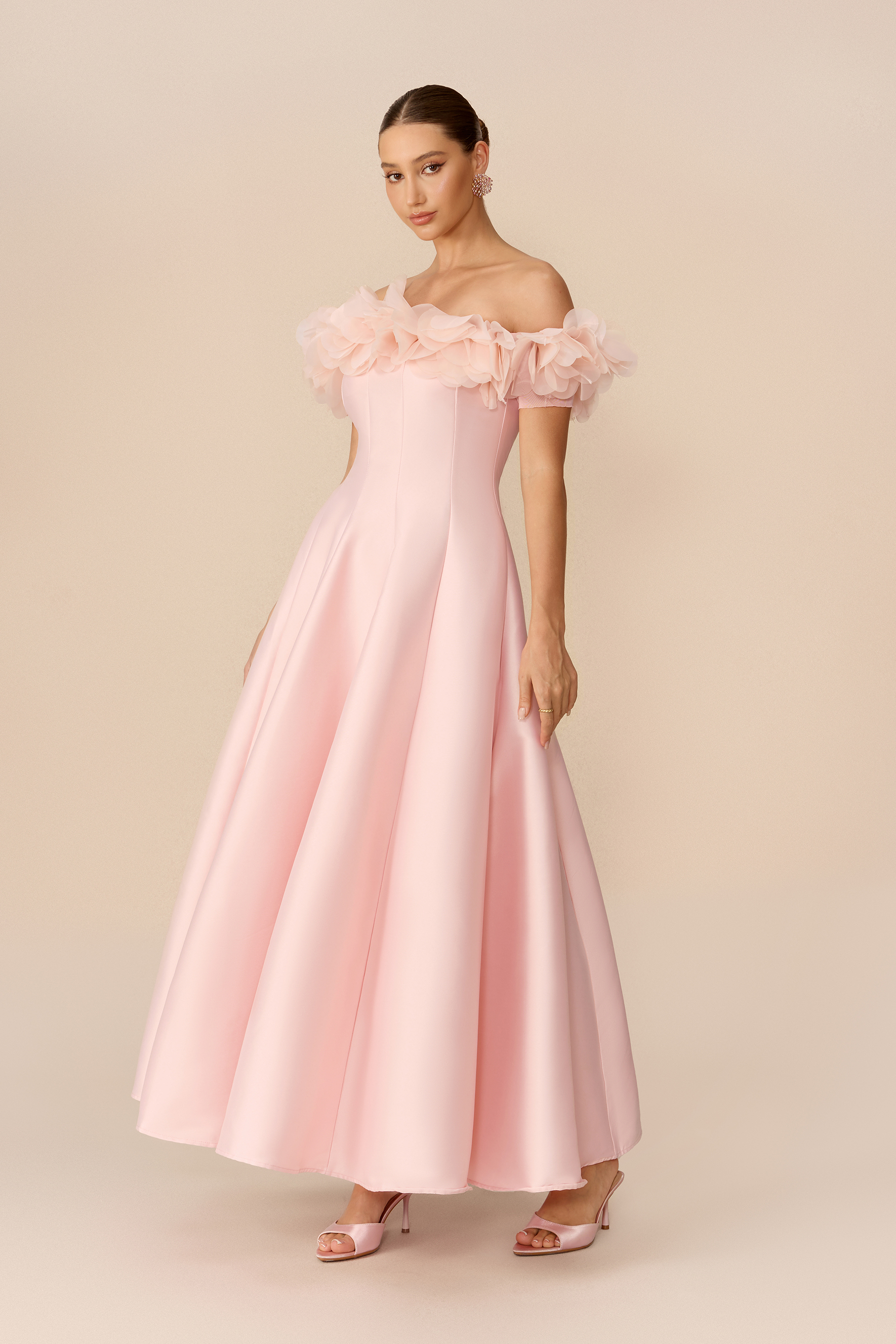
SHOP THE LOOK: Sweet Daydream Pink Floral Trim Satin Maxi Dress
Use This Final Comparison Before You Order
If you are choosing between one satin dress and one chiffon dress, answer the same questions for both:
- What are the shell and lining made from?
- How many layers cover the bodice and skirt?
- Is the dress lightweight, structured, or closely fitted?
- Does the size guide support comfortable seated movement?
- Will you want additional underlayers?
- Does the dress suit the time outdoors and the invitation’s dress code?
If important answers are missing, send the retailer a focused question:
“I’m considering this dress for a hot outdoor wedding. Could you confirm the shell and lining composition, whether the bodice and skirt are fully lined, and whether the lining has stretch?”
You can then compare options within summer wedding guest dresses using the same criteria.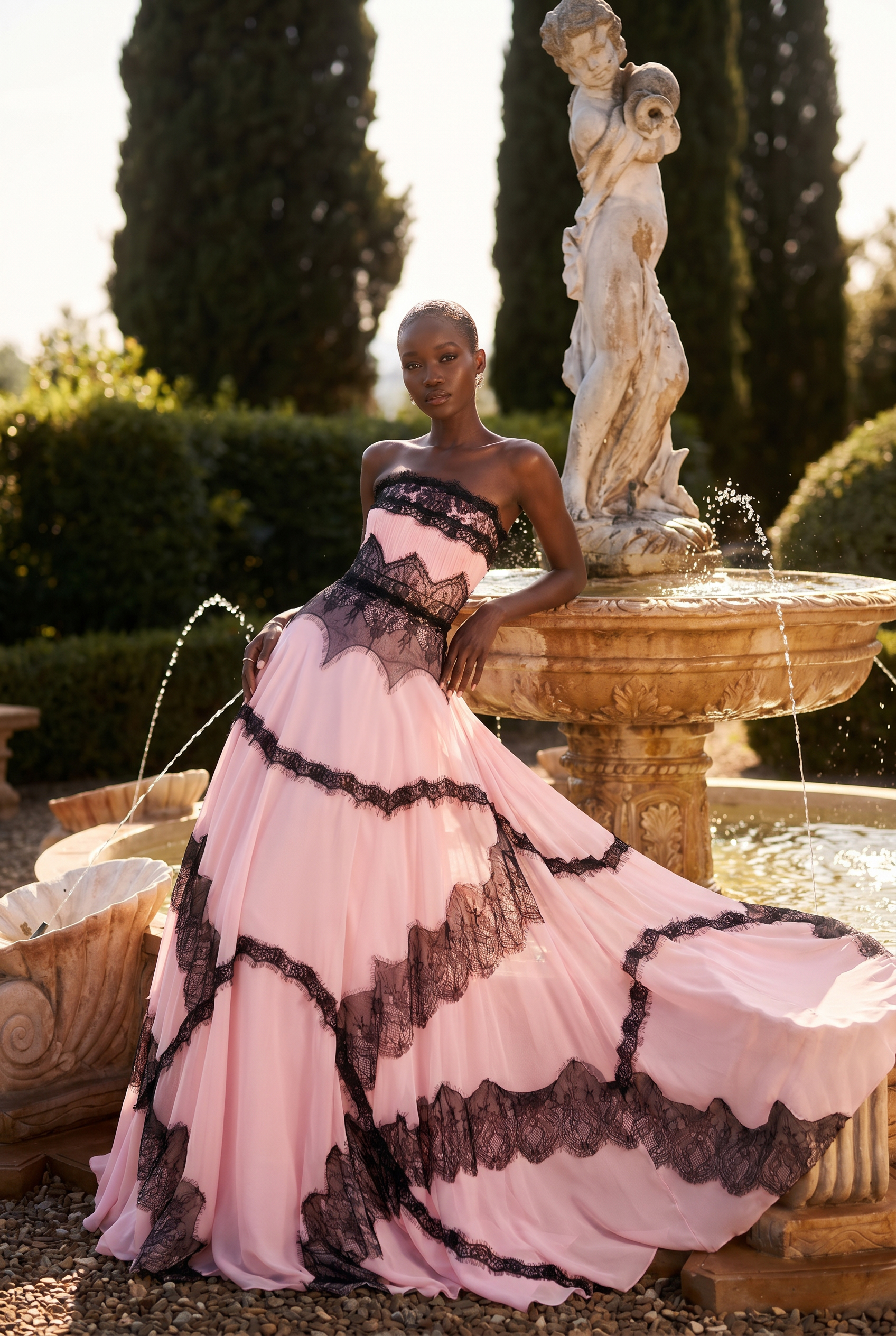
SHOP THE LOOK: Secret Grove Pink Strapless Lace Trim Maxi Dress
Choose the Dress You Can Assess With Confidence
Choose chiffon if you prefer its soft texture and movement, then verify the lining and layers. Choose satin if you prefer its smooth finish, then check weight, fit, and coverage.
For a hot outdoor wedding, the strongest purchase decision comes from understanding the complete garment. A clear description and a comfortable movement test offer more useful reassurance than the fabric name alone.
SHOP THE LOOK: Classic Moment Mint Green Floral Print Maxi Dress With Cape
FAQs About Satin and Chiffon for Outdoor Weddings
Can You Wear Chiffon to a Formal Outdoor Wedding?
Yes, a chiffon dress can suit a formal outdoor wedding when its silhouette, length, and detailing meet the requested dress code. Consider the complete design rather than assuming chiffon is casual because of its soft, floaty appearance.
Is a Satin or Chiffon Dress Better for a Windy Wedding Venue?
Neither fabric name guarantees that a dress will stay in place in the wind. Check skirt fullness, lining, hem weight, and any wrap openings or high slits, then choose a design that provides your preferred coverage when the outer fabric moves.
Should I Remove the Lining to Make My Wedding Guest Dress Cooler?
Do not remove the lining without having the dress assessed by a tailor. It may provide essential opacity, conceal internal construction, or help the outer fabric hang properly; choosing a different dress may be more practical than altering those features.