

Why Do Square Neck Dress Straps Slip Even When the Waist Fits?
A comfortable waist does not settle the fit of square neck dress straps. Check whether the straps are too long, sit too far toward the edges of your shoulders, or move because the bodice shifts. Shorten an adjustable strap only enough to test the first possibility. If tightening lifts the waist or distorts the neckline, stop: shortening the straps alone will not resolve that fit.
The question to answer is not simply whether the strap can be made tighter. It is whether the dress can hold its intended neckline while your shoulders move normally. This guide separates a straightforward adjustment from a placement or bodice issue, then shows what to ask a tailor. Do the initial checks without cutting, unpicking seams, or adding adhesive, especially while you are deciding whether to keep the dress.
SHOP THE LOOK: Private Invitation Red Square Neck Corset Maxi Dress
Check Square Neck Dress Straps Before Changing the Size
Start with the dress in its intended position
Fasten the dress and settle the bodice before touching the straps. Check where the waist seam sits and whether the bust area looks and feels positioned correctly. Use your intended bra or other underlayer for the fitting. If you test with one underlayer and wear another at the event, you have changed part of the outfit you evaluated. Take a front and back photo with your shoulders relaxed, rather than deliberately holding the straps up.
Identify whether the straps are genuinely adjustable. Look for a slider, buttons, or ties designed for that purpose. A decorative bow is not automatically a fit adjustment. If you are uncertain, check the product information or ask the retailer. Do not pull on a fixed strap or tighten an embellishment to find out. For a nonadjustable strap, a tailor can pin a temporary change at a fitting without committing you to a permanent alteration.
Make a small, reversible adjustment
If a slider is provided, change the length a little and repeat the same movement: reach toward a table, turn your upper body, and bring your arms forward as though greeting someone. Watch the neckline and waist as well as the strap. Stop shortening when the bodice begins to lift, the neckline pulls out of shape, or the arm opening becomes uncomfortable. A strap remaining on your shoulder is only one part of a successful result.
If the modest adjustment keeps the strap in place and the rest of the dress remains correctly positioned, repeat the check on both sides. Shoulders need not behave identically, so judge each side by the garment's position rather than forcing the sliders to match visually. Avoid creating an extreme difference without understanding why it is needed. If the dress starts twisting, return the straps to their starting lengths and arrange a fitting assessment.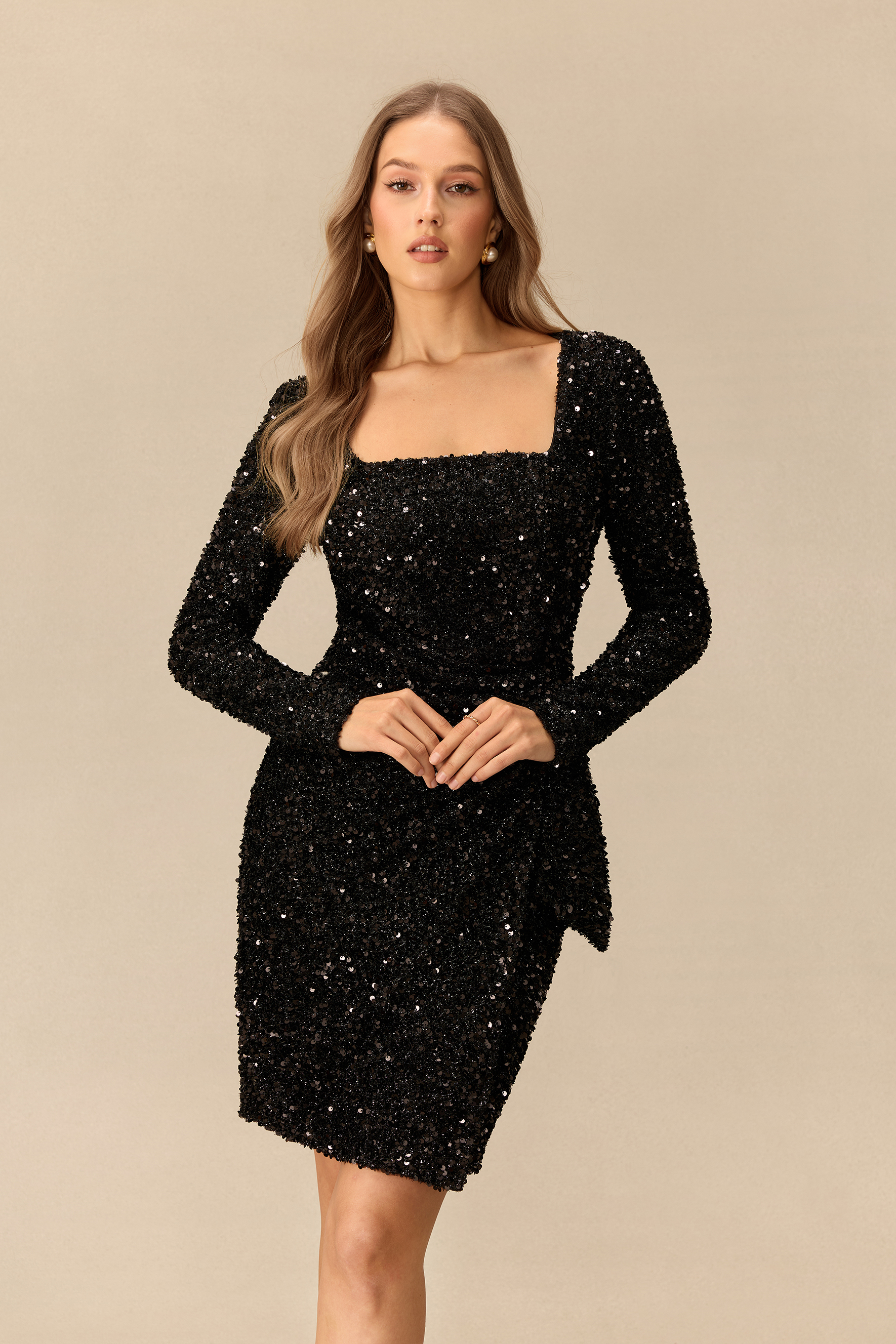
SHOP THE LOOK: Tonight Is Mine Sequin Square Neck Long Sleeve Mini Dress
Distinguish Length From Strap Placement
| What happens during the check | Useful next step | Decision boundary |
|---|---|---|
| A loose strap settles after a small adjustment | Repeat movement checks without lifting the bodice | Keep the adjustment only if the neckline stays comfortable |
| The strap still falls after the neckline becomes tight | Stop shortening and assess placement | Do not keep tightening |
| Both straps sit at the outer shoulder edges | Compare attachment positions with another dress | Discuss repositioning before permanent work |
| The waist or bust shifts before a strap slips | Assess the moving bodice | A strap-only fix may miss the problem |
| Only a bag or outer layer dislodges the strap | Test without that accessory | Change the accessory arrangement first |
To assess placement, look at where each strap joins the front and back of the bodice. Compare those positions with a similar dress that stays put on you. You are looking for a practical difference, not a universal ideal distance. A strap that starts far out at both attachments may behave differently from one that runs closer to the center of your shoulder. Record the comparison for a tailor rather than diagnosing your shoulder shape from a photo.
Try the reaching motion again while someone observes from behind, or use a safely positioned camera. Does the strap begin to move at the front, the shoulder, or the back? Does the back of the bodice gape first? A front-only mirror can miss useful information. Keep the observation simple, such as “the back attachment moves outward when I reach.” Do not turn a single sign into a claim that the whole dress is the wrong size.
A square neckline describes a visual shape; strap behavior still needs checking. Two dresses with similar front photographs can have different backs, strap lengths, closures, and bodice proportions. When browsing party dresses, compare the back view and construction details alongside the neckline. Choose the listing that provides enough information to evaluate the feature troubling you, or ask for clarification before making a purchase decision. 
SHOP THE LOOK: Classy Nights Royal Blue Velvet Tie Shoulder Mini Dress
Check Whether the Bodice Moves First
Observe the waist and bust together
Put one hand lightly at the waist seam as a reference while you reach forward, without holding the dress in place. If the bodice moves before the strap falls, investigate that movement. Notice any empty space, pulling, or change in cup placement. A waist that feels snug can coexist with a fit problem above it. The useful question is where the dress needs a different proportion, not whether one circumference matches your usual size label.
Sunfere's general size page distinguishes body measurements from garment dimensions and directs shoppers to product measurements for the actual clothing dimensions. Use that distinction when comparing the fit above the waist; the general size label alone does not describe every part of the bodice.
If your measurements suggest different sizes for the bust and waist, do not promise yourself that a strap adjustment will reconcile the difference. Compare available garment measurements and discuss the least adjustable area with the retailer or a tailor. If a larger size improves the bust but makes the waist and straps unstable, that is a trade-off to evaluate. The goal is a balanced upper fit, not simply the largest size you can fasten.
Separate the dress from the underlayer
Check where the bra strap sits relative to the dress strap. If the two overlap and drag against each other, compare the fit with a different compatible bra you already own. Keep the dress adjustment unchanged during this test. If the dress strap still falls outward while the bodice stays level, bring that observation to the tailor rather than buying shapewear to solve a shoulder-placement problem.
Do not rely on a bra strap to carry a heavy or poorly positioned dress strap. A strap keeper may be something to discuss for a compatible garment, but it should not be assumed to correct the underlying fit. Ask the person installing it what it will do, how it will attach, and whether it changes the bra's position. Avoid improvising with exposed safety pins where they could open, catch delicate fabric, or contact your skin.
SHOP THE LOOK: Forever Enchanting Floral Lace Corset Bodice Maxi Dress
Choose Between Adjustment, Alteration, and Another Style
Use the built-in adjustment when it resolves the whole problem
Keep a reversible length adjustment when the straps remain stable, the neckline stays as intended, and ordinary reaching feels comfortable. Wear the complete outfit indoors briefly before the event and check that the sliders remain where you set them. Follow the garment's use and care directions; do not add glue to hold a slider. If hardware will not stay adjusted during a gentle try-on, ask about the component rather than continually making the strap shorter.
Ask for a fitting when placement needs to change
Moving a strap attachment is a different alteration from shortening its length. Ask a tailor to show the proposed position and explain what happens to the neckline and arm opening. A lined, embellished, or shaped bodice may need more work than its exterior suggests. Avoid naming an exact number of inches to remove based on online advice. Let the proposed change be demonstrated on the garment while you wear the intended underlayers.
At the appointment, request a front and back check after the temporary adjustment. Bring your movement notes, not just a photograph with your arms at your sides. Ask whether the work will leave visible marks, interfere with a closure, or change coverage. Confirm whether a follow-up fitting is included before your event. If the solution depends on several uncertain alterations, consider whether another dress is a more practical use of the time and budget available.
Compare another neckline when the needed alteration is substantial
If shortening distorts the neckline, compare dresses whose strap attachments sit farther inward on your shoulders. Look at the back as well as the front: the attachment positions determine the direction in which the straps run. A sleeve can offer another construction to try, but test it rather than assuming more fabric guarantees a better fit.
If you prefer to keep the square neckline, compare another square-neck garment before changing every other part of the outfit. Use the same relaxed posture, underlayer, and reaching sequence. A different result helps identify a more suitable construction without making assumptions about your body. Do not accept a dress solely because it stays in place while you pull your shoulders back; you should be able to use your ordinary posture throughout the event.
SHOP THE LOOK: Summer Crush Floral Lace Spaghetti Strap Mini Dress
Check the Accessories That Touch the Straps
Add your bag after the dress works on its own. Carry it where you normally would, then remove and replace it. If the bag dislodges the dress strap, change the carrying arrangement or choose a bag that does not compete for that position. Do the same with your coat or wrap. Watch what happens when you put the layer on and take it off, not only how the finished outfit looks in a still photo.
After making an adjustment, repeat the action that originally made the strap fall. Reach for a glass, sit with your shoulders relaxed, and put on your coat without holding the strap in place. If it stays put only when you keep your shoulders raised or pulled back, the adjustment has not solved the everyday fit problem.
If you are considering fashion tape for a minor coverage preference, read the manufacturer's skin and fabric instructions and the garment's care guidance first. Tape should not be the entire support plan for a strap or bodice that repeatedly falls. Do not use an adhesive on irritated skin or continue using it if it causes a reaction. Choose a different solution when the dress requires constant reattachment to function normally. 
SHOP THE LOOK: Romantically Speaking Wide Strap Lace Peplum Midi Dress
Make the Final Keep-or-Change Decision
Keep the dress when the waist, bust, neckline, and straps work together during normal movement. Arrange an alteration when a specific reversible fitting demonstration resolves the problem and the professional confirms the construction permits it. Choose another garment when shortening distorts the neckline, moving the straps requires uncertain reconstruction, or you still have to hold yourself in a special position. A clear decision is more useful than collecting several small tricks that fail in combination.
Before putting the outfit away for the event, record the final strap setting and the underlayer you used. Check any adjustable hardware again when dressing, because a different setting changes the fitting you already approved. Keep the original product information and alteration notes available if you need follow-up help. That gives you a repeatable setup while leaving room for your own comfort and preferred coverage, rather than treating a single fitting photo as the final answer. 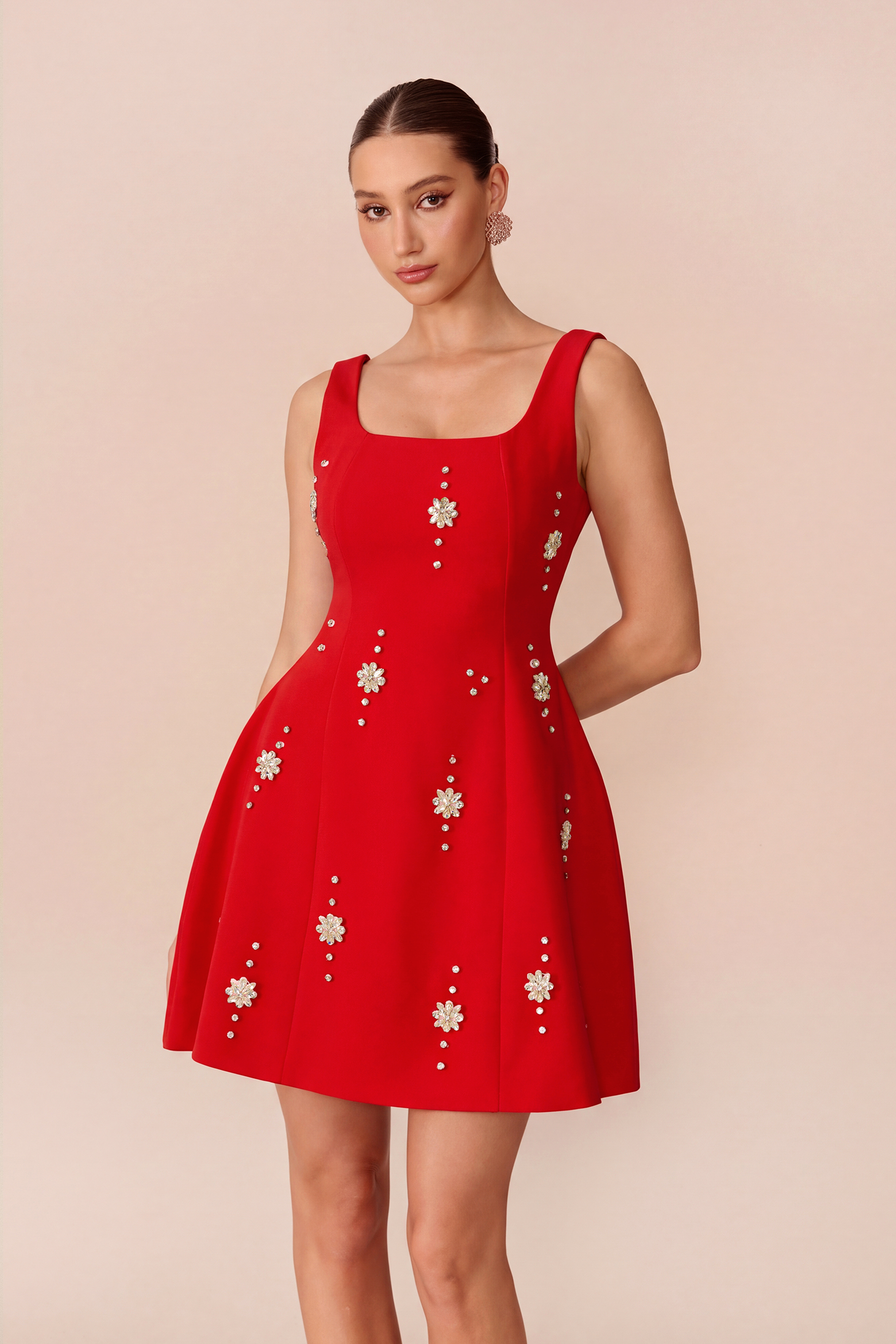
SHOP THE LOOK: Keep It Sweet Square Neck Crystal Embellished Mini Dress
Frequently Asked Questions
Should I size down if square-neck straps keep falling?
Do not size down automatically for falling straps. First determine whether length, placement, or bodice movement is responsible. A smaller size is not a useful solution if it makes the bust or waist uncomfortable.
Can the waist fit while the upper bodice does not?
Yes. Assess the bust, neckline, back, and straps separately instead of using the waist fit as the verdict on the entire dress.
How much should a tailor shorten the straps?
The amount to shorten the straps should come from a fitting of that garment on you. Ask for a temporary demonstration that preserves neckline shape and comfortable arm openings before approving permanent work.
Will wider straps always stay on better?
Wider straps do not automatically stay on better. The Sweet Invitation wide-strap midi dress shows the detail to compare: broad straps attached to a fitted bodice. Check where those straps would sit on your shoulders, not just how wide they look in a photograph. Strap length and attachment position still matter, and the dress needs the same relaxed-posture test as a narrow-strap design.
Should I accept straps that stay put only when I stand straight?
Only if that matches your actual needs, which is unlikely for an active event. Test your relaxed posture and normal reaching before deciding to keep the dress.