

Your Old Bridesmaid Dress, a New Wedding Invitation: Can You Wear It?
Yes, you can rewear a bridesmaid dress as a wedding guest if it suits the new wedding’s dress code, the couple’s requests, and the setting. Having worn it in a bridal party does not make it permanently off-limits to guests. The useful question is whether this particular dress works for this particular invitation.
That distinction matters when you pull a carefully stored gown from the closet. You already own it, but the hem may have been fitted to different shoes, the bodice may feel different now, or the new celebration may be much less formal. Rewearing is a good option when the dress needs a fresh assessment, not a complete rescue.
Think in three possible outcomes: wear it as it is, make a specific adjustment, or choose something else. Start with the invitation before spending money on accessories or booking alterations.
SHOP THE LOOK: Alessia Floral Print Ruffle Cuff Maxi Dress
Does the Dress Fit the New Invitation Before You Change Anything?
Ignore the original bridesmaid label for a moment. Look at the dress as clothing: its length, silhouette, fabric appearance, coverage, and level of decoration. A simple long gown and a heavily embellished gown can have very different effects, even if both were sold as bridesmaid dresses.
Read the invitation and wedding website for an explicit dress code and any ceremony requirements. If the wording is unclear, ask about the expected level of formality. A hotel reception, for example, does not tell you everything you need to know about what the hosts expect.
Use the invitation, time of day, and the couple’s specific instructions together to assess formality. Do not assume a dress qualifies simply because it is floor-length.
Try this question: if you were seeing the dress for the first time today, would you choose it for this wedding? If your answer depends on hiding most of it under a jacket or hoping the event is dressier than described, it may be the wrong starting point.
A plain navy gown might work unchanged for a formal evening celebration. The same gown could feel excessive at a casual daytime gathering, depending on its construction and finish. Shortening it might improve the balance, but it is worth considering only if you would also enjoy the resulting dress afterward.
SHOP THE LOOK: Nina Asymmetry Pleated Halterneck Midi Dress
Check the Dress You Have Now, Not the Dress You Remember
Try it on early enough to leave room for cleaning, a fitting, or another outfit. Fasten it fully, use the undergarments you intend to wear, and put on the actual shoes. An old fitting is useful history, not proof of current comfort.
Recheck the hem with this wedding’s shoes
A dress hemmed for high heels may drag when you switch to lower shoes. Walk forward, turn, and step onto a low stair if you can do so comfortably. Look for fabric catching under your heel or requiring you to hold up the skirt continuously.
Do not buy shoes you dislike simply to preserve the old hem. Decide which footwear makes sense for the venue and your comfort, then ask a tailor whether the dress can work with it.
Test the bodice through a real evening’s movements
Sit in a dining chair, reach forward, lift your arms, and move as you would while greeting people. Notice whether the neckline shifts, straps dig in, the waist feels restrictive, or the zipper strains.
A dress that closes while you stand still can still be uncomfortable through dinner. For broader checks, use the wedding guest fit and care guide, then return to the specific problem your old dress needs to solve.
Look for wear and storage issues
Check the underarms, neckline, hem, lining, closures, and any embellishments in good light. Look for stains, loose threads, missing fasteners, snags, or areas that have changed color. Follow the care label, and ask a cleaner about marks you are unsure how to treat.
Some creasing may be manageable with appropriate care; damage, discoloration, or a distorted lining calls for a closer assessment. Avoid assuming a cleaner can restore every mark or that pressing will correct a fit problem.
SHOP THE LOOK: Just Like Poetry Pink Textured Flare Sleeve Maxi Dress
When Wearing It Without Alterations Makes Sense
Wear the dress unchanged when it already meets the invitation, feels comfortable through movement, and is in good condition. You do not need a new neckline or hem just to prove you are attending in a different role.
Begin with what you already own. Try one pair of appropriate shoes, one bag, and jewelry you would naturally choose now. A bridesmaid outfit often involved coordinated accessories; leaving those behind can make the dress feel more personal without changing its structure.
For example, an unembellished burgundy dress that fits a formal reception may need only shoes suited to the venue and a small evening bag. Adding a belt, statement necklace, different wrap, and elaborate hair accessories all at once can create more decisions without improving suitability.
Keep any layer practical. If you need coverage for the ceremony or warmth between venues, check how the layer sits over the bodice and whether you can remove it comfortably. The dress should still meet the reception’s expectations once the layer comes off.
SHOP THE LOOK: Charming Choice Asymmetric Strapless Top & Floral Applique Skirt Set
When a Specific Alteration Is Worth Exploring
An alteration is worth considering when you can name the problem and describe the result you want. “The hem catches with my planned shoes” gives a tailor something concrete to assess. “Make it look less like a bridesmaid dress” leaves too much unresolved.
Separate fit corrections from a redesign
Ask whether a slipping strap, loose area, or hem-length issue can be addressed within the dress’s construction. A change that appears small from the outside may affect the lining, support, or balance of the garment, so let the tailor inspect it rather than assuming it is straightforward.
Changing a neckline, removing sleeves, or reshaping a structured bodice is a different decision from correcting length. Before agreeing, ask what will change, what cannot be preserved, and whether a fitting is needed before the work is finished.
Decide whether you actually want the shorter version
Do not shorten a gown automatically. Pin or have a tailor mark a proposed length so you can judge the proportions with your shoes. Consider where the skirt widens, whether a slit will remain appropriate, and how any decorative border would be affected.
A gown you like at full length may not become a dress you love at midi length. Browse midi dresses for a reference point if useful, but compare the overall shape rather than assuming cutting off fabric recreates a different design.
Compare the remaining cost and effort
The original purchase is already behind you. For this decision, compare what comes next: cleaning, alterations, any necessary accessories, fitting appointments, and the time available before the wedding.
Ask for a quote and completion date before committing. Bring the shoes and undergarments you intend to wear, and explain which aspects of the dress you want to keep. If the plan involves several uncertain changes, pause before paying for a redesign you may not wear again.
A useful appointment question is: “Can you fix this hem and strap issue while keeping the existing neckline and skirt shape?” That is easier to evaluate than requesting an entirely different dress.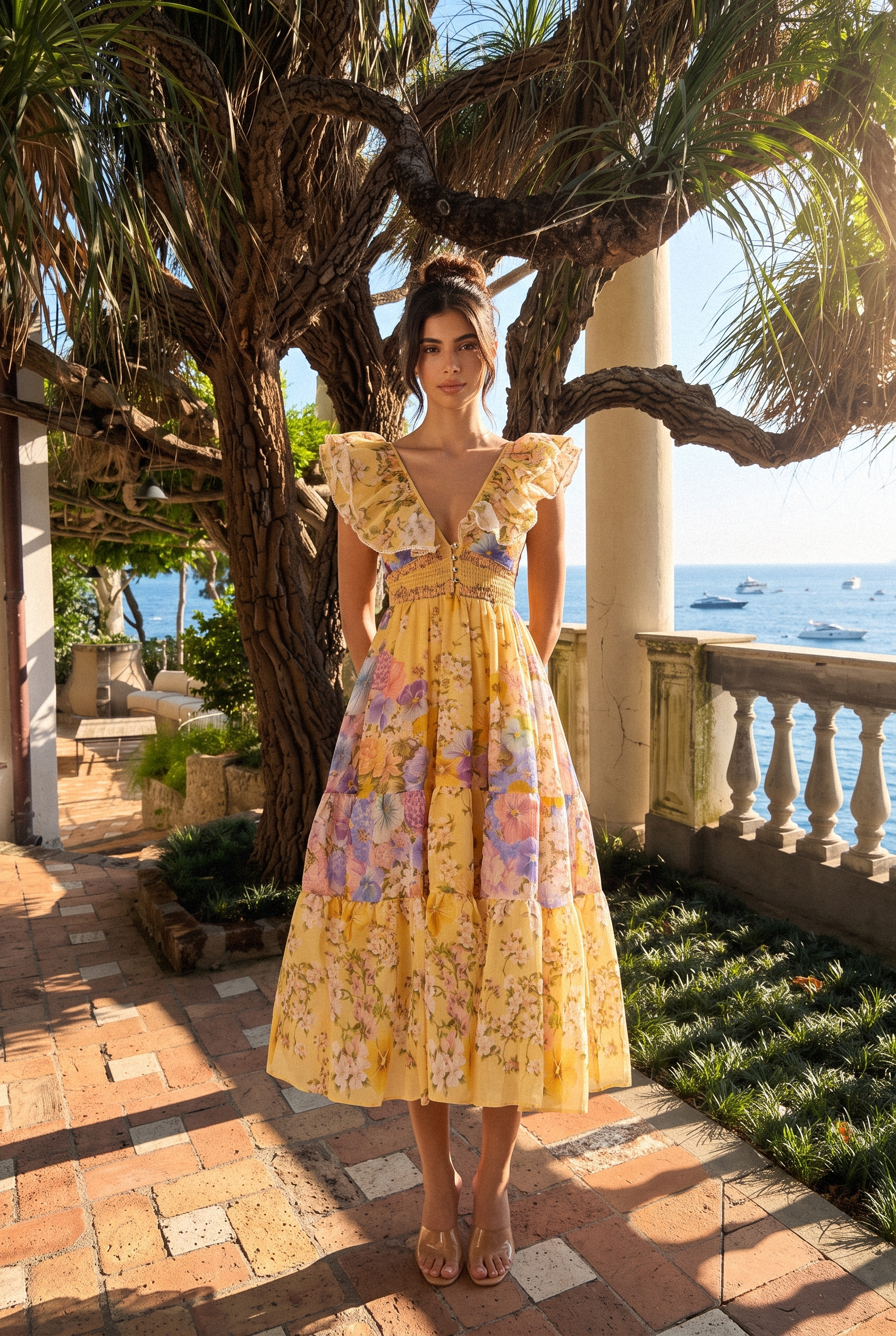
SHOP THE LOOK: Keep The Feeling Yellow Floral V-Neck Ruffled Midi Dress
Check Similarity to the Current Bridal Party Once
There is one separate check: whether your dress closely resembles what this wedding’s attendants will wear. The fact that you wore it as a bridesmaid somewhere else is different from arriving in an outfit that looks coordinated with this bridal party.
If you know the resemblance is close, consult the guide to wearing the same color or fabric as the bridesmaids. It covers that question in detail. Keep this check proportionate; you do not need to turn your entire outfit search into an investigation of every wedding color.
When a genuine concern remains, a photo is more useful than a vague color description. You might ask: “I have this dress from a previous wedding and hoped to wear it as a guest. Does it look too close to the bridal party’s outfits?” Use the couple’s preferred contact or a suitable member of the wedding party, and leave time to act on the answer.
If the invitation reserves a color or look for someone else, follow that request. Shoes and jewelry cannot resolve a direct conflict with the hosts’ instructions.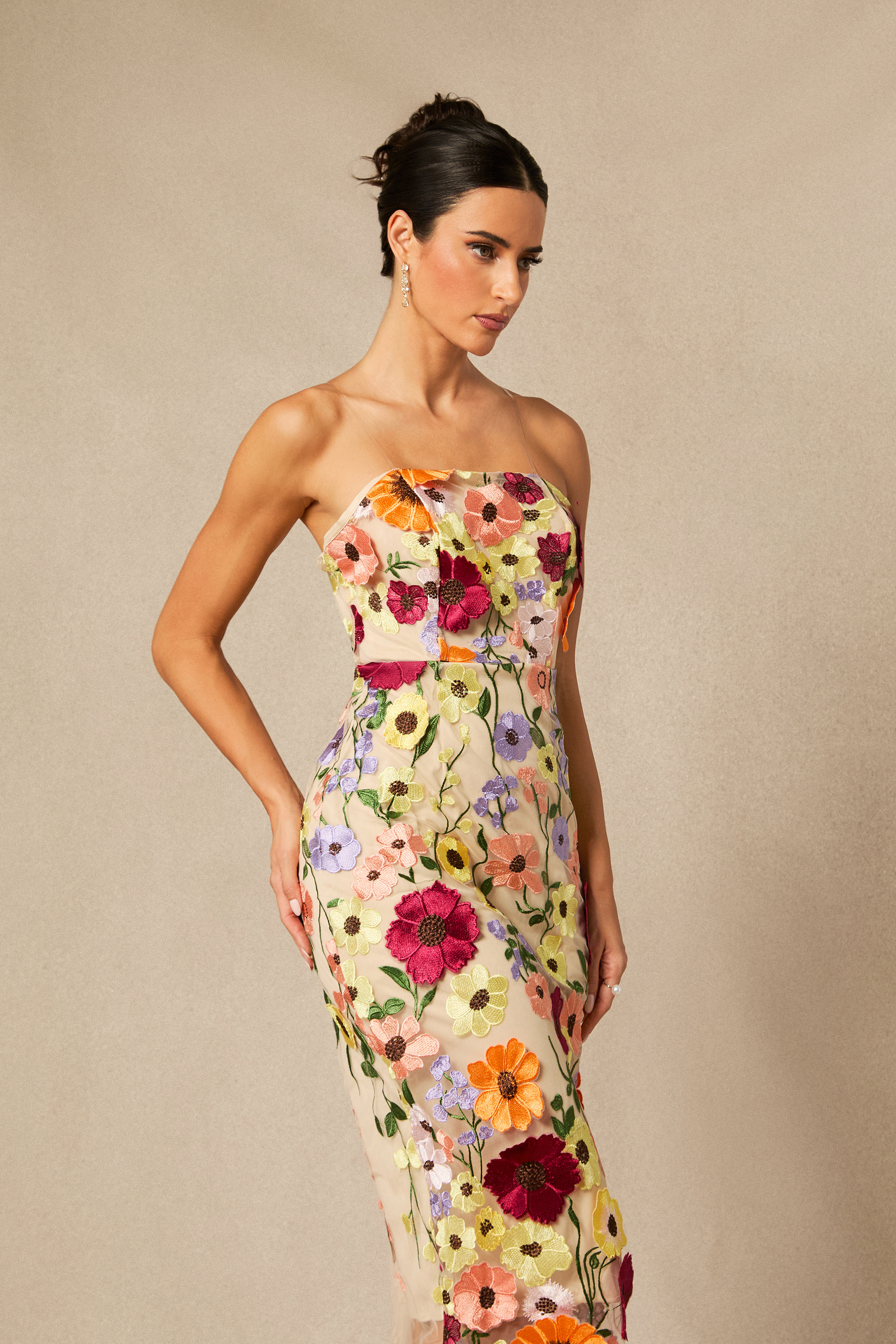
SHOP THE LOOK: Belle Embroidered Floral Strapless Midi Dress
When Choosing Another Dress Is the Better Decision
Choose another outfit when the dress misses the stated formality, cannot be made comfortable within your time frame, or needs repairs or alterations you do not want to fund. Rewearing should help you attend comfortably, not make you manage the dress throughout the celebration.
There is also a personal test: after you try it on, do you want to wear it? You do not have to redesign a dress you never liked simply because it is in your closet. Another outfit you own, a borrowed option, or a suitable rental may solve the problem before you consider buying.
If a replacement would solve the problem more simply than a redesign, compare the total cost with a different construction. The Madeline V-Neck Lace Embroidered Midi Dress, for example, has long sleeves, embroidered lace, and partial lining. For a daytime invitation where those details suit the dress code, compare its actual coverage and fit with the old dress before paying to change the old neckline or sleeves. Partial lining still needs checking against your own coverage preferences.
If you do need a replacement, use what you learned from the old dress to narrow the search. Perhaps you need a hem that works with lower shoes, a bodice that stays secure while seated, or a less elaborate silhouette. Compare wedding guest dresses against those requirements instead of restarting with color alone.
SHOP THE LOOK: Madeline V-Neck Lace Embroidered Midi Dress
Make the Final Decision in the Complete Outfit
Before committing, put everything on together and check the following:
- Invitation: the complete outfit meets the stated dress code and any specific requests.
- Fit: you can sit, walk, reach, and move without repeatedly adjusting the dress.
- Condition: cleaning and any necessary repairs are resolved.
- Practicality: the shoes, hem, coverage, and outer layer work for the actual setting.
- Commitment: any alteration plan has a clear outcome, acceptable cost, and workable completion date.
If those checks pass, your old bridesmaid dress has earned another outing. If one fix will resolve the remaining issue, have that fix assessed. If several parts of the outfit still need explaining away, choose another option.
The aim is a dress that works for the invitation in front of you. Its previous role can remain part of its story without deciding its next one.
FAQs About Rewearing a Bridesmaid Dress as a Wedding Guest
Do I need the original bride’s permission to rewear my bridesmaid dress?
If you own the dress, you generally do not need the original bride’s permission to wear it again. If it was borrowed or given to you with an agreement to return it, clarify that arrangement before wearing or altering it.
Can I rewear the dress if the original bride will be at the new wedding?
Yes, the original bride’s presence does not by itself make the dress inappropriate. You do not need to disguise where you first wore it; assess it against the new wedding’s requirements.
Should I remove a matching sash or detachable flower before rewearing the dress?
You can leave off an optional accessory if you prefer the dress without it and it has no structural purpose. Check that removing it does not expose attachment points or affect how the dress stays in place; have sewn-in details assessed before cutting anything.
