

Your Wedding Invitation Includes a Color Palette: How Closely Should Your Dress Match?
Your invitation includes sage, dusty blue, and champagne swatches, but your dress is not an exact match. Do you need another outfit?
Usually, no. First check whether the palette is inspiration or a guest attire request. A broad color family leaves room for shade differences; an explicit exact-match request needs a closer check. Formality, fit, and your budget still matter.
SHOP THE LOOK: Catching Light Yellow Draped Cape Ruched Maxi Dress
Is the Palette a Request, a Requirement, or Just Inspiration?
| What the hosts say | How to interpret it | What to do |
|---|---|---|
| “Our wedding colors are sage and champagne.” | Event palette; not automatically guest attire. | Check whether clothing is mentioned. |
| “Earth tones are encouraged.” | A preference with room for interpretation. | Try an existing outfit in that family. |
| “Please wear shades of green.” | A stated guest color request. | Choose a dress that clearly reads green. |
| “Please match this sage swatch.” | A precise reference is requested. | Compare closely; ask if unclear or impractical. |
| “Colors are optional; wear what you own.” | The palette is inspiration. | Choose suitable attire; no new purchase is implied. |
Broad color families leave room within the stated range
If the invitation says “please wear blue or green,” you have more latitude than an instruction specifying “pale dusty blue or sage.” Even then, check for additional limits such as no dark colors, no neon, solids only, or particular colors reserved for the wedding party.
Start with a dress you already own within the requested range, then check formality and comfort before deciding to shop.
Named shades and exact swatches call for a closer check
Names such as sage, dusty rose, and muted lavender describe a narrower range than green, pink, and purple.
A named shade does not automatically require an exact swatch match. When the hosts explicitly ask for precision, check which reference to use and explain any fit or budget constraint.
An inspiration board needs context
A mood board can communicate several things at once: color, formality, texture, and the overall atmosphere. A collage of evening gowns may help explain the intended level of dress, while labeled swatches identify a color range. Flowers, landscapes, and table linens are visual context, not necessarily additional approved clothing colors. Read the caption to see whether the board is offered as inspiration or as a specific guest attire reference.
If the image appears only in a general wedding design section, do not treat it as a guest dress code without further direction. For broader questions when no guest palette is requested, the wedding guest color rules guide covers a different decision.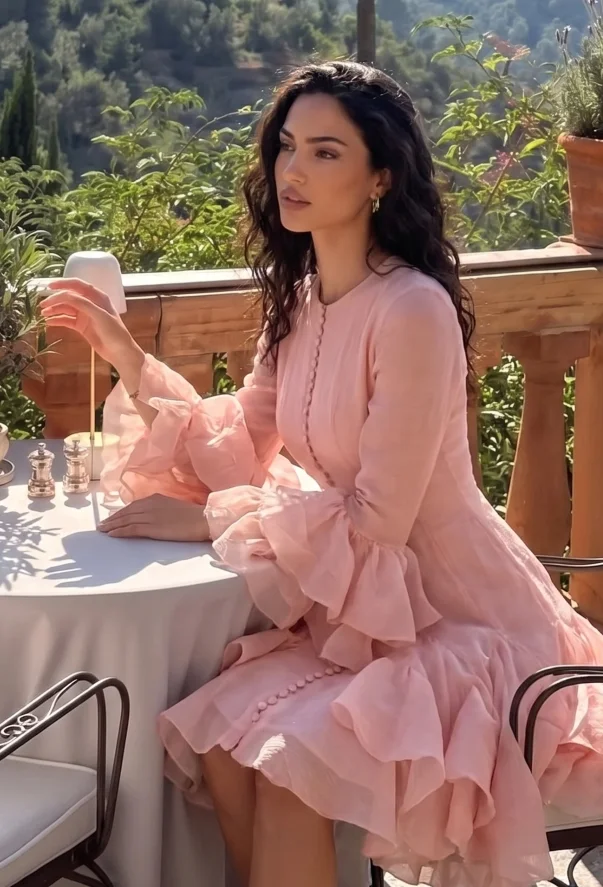
SHOP THE LOOK: Gloria Long Sleeve Flared Hem Midi Dress
How Close Is Close Enough for a Similar Shade?
Compare the dress with the requested palette on three dimensions:
- Color family: does the dress read as the requested color, or as a neighboring one? Teal may read more blue-green than the green the couple intended.
- Depth: is it similarly light or dark? Pale blue and navy share a family but have very different overall effects.
- Intensity: is it muted or vivid? Dusty rose and bright fuchsia can both be called pink while looking far apart in a coordinated group.
Together, these checks distinguish a small shade variation from a noticeably different overall color.
Example: Sage Green Versus Bright Lime
For a sage request, a slightly different muted green is a closer candidate than bright lime. If the invitation simply asks for green, both may fit unless other limits are stated. A deep jewel tone, however, will not create the same effect as a pastel palette.
Do not use a retailer’s color label as the deciding evidence. Names such as champagne, rose, wine, and sea green are descriptive labels, not shared standards across brands. Judge the actual garment images, available swatches, and the dress in person when possible.
SHOP THE LOOK: Twilight Whispers Green Draped Cape Sleeve Knit Maxi Dress
Does Your Dress Need to Match Every Color in the Palette?
For an ordinary palette offering several guest colors, choosing one listed color is a sensible starting point. You do not need a dress containing every swatch. Check for any special instruction to combine colors, wear a particular pattern, or use one shade for the dress and another for accessories.
Example: One Palette Color Is Enough
For example, if guests are invited to choose sage, dusty blue, or muted pink, a suitable dress in just one of those colors can answer the request. Navy may coordinate attractively with those shades, but coordination alone does not make it part of the requested palette. Consider an outside color only when the palette is optional or the hosts have confirmed broader choices.
SHOP THE LOOK: Vibes On Point Mint Green Abstract Print Tiered Ruffle Maxi Dress
Can a Floral or Multicolored Dress Count?
A printed dress can meet a palette request if prints are allowed and its overall appearance fits the requested colors. One small flower in the correct shade does not automatically make an otherwise off-palette dress suitable.
Check these three things before choosing a print:
- Background: does the dress read mainly as a requested color, or as an unrelated shade?
- Pattern scale: tiny matching flowers do not outweigh a large off-palette background.
- Instructions: follow “solids only”; when prints are welcome, assess the whole garment. Ask only if it is genuinely borderline.
Example: A Solid-Color Request
Suppose the instructions say “choose a solid dress in one of these three shades.” A solid dress in an approved shade answers that request more directly than a floral dress containing small amounts of all three. The outfit’s relationship to the instruction matters more than how many swatches you can identify in it.
If the print is borderline, send a full-length image showing the whole pattern. A close-up of one matching flower can give a misleading impression.
Once you know prints are welcome, the floral wedding guest dress guide can help with the separate question of formality and styling. Keep palette approval and occasion suitability as two distinct checks.
SHOP THE LOOK: Sarah Butterfly Print Ruffle Chiffon Maxi Dress
What If the Written Colors and Inspiration Pictures Disagree?
Do not silently decide which version the couple meant. A board labeled “pastels” might contain a dress that looks saturated on your screen. Written guidance may say “earth tones” while a photograph includes a strong blue accent. The image could illustrate silhouette or atmosphere rather than an additional permitted color.
Check whether the image has a caption, whether it belongs to the correct event, and whether a more recent instruction explains the difference. If there is a genuine conflict, quote the wording and ask about one specific option.
Example: A Berry Dress on a Pastel Mood Board
For example: “The website says muted pink and lavender, but the outfit board includes a darker berry dress. Would a berry dress like this be within the palette, or should I stay with the lighter swatches?”
This gives the hosts a clear decision to make. “What can I wear?” asks them to restart your search, while “Which instruction should I follow for this dress?” identifies the uncertainty.
SHOP THE LOOK: Just Like Poetry Pink Textured Flare Sleeve Maxi Dress
What If the Palette Includes Cream or Pale Colors but Says No White?
Do not treat an unlabeled pale swatch as automatic permission to wear cream, ivory, or a dress that looks white overall. A light area on a mood board could represent decor, a neutral accent, or a color that looks different on another screen.
If the written instructions explicitly allow a named pale shade while also saying no white, ask where the hosts want that boundary. Send the specific dress rather than asking only whether “champagne” is acceptable, since garments using that name can look quite different.
Example: Cream Swatches With a “No White” Rule
A concise message is: “The palette includes a pale cream shade, and the website also says no white. Is this dress an approved guest option, or would you prefer that I choose one of the darker colors?”
When another clearly permitted color works for you, choosing it can avoid the uncertainty. If the couple explicitly requests all-white guest attire, follow that event-specific instruction. An ambiguous pale swatch is a different situation from a clear all-white request.
SHOP THE LOOK: Don't Look Away Beige Lace Trim One Shoulder Top & Skirt Set
Check the Real Dress Before Committing to the Color
A screen comparison is a useful starting point, but screens and photographs can show the same garment differently. Fabric sheen, folds, and lighting can also change its apparent depth. A shiny dress may have bright highlights and dark folds that a flat digital swatch does not show.
If you already have the dress
- Check it in indirect daylight and typical indoor light, without a filter.
- Look at the whole garment as well as a close detail; sheen and folds can change its apparent depth.
If you are ordering online
- Compare all available views and ask the retailer about significant color inconsistencies.
- Check current delivery and return terms, leaving time for another option if needed.
If an exact match is explicitly required
Ask whether there is a physical swatch or an approved example. A phone photo cannot certify an identical color.
SHOP THE LOOK: Sweet Daydream Floral Trim Satin Maxi Dress
Check Formality, Bridal Party Colors, and Accessories
Once the color looks right, check how the whole outfit fits the occasion. These three details can affect your choice even when the shade works:
- Formality: choose wedding guest dresses that suit the occasion as well as the palette. An exact-color sundress can still miss a black-tie dress code.
- Bridal party: if guests are invited to wear the bridesmaids’ colors, those shades are not automatically off-limits. For a near-identical outfit, see the guide to matching the bridesmaids.
- Accessories: a color accent can acknowledge an optional theme, but it cannot replace a specifically requested dress color. Shoes and bags need not match unless stated.
If those details work together, you can keep the styling simple. A suitable dress does not need every accessory to repeat the palette.
SHOP THE LOOK: Extraordinary Charm One Shoulder Floral Applique Pleated Maxi Dress
Ask One Clear Question Before You Spend
Ask only when there is a meaningful uncertainty or practical constraint. Use the designated contact and send one or two realistic options with a full-length image and the relevant wording.
For a neighboring shade
“I already own this muted blue dress. Does it fit your dusty blue palette, or are you hoping for a closer match to the swatch?”
For a print
“Are printed dresses welcome within the palette? This one has a sage background with pink flowers; I have attached a full-length image.”
For a budget or fit constraint
“I already own this dress, but I am struggling to find a closer shade in a suitable fit within my budget. Would this work, or is there a broader color range I could use?”
You do not need to disclose personal details. Before buying again, consider an existing option, borrowing, or renting, while checking fit and timing.
If no reply arrives, use the clearest available attire instructions. Choose within a broad palette without waiting for approval. If your dress clearly departs from an explicit request, seek a closer practical option or communicate the limitation; silence does not confirm an exception.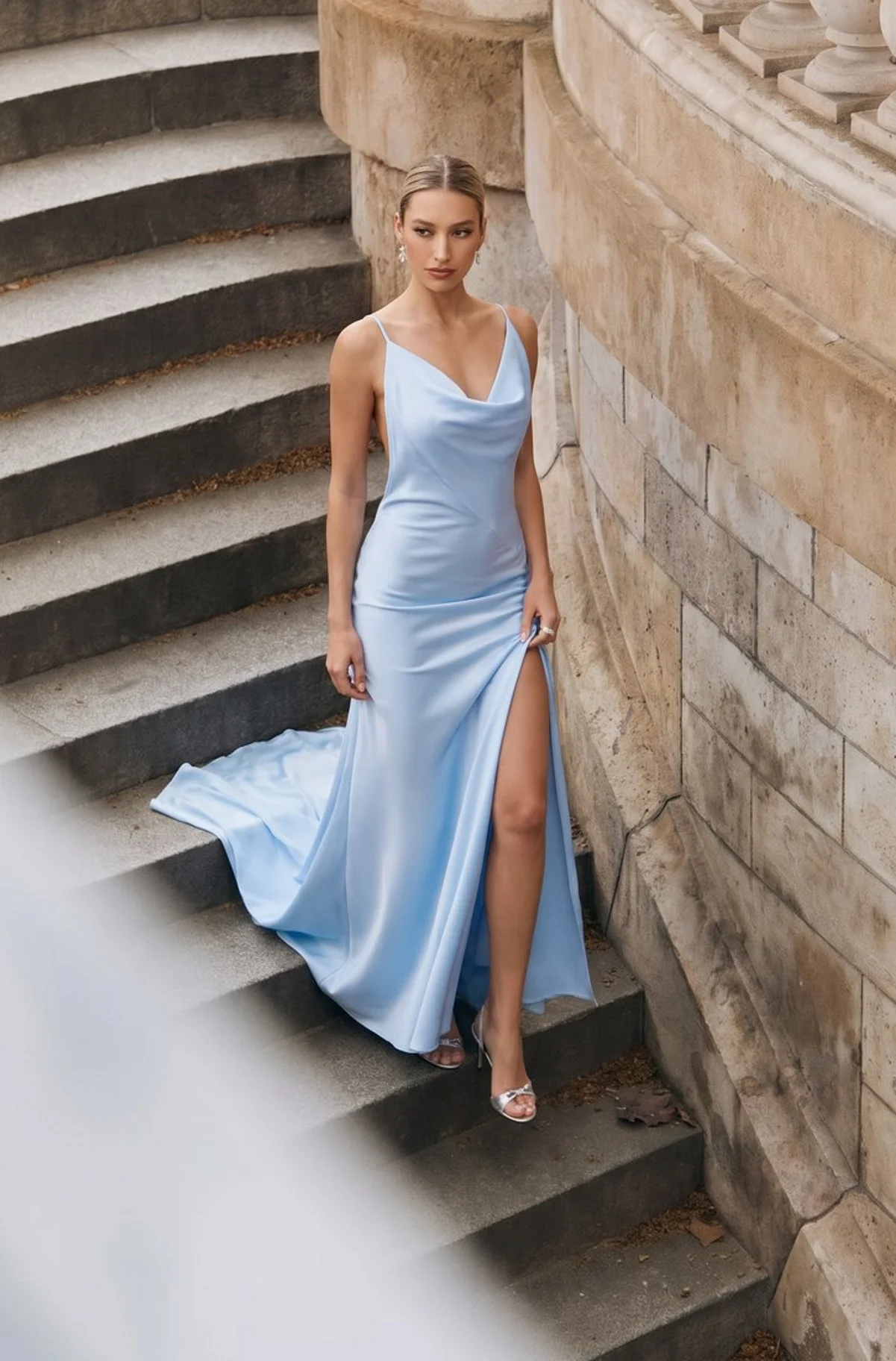
SHOP THE LOOK: Simply Stunning Blue Cowl Neck High Slit Satin Maxi Dress
Choose the Clearest Match, Then Stop Rechecking
You can stop rechecking when:
- The dress clearly fits the stated color direction, or the hosts have confirmed an exception.
- Its formality, coverage, and fit work for the event.
- No unresolved instruction, such as “solids only,” conflicts with your choice.
Once your dress reasonably follows the stated color direction, suits the event, and fits comfortably, stop comparing tiny differences between screenshots. Coordinated dressing is a shared visual idea, not proof of how much a guest cares about the couple. Taking the request seriously does not require treating a slight fabric or lighting difference as a personal failure. If a genuinely narrow request is impractical for you, explain that limitation early and seek a workable option rather than feeling obliged to spend beyond your means. 
SHOP THE LOOK: A Little Mystery Sequin Embellished Corset Maxi Dress
FAQs About Wedding Guest Color Palettes
Does the wedding-day palette also apply to the welcome dinner or brunch?
Only if the hosts say it applies to those events too. Check each invitation or event listing separately, since a wedding weekend can have different clothing instructions for each gathering.
Does my partner need to match my dress within the requested palette?
You do not need to match each other unless the hosts request coordinated couples’ outfits. Each person should follow the instructions that apply to their clothing, including any separate guidance for suits, shirts, or accessories.
What if the couple changes the palette after I have bought my dress?
Contact the designated person promptly, explain that you purchased the dress using the earlier guidance, and share a picture. Ask whether it remains acceptable before paying for another outfit or arranging alterations.