

Why Do Statement Earrings Catch on a High-Neck Dress?
Statement earrings can catch on a high-neck dress when their drops, connecting links, settings, or backs come into contact with the collar as you move. The cause may be the earring’s length and movement, a projecting detail on the neckline, or a rough or damaged jewelry component.
Start by identifying exactly where the contact occurs. If the bottom of the earring reaches the collar when you turn, try a shorter or less mobile design. If the back catches behind your ear, changing the drop length may not solve it. If a setting looks raised or damaged, stop wearing that piece until it has been assessed.
You do not necessarily need a different dress or tiny earrings. You need a combination that leaves enough space for ordinary movement.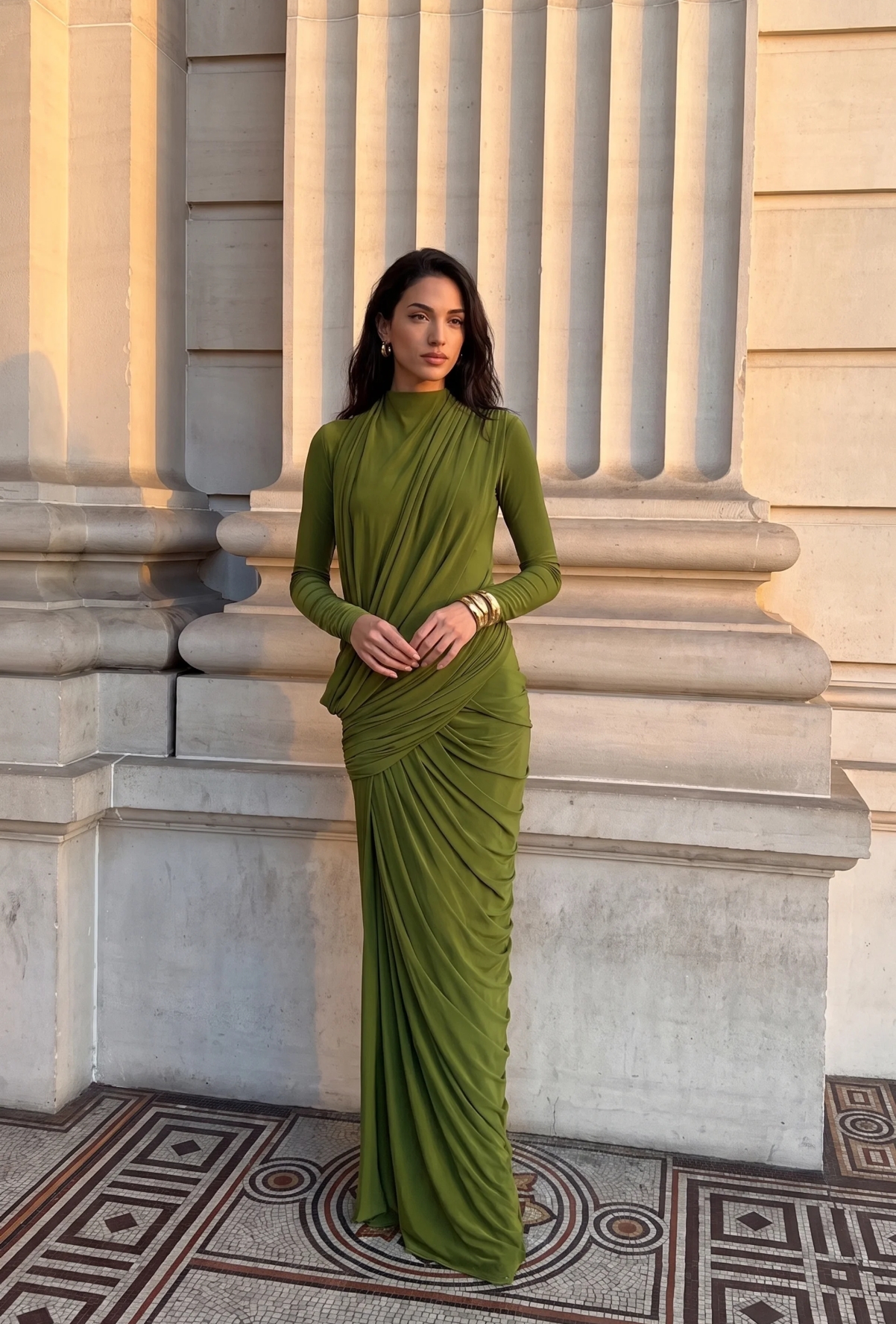
SHOP THE LOOK: Swan Song High Neck Asymmetric Drape Maxi Dress
Find the Contact Point Before Changing Your Outfit
A pair of earrings can look clear of the neckline in a front-facing mirror and still touch it when you look down or turn toward someone.
Check both sides separately. A side bow, raised appliqué, or asymmetric collar can make one side behave differently from the other.
| Where the earring catches | What to investigate | What to try first |
|---|---|---|
| The lowest drop touches the collar | Overall length and the drop’s path as it swings | A shorter design that stays clear during movement |
| A side branch or connecting link catches | Width, projecting details, or open connections | A simpler outline with fewer moving parts |
| The back catches behind the ear | Earring back, exposed post, or the back of the collar | Check positioning and fit; replace or assess unsuitable hardware |
| A stone setting catches repeatedly | A raised, rough, or damaged setting | Set the piece aside and ask a jeweler to inspect it |
| Contact happens only with outerwear | Coat collar, scarf, wrap, or the way it moves | Check the outer layer separately |
| Hair becomes tangled near the neckline | Hair, earring movement, and collar contact together | Move hair aside, then reassess the earrings and dress |
This is a practical way to narrow the problem, not a reason to deliberately drag jewelry across delicate fabric.
If something has already caught, release it before continuing the assessment.
SHOP THE LOOK: Timeless Moments Beige High Neck Lace Overlay Maxi Dress
Is the Earring Too Long, or Does It Move Too Much?
Length is the easiest feature to notice, but it is not the only one that matters.
A long, narrow drop may hang away from a low collar in one outfit. A shorter, wider earring may reach a raised neckline when you turn. Multiple linked sections can also move differently from a single-piece design.
The useful measurement is the clearance between the actual earrings and the dress while you are wearing both.
Check movement, not just the resting position
Look straight ahead, then slowly turn left and right. Look down as though you are reading a place card, and sit as you would at dinner.
Watch where the lowest and widest parts of the earrings travel. Do they brush the collar, pass behind it, or meet a decorative edge?
Stop if you feel resistance. Repeatedly recreating the snag can damage the garment or jewelry.
There is no universal ideal drop length
A fixed rule such as “keep earrings under two inches” cannot account for differences in neck length, ear position, collar height, shoulder shape, or earring construction.
Use listed dimensions to build a shortlist, then assess the complete combination. An earring that works with one high-neck dress may not work with another.
When browsing statement earrings, compare width, outline, and the number of articulated sections alongside length. A large visual effect does not have to come from a long drop.
SHOP THE LOOK: Wing Shaped Crystal Cluster Earrings
When a Shorter Earring Will Not Solve the Problem
If the snag is behind your ear, focus there before changing the decorative front.
A collar can sit close to an earring back or exposed post. Hair may also become involved, making it difficult to tell which part first caught.
Move your hair away and inspect the back with a second mirror or help from someone else. Check whether the earring is seated correctly and whether the back is secure and appropriate for the piece.
Do not force a different backing onto an incompatible post or tighten it uncomfortably against your ear. If the hardware is bent, loose, or difficult to fasten, set the earrings aside and seek advice from the retailer or a jeweler.
A shorter front cannot compensate for a problem at the back.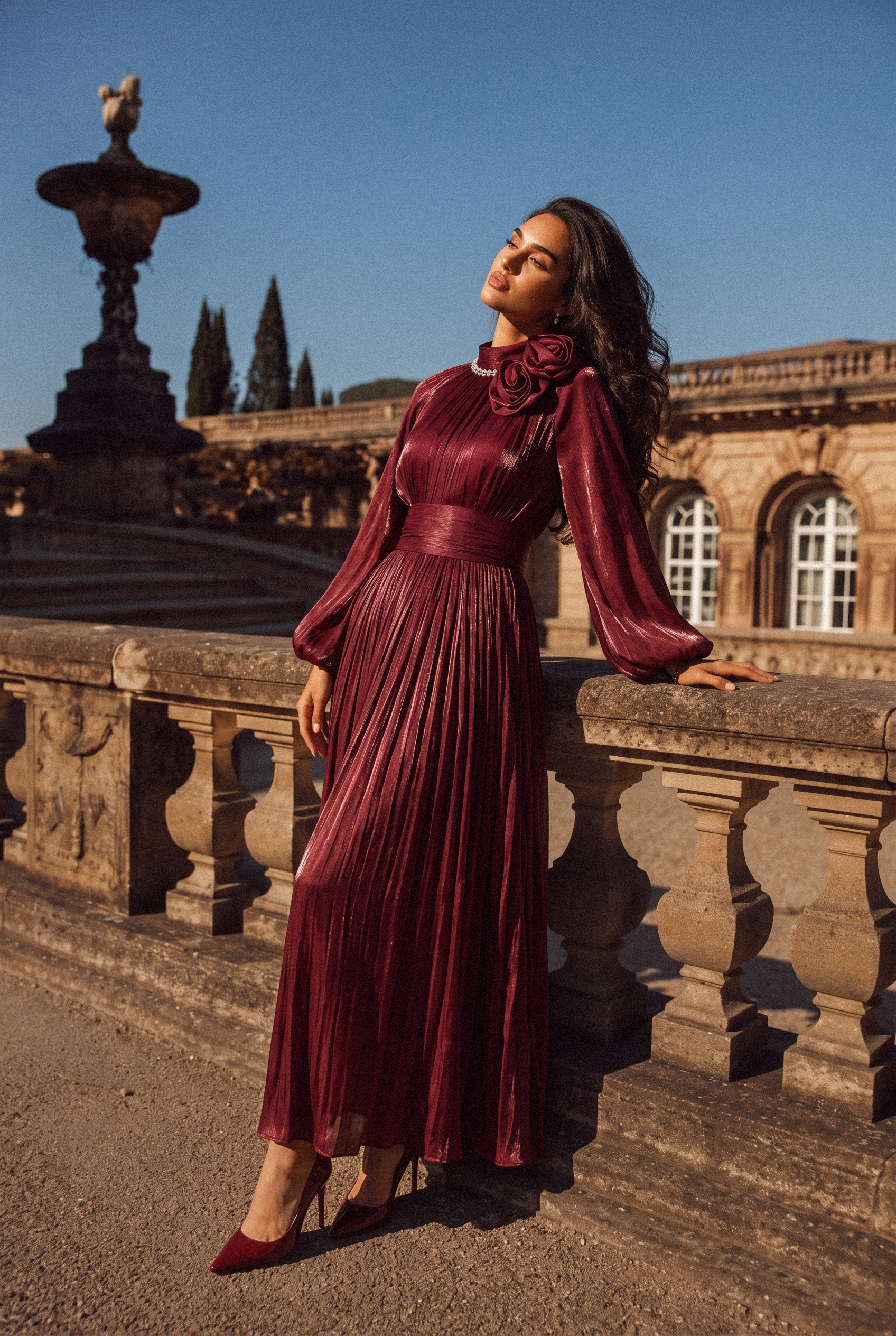
SHOP THE LOOK: Beautiful Night Burgundy Pearl Collared Pleated Maxi Dress
Could a Rough Setting Be Causing the Snag?
Yes. Repeated catching at the same small point can indicate a jewelry issue rather than an unsuitable neckline.
Inspect the earrings under good light. Look for an obviously raised setting, bent component, loose stone, or connection that appears open. Do not test suspected damage by pulling it through the dress.
Jewelry workmanship guidance identifies raised prong edges as a snagging risk, and professional repair guidance emphasizes settings that do not catch clothing.
That does not mean every earring with a textured surface is defective. Decorative shape and damage are different issues. The important question is whether a component is catching unexpectedly or appears out of position.
If you suspect a problem, avoid bending, filing, or coating the setting yourself. A jeweler can assess whether it needs adjustment or repair.
SHOP THE LOOK: Love In Full Rhinestone Embellished Lace Maxi Dress
What About Lace, Beads, and Raised Collar Details?
A plain mock neck and a high lace collar do not present the same surface to an earring.
Look at the parts nearest the jewelry:
- Open lace or mesh.
- Raised embroidery.
- Beads and sequins.
- Ruffles or folded collar edges.
- Bows, loops, and three-dimensional appliqués.
These are contact points to inspect, not a list of details you must avoid.
If an earring swings into a raised collar decoration, a shorter or less mobile option may preserve the dress exactly as it is. If the earring clears the collar but reaches the shoulder, check decoration there too.
Avoid flattening, pinning, or removing a design feature simply to accommodate one pair of earrings before considering an easier jewelry change.
For broader styling questions, the wedding guest accessories guide covers balancing jewelry with the outfit. Here, the priority is physical clearance rather than whether the pieces look visually coordinated.
SHOP THE LOOK: Multi-Layer Floral C-Shaped Earrings
How Can You Keep a Statement Look Without Long Drops?
If you love the impact of statement earrings, shortening the design does not have to mean losing the look.
Consider where you want the visual emphasis:
| The effect you want | A design direction to compare | What still needs checking |
|---|---|---|
| Sparkle near the face | A compact cluster or embellished stud | Projecting settings and the earring back |
| A bold shape | A shorter sculptural design | Width and contact when turning |
| A rounded outline | A compact hoop with a secure closure | Whether its lower edge reaches the collar |
| Some movement | A short drop with fewer linked sections | Its full swing during ordinary movement |
| A quieter finish beside an ornate collar | A simple stud or small-scale design | Comfort, fastening, and clearance |
These are alternatives to try, not guarantees against snagging.
A small earring can still have a rough setting. A smooth-looking design can still touch the dress. Assess each piece rather than relying on the category name.
The earring collection can help you compare shapes, but product photographs alone cannot confirm how an earring will sit against your neckline.

SHOP THE LOOK: Intertwined Loop Pearl Drop Earrings
Check the Coat and Scarf Separately
Sometimes the dress is not the source of the problem.
If your earrings remain clear indoors but catch during arrival or departure, inspect the coat collar, scarf, or wrap. A raised outer layer can move behind the ear or push another fabric into the jewelry’s path.
Try the layers individually so you can identify the contact point. Avoid wrapping a scarf directly around dangling earrings.
If putting on outerwear repeatedly creates contact, remove the earrings first and fasten them again once the layer is settled. Allow enough time to do this carefully rather than pulling fabric past the jewelry.
For travel, keep earrings and other accessories separate from delicate garments. The guide to packing satin, pleated, and embellished dresses explains how to prevent unnecessary contact during transport.
SHOP THE LOOK: Lavish Looks White Embellished Jacket & Bow Tie Pleated Dress Set
A Gentle Movement Check Before the Event
Once you have chosen a combination with no obvious hardware problems, check it in the outfit you will actually wear.
Put on the dress before the earrings
Fasten the dress and let the collar settle into its normal position. Arrange your hair as planned, then add the earrings.
This avoids pulling a high neckline over jewelry already in place.
Observe a few normal movements
Slowly turn your head, look down, and sit. If the event involves dancing, add a few gentle movements that reflect how you expect to move.
You are checking for contact, not trying to prove the outfit can withstand force. Stop at the first sign of catching.
Include the outer layer
Add your coat or wrap and check it separately. If the earrings only work without the outerwear, decide whether removing and replacing them is practical for your evening.
Change one feature at a time
If the first pair touches the collar, try a shorter or less mobile pair before changing the dress, hairstyle, and coat together.
Changing one element makes the result easier to understand. You can identify which adjustment solves the problem rather than hoping the new combination works.
SHOP THE LOOK: Twilight Whispers Green Draped Cape Sleeve Knit Maxi Dress
What Should You Do If an Earring Is Already Caught?
Stop moving and support the fabric so it is not pulling on your ear.
Do not tug the earring away or pull the collar downward. Use a mirror, or ask someone to help you see the connection. If the fastening is accessible and can be opened without adding tension, removing the earring may make it easier to separate the pieces.
If you cannot see how they are connected, or releasing them requires force, get assistance rather than continuing to pull.
After separation, inspect both items. Set aside jewelry with a loose stone, bent component, or damaged fastening. Avoid cutting a pulled fabric loop or trimming decoration as an immediate fix; a garment professional can advise on an appropriate repair.
SHOP THE LOOK: Retro Reverie Lace Bodice Polka Dot Tulle Maxi Dress
Change the Cause, Not the Whole Outfit
The most useful solution depends on where the snag starts.
If the drop reaches the collar, compare shorter earrings. If linked sections swing into the neckline, try less movement. If the back catches, inspect the fastening and the rear collar. If a setting appears damaged, have the jewelry assessed.
You should not need to keep your head unusually still to wear the combination comfortably. Choose earrings that allow you to turn, talk, and enjoy the evening without repeatedly checking the neckline.
The goal is to keep the statement you like while removing the contact that causes the problem.
SHOP THE LOOK: Diana Crystal Embellished Cape Sleeve Maxi Dress
FAQs About Earrings Catching on High-Neck Dresses
Are lightweight earrings less likely to catch on a high neckline?
Not necessarily. Lightweight earrings can still swing into the collar or have projecting details that catch the fabric. Compare their shape, movement, and clearance rather than choosing by weight alone.
Can wearing my hair up prevent earrings from snagging?
Wearing your hair up may help if hair is becoming tangled around the earrings, but it will not fix direct contact between the jewelry and collar. Move your hair away first, then check whether the earrings still touch the neckline as you turn.
Can I wear different earrings with an asymmetric high neckline?
Yes, an intentionally mismatched pair can work if you like the look. A shorter design beside a raised bow or collar detail may provide more clearance, but check both sides during movement before the event.