

How to Pack Satin, Pleated and Embellished Dresses
Pack a special-occasion dress according to its own care instructions and construction, then protect it from unnecessary pressure, friction, and movement in the bag. Do not use one folding method for every garment. A smooth dress from a satin dress collection, a skirt with defined pleats, and a heavily decorated evening dress can present different handling questions even when all three look easy to fold.
Begin with the label and any garment-specific advice from the maker. If the dress has a delicate finish, complex pleating, or substantial embellishment and you are unsure how to transport it, ask a suitable garment-care professional before packing. The steps below are a planning method, not a guarantee that every dress will arrive without a crease.
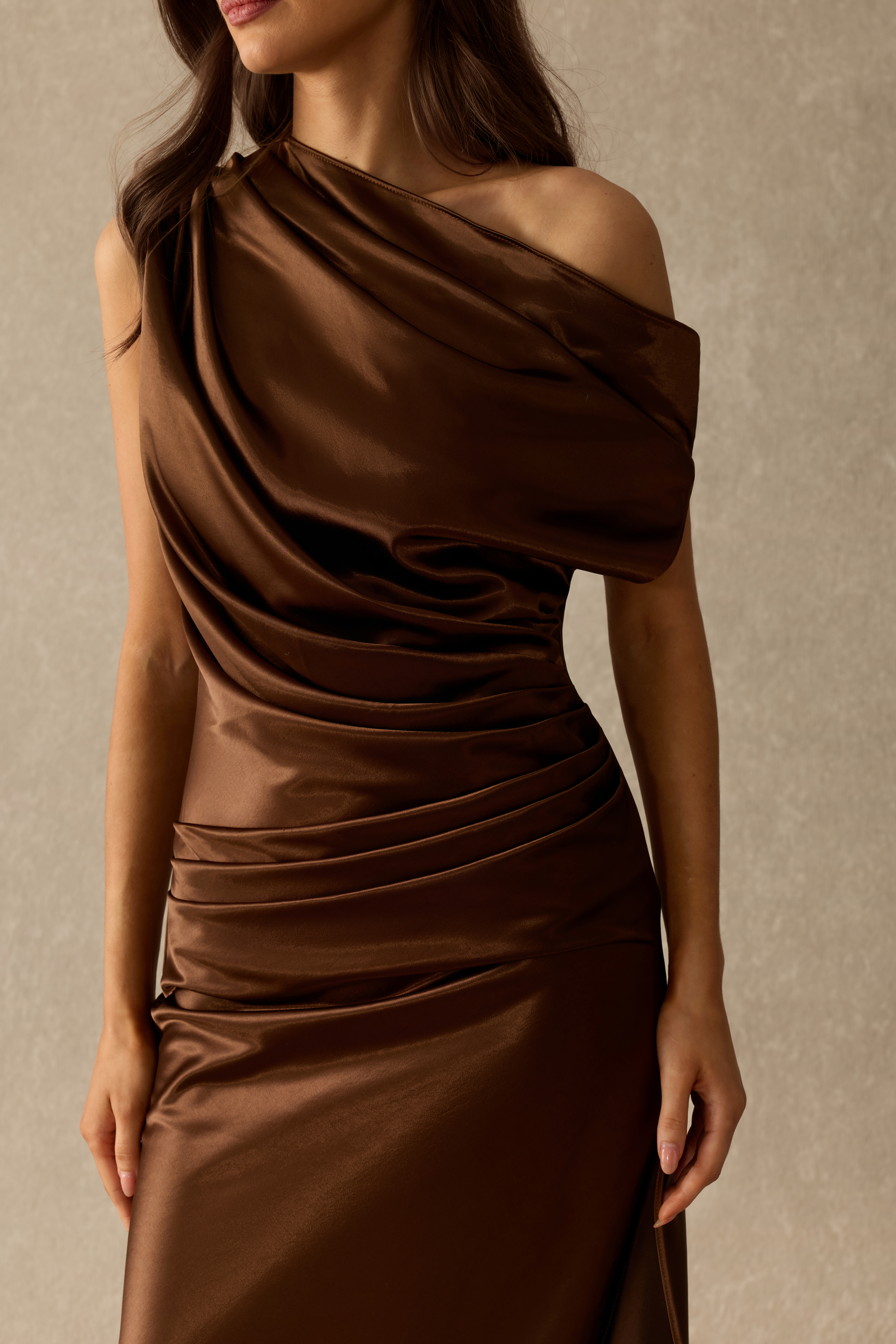
SHOP THE LOOK: Under Your Spell One Shoulder Ruched Satin Maxi Dress
How to pack dresses: identify the problem before choosing a method
Lay the dress on a clean surface with enough room to see its shape. Read the care label and look at the parts you need to protect: the bodice, skirt, sleeves, pleats, decorative details, and closures. Note any instructions about ironing, steaming, washing, or professional cleaning.
The FTC's care-label guidance explains that garment instructions include appropriate care procedures and relevant warnings. Use those instructions as the starting point for preparation and arrival care; a travel tip does not override a warning on the actual dress. FTC care-label guidance.
Decide what your luggage can realistically accommodate. A garment bag may be an option for one journey and impractical for another. A suitcase may have room for a broad, supported fold or may already be crowded. Solve the space question before forcing a delicate dress into the remaining gap.
Also plan the time between arrival and wearing. If you have only a short interval, choose a dress and transport arrangement that you can manage without unconfirmed equipment or services. Packing and arrival preparation are parts of the same decision.
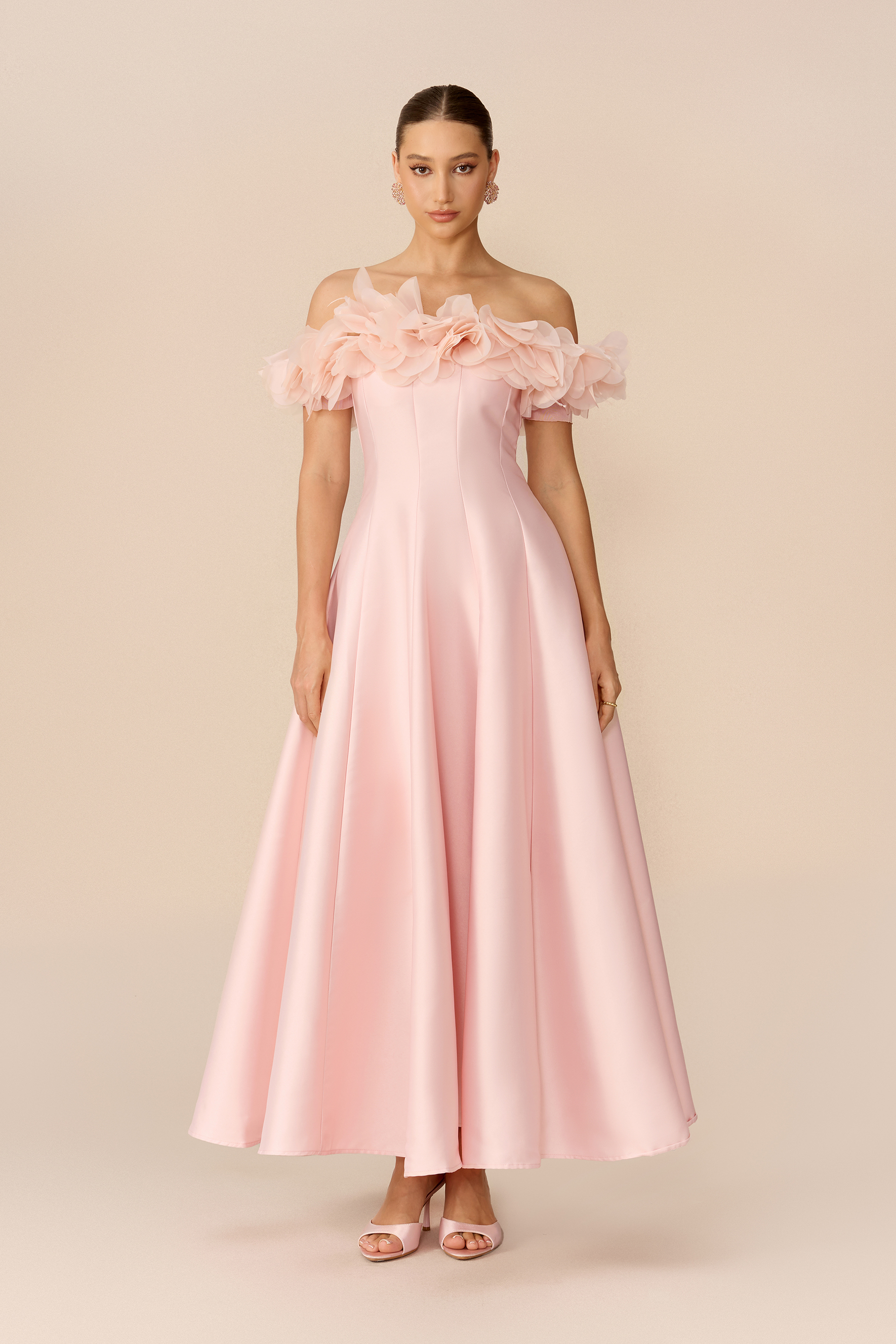
SHOP THE LOOK: Sweet Daydream Pink Floral Trim Satin Maxi Dress
Prepare the dress before it goes into luggage
Check that the dress is ready to pack according to its care needs. Address existing stains or required cleaning before travel using an appropriate method. Do not pack a garment with unresolved care issues and assume they will be easier to handle at the destination.
Inspect closures, seams, and decoration. If a bead, hook, or thread is loose, arrange an appropriate repair before the trip. Transport is not the moment to discover that an important closure is unreliable or that a decorative section needs attention.
Remove detachable accessories when the garment's instructions allow it and pack them separately in a way that protects both the accessory and the dress. Keep a note of what belongs with the outfit. Do not remove attached elements simply because they look removable.
Prepare a clean separation between the dress and other luggage contents. Keep shoes, liquids, cosmetics, and jewelry away from direct contact with the garment. Use packing materials appropriate for the piece, and avoid any material that could transfer color or catch on its surface.
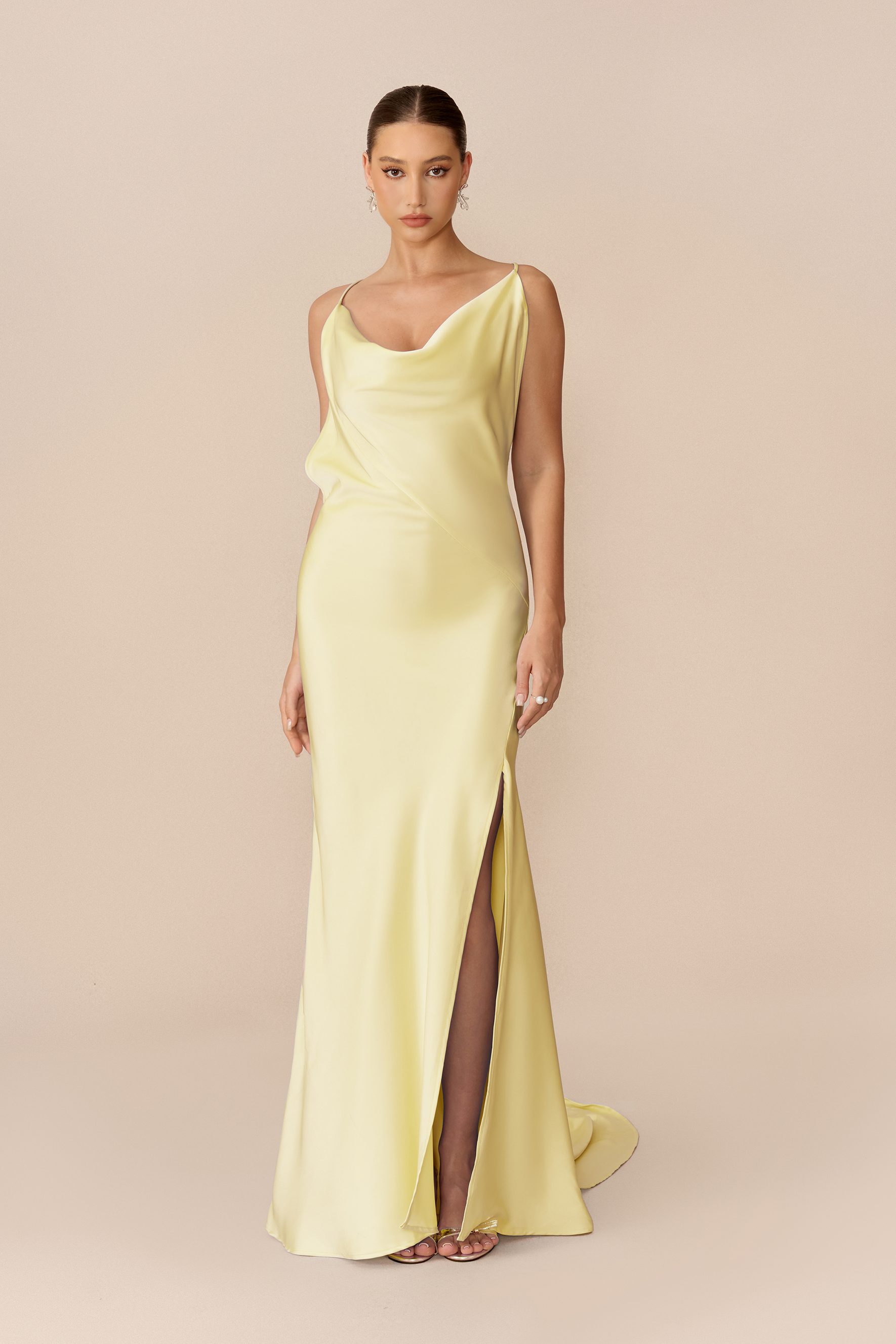
SHOP THE LOOK: Simply Stunning Light Yellow Cowl Neck High Slit Satin Maxi Dress
Packing a satin dress: protect the surface and avoid sharp compression
“Satin” in the product name does not tell you every detail of the garment's material or care requirements. Read the actual label before choosing how to fold, hang, or refresh it. Check whether the dress includes a structured bodice, lining, trim, or another feature that changes how it can be handled.
If the maker's guidance permits folding, start with the dress laid smoothly on a clean surface. Arrange the sleeves or straps without twisting them, and consider broad folds that fit the available luggage space. Avoid forcing the garment into a shape that crushes a structured area.
Use a clean, suitable protective layer where needed so the surface does not rub against zippers, rough accessories, or other items in the case. Keep heavy objects from pressing directly onto the dress. Leave enough room that closing the suitcase does not require squeezing the garment into a tight bundle.
If hanging is appropriate and practical for your journey, use the garment's intended hanging supports where provided. Check the weight and construction before relying on thin straps alone. Ask for garment-specific advice if you are uncertain whether the dress should travel hanging or supported another way.
Do not automatically turn every satin dress inside out. That may be appropriate for some garments and unsuitable for others with internal structure or decorative details. Choose the method based on the actual construction rather than treating an online packing rule as universal.
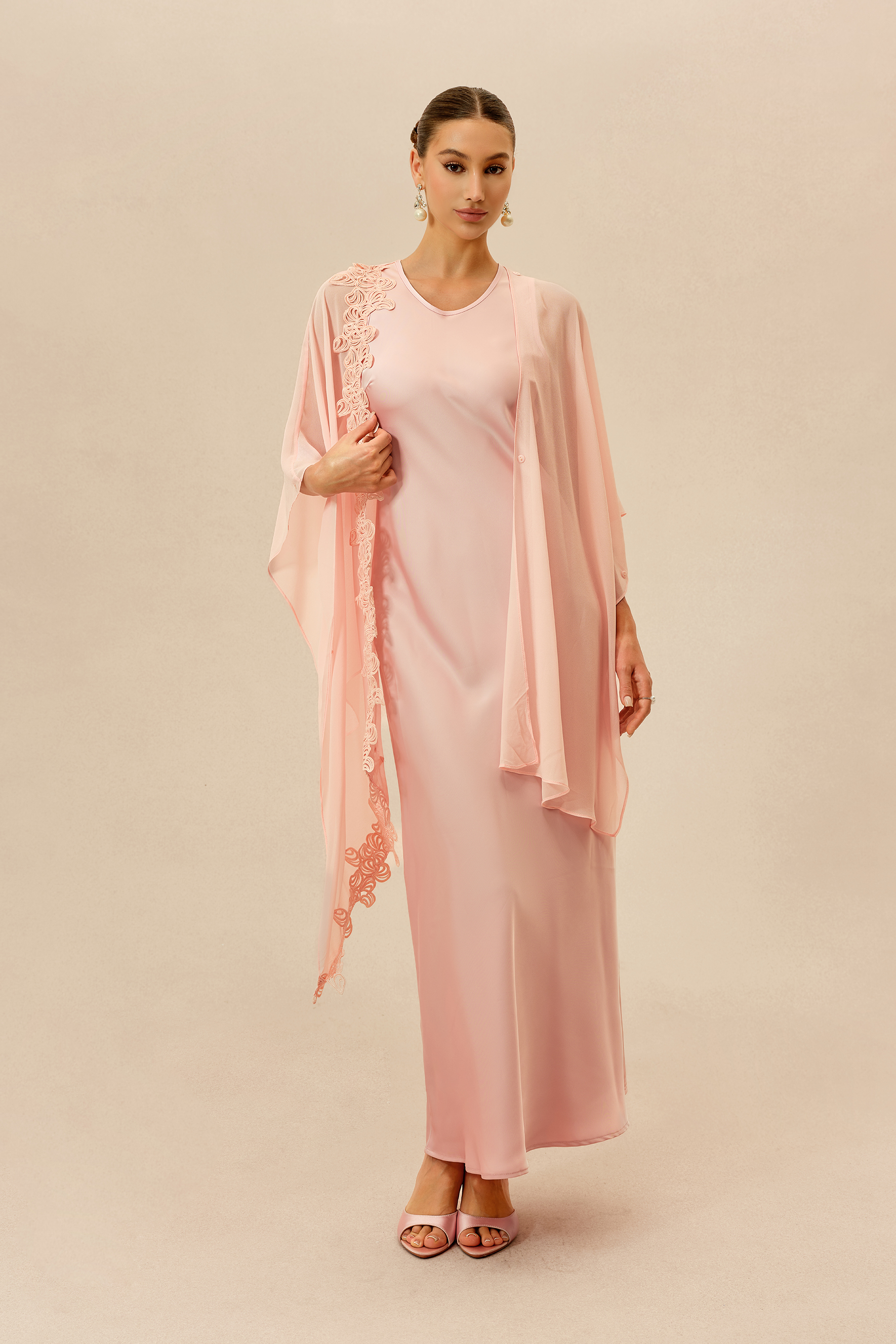
SHOP THE LOOK: Simply Stunning Light Yellow Cowl Neck High Slit Satin Maxi Dress
Packing pleated dresses: preserve the intended arrangement
Look closely at the pleats before moving the dress. Note their direction, where they begin, and whether the design includes a structured waistband or a different fabric in the bodice. The aim is to maintain the garment's intended arrangement rather than flatten it into a shape it was not designed to hold.
Follow the maker's packing or storage instructions if available. If folding is appropriate, arrange the pleats as they naturally lie before making the necessary folds. Do not force an unfamiliar pleat pattern into a different alignment simply because it fits a packing cube more easily.
Avoid tightly compressing the skirt beneath heavy luggage. Choose enough space for the garment and any suitable protective material. If the dress cannot fit without being crushed, consider a different luggage arrangement or a different outfit for the trip.
Be particularly cautious about planning to restore pleats with heat at the destination. Do not assume that a steamer or iron can recreate the original shape safely. Check the care label and seek professional guidance when the pleat construction or permitted treatment is unclear.
Take a photograph of the garment's original arrangement before packing if that would help you inspect it on arrival. This is a record of how it looked, not an instruction to reshape it yourself. Use it to explain a concern to a professional if the dress needs attention.

SHOP THE LOOK: Your Only Darling Green Floral Applique Off Shoulder Maxi Dress
Packing embellished dresses: separate decoration from pressure points
Identify which areas carry beads, sequins, appliqués, or other decoration. Look at how those areas would meet if you folded the dress. Avoid an arrangement that presses projecting details directly into a delicate fabric surface or forces a decorated section into a sharp crease.
Use the maker's instructions for the particular garment. If the dress is heavy or the decoration is complex, ask whether it should be transported flat, folded with support, or hung using designated loops. Do not assume a standard hanger or a thin shoulder strap is suitable for every embellished piece.
Pack jewelry, belts, and other accessories separately so they cannot catch on the dress. If a bag or shoe has a rough or decorative surface, keep it from rubbing against the garment. Check the inside of the suitcase for exposed areas that could snag the material.
Do not automatically turn an embellished dress inside out. In some constructions that may place the decoration against another vulnerable part of the garment. The safest general approach is to obtain instructions for the actual piece rather than applying a universal trick.
If a decorative element becomes loose before travel, arrange a suitable repair. Carrying a small repair item may be useful for some outfits, but it does not replace proper preparation or mean every garment can be repaired quickly at the hotel.

SHOP THE LOOK: Nina Asymmetry Pleated Halterneck Midi Dress
Choose the luggage arrangement around the dress's needs
|
Packing situation |
What to decide first |
What to avoid assuming |
|---|---|---|
|
A garment bag |
Whether the dress can travel hanging and how it will be supported |
That every carrier or vehicle provides a suitable place to hang it |
|
A suitcase |
How the garment can fit without unsuitable compression |
That a tightly packed case protects every dress better |
|
A carry-on arrangement |
Whether the complete bag meets the carrier's current rules |
That calling a bag a garment bag exempts it from size or item limits |
Check your carrier's current baggage rules directly for the trip you are taking. Do not rely on a general article for dimensions, allowances, or cabin storage promises. Confirm how the garment will be handled during each part of the journey.
Think about transfers as well as the main flight or drive. A dress may travel through taxis, hotel storage, and several rooms before you wear it. Choose an arrangement you can carry and supervise without making those transitions unnecessarily difficult.
Keep the complete outfit in your packing plan. A carefully transported dress is not ready to wear if its essential underlayer, belt, or shoes are elsewhere and unavailable. List those components before deciding where each one goes.

SHOP THE LOOK: Remarkable Arrival Blue Ruffle Sleeve Ruffle Maxi Dress
Do a trial pack when the garment allows it
A trial pack can help you check whether the dress fits your intended luggage arrangement without excessive pressure. Use the same bag and approximately the same surrounding items you plan to take. Keep the trial consistent with the garment's care and handling guidance.
Unpack and inspect the dress with enough time to address any problem before departure. Look at the folds, structured areas, pleats, and decoration. If the arrangement clearly does not work, change the packing plan rather than relying on an untested arrival fix.
Do not use a trial as proof that a garment is wrinkle-free or safe under every travel condition. It only tells you something about the arrangement you tried. Handling, duration, and other conditions can differ during the actual journey.
If the dress needs professional attention after a brief trial, consider whether it is the right garment for this itinerary. It may still be worth taking, but you should have a realistic preparation plan and enough time to use it.
-2.jpeg?w=1770&h=2655)
SHOP THE LOOK: https://sunfere.com/products/rosalie-backless-pleated-set
Unpack with a care plan, not a heat shortcut
Inspect the dress when you arrive. Use the storage or hanging method appropriate to the garment and give yourself time to assess it before the event. Check closures and any decorative areas as well as the visible creases.
Read the care label again before using an iron, steamer, or other treatment. Do not assume hanging the dress in a steamy bathroom is harmless, or that low heat is automatically appropriate for an unfamiliar finish. If the instructions are unclear, ask the maker or a qualified care provider.
If professional service is needed, explain the material and construction and show the label. Confirm the time required and the service's suitability for the garment before leaving it. Do not build an event-day plan around a service you have not arranged.
Keep an alternative outfit available when the trip's timing makes dress preparation uncertain. This is a practical wardrobe decision, not a claim that your preferred dress will fail. Choose the level of contingency that makes sense for the importance of the event and the options you actually have.
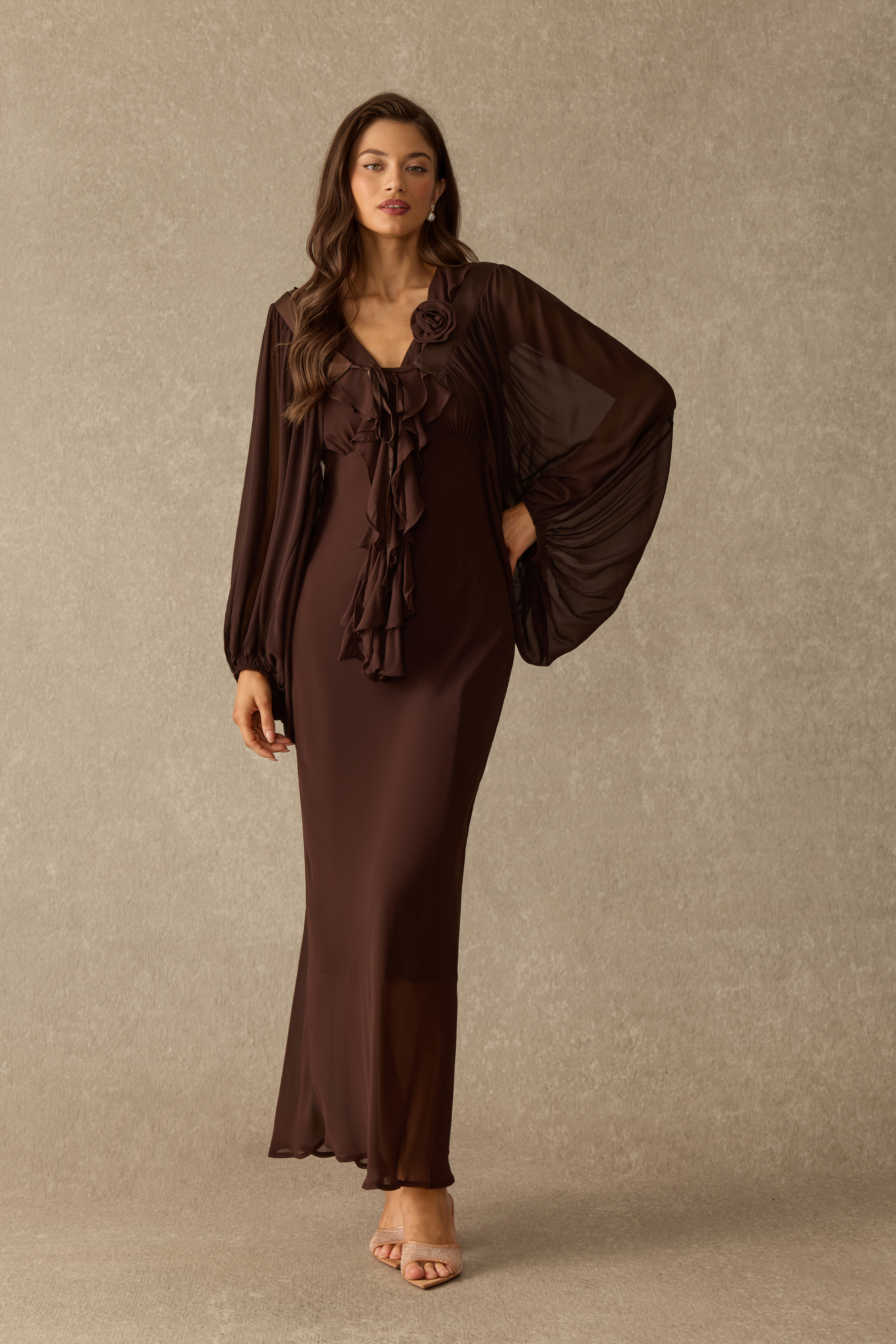
SHOP THE LOOK: Fall For Me V‑Neck Layered Ruffle Dress & Jacket Set
Common packing habits to reconsider
Avoid rolling every dress tightly because it saves space. A method that works for an everyday garment may not suit a structured bodice, defined pleats, or decoration. Inspect the piece before choosing a packing technique.
Do not put loose shoes or jewelry in the same space as an unprotected dress. Keep possible friction, snags, and spills in mind when arranging the case. A clean separation is a simple planning step you can take before departure.
Avoid packing a dress at the last minute without checking its label and condition. That leaves little time for care, repairs, or a different luggage arrangement. Prepare the garment early enough that you can respond to what you find.
Finally, do not judge success only by the absence of visible creases. The dress also needs its intended shape, secure decoration, working closures, and the rest of the outfit ready to wear. A useful packing plan protects the complete garment and gives you a realistic way to prepare it at the destination.
.jpg?w=1080&h=1591)
SHOP THE LOOK: Angelica Floral Applique Short Sleeve Top & Skirt Set
Frequently asked questions
Should I roll or fold a satin dress?
Use the method appropriate to the actual garment and its maker's guidance. Satin alone does not identify the fiber, structure, decoration, or care limits needed to make a universal choice.
Can I steam a pleated dress after unpacking?
Only use steam if the garment's care instructions permit it and you know how it should be applied. If the pleats or finish require specialist handling, seek professional guidance rather than trying to restore them with an improvised treatment.
Should embellished dresses always be turned inside out for travel?
No, turning the garment inside out may change which surfaces press against the decoration. Follow instructions for the specific dress and protect vulnerable areas without assuming one method suits every design.
-a85ae98e-ab41-4ebe-9947-4bb2b2fd6081.jpg?w=1884&h=1060)