

Why Does My Dress Ride Up When I Walk, and Should I Size Up?
Do not automatically size up when your dress rides up. First identify what moves: the whole dress, the outer skirt, or the lining. Compare two sizes if the skirt feels tight and repeatedly climbs while walking. If the bodice fits but the lining bunches or the skirt catches on another layer, address that specific problem before changing sizes.
A useful fitting should end with a decision you can act on: keep the size, compare another size, ask for a targeted alteration, or choose a different skirt shape. The checks below help you collect that information without cutting, stretching, spraying, or taping the garment. They are a practical comparison routine. Professional diagnosis and the feasibility of an alteration require an assessment of the actual garment.
SHOP THE LOOK: A Little Mystery Sequin Embellished Corset Maxi Dress
Why Does Your Dress Ride Up During a Normal Walk?
Put the dress on with the underwear and shoes you intend to wear. Fasten it normally and let the skirt settle without pulling hard on the hem. In a mirror, note three starting points: the waist seam, the side seams, and the hem. If the dress has a lining, check its position too. A quick front and side photo can help you compare the starting fit with what happens after movement. Keep the same posture in both pictures.
Walk across the room and back at your usual pace. Turn once, then stop without immediately tugging the skirt down. Look at those same reference points. Has the waist moved toward your ribs? Has one side seam rotated forward? Is the outer skirt higher while the lining remains lower, or is the lining folded inside? Write down what you actually see. “The right side twists after walking” is more useful than “the dress fits badly.”
| What you observe | What to investigate next | Avoid assuming |
|---|---|---|
| The whole dress moves upward | Bodice position, waist placement, and overall fit | Only the hem needs attention |
| The fitted skirt climbs and feels restrictive | Room through the hips and thighs; compare sizes or silhouettes | A smaller size will hold it down |
| The lining bunches separately | Lining position, attachment, length, and movement | The outer skirt alone is responsible |
| The problem appears only with tights or shorts | Interaction with that specific underlayer | Every underlayer will behave alike |
| Only one side twists or catches | An uneven layer, seam, fastening, or local fitting problem | The entire dress needs resizing |
These observations narrow the next check; none proves a single cause. More than one issue can occur together. For example, a tight lining and a close-fitting outer skirt may both need attention. Avoid deciding that the fabric is defective, the size is wrong, or your body needs to change based on one standing photograph. You are evaluating how this particular garment works on you in motion.
SHOP THE LOOK: A Night To Remember One Shoulder Rhinestone Trim Maxi Dress
Decide Whether Comparing a Larger Size Is Worthwhile
Look for a combination of tightness and movement problems
Sunfere's general size page describes body sizing separately from actual garment dimensions and directs shoppers to the product measurements. This distinction is useful when comparing a fitted skirt: a body-size range and the width of the finished garment answer different questions.
Consider another size when walking feels restricted, the skirt repeatedly gathers upward, and the garment pulls across the area where you need more room. Check the fastening and seams without forcing them. Then compare your measurements with the product-specific chart. Establish whether the chart describes body measurements or the garment itself. If that distinction is unclear, ask before using the numbers to decide how much room the dress offers.
A larger size is a candidate to test, not an automatic solution. Repeat exactly the same walk in both sizes with the same underlayers. Compare the hip area, the skirt's resting position, and the neckline. The useful result is a dress that moves comfortably while keeping the bodice secure. If the larger size improves the skirt but leaves the top noticeably loose, record that trade-off rather than declaring the problem solved.
Do not size down to hold a moving skirt in place
If the skirt already feels restrictive, a smaller size is a poor troubleshooting experiment. Equally, tightening the waist or straps to stop movement may introduce a different fit problem. Stop and return to the reference points: is the waist in the intended position, and does the skirt have the movement you need? A dress that requires you to hold a rigid posture is not a successful fit for an active event.
Sunfere's wedding guest dress fit and size guide can help organize a measurement comparison. For this particular decision, give priority to the current product chart and your side-by-side try-on. Do not treat a general “between sizes” suggestion as a promise that tailoring will fix every larger dress. A tailor needs to inspect the construction before confirming whether the extra room can be adjusted where you do not want it.
Choose a different cut when the size trade-off remains
If one size restricts the skirt and the next fails at the bodice, compare a different silhouette. Keep the neckline or color you like while changing the skirt shape. For example, shortlist an A-line option alongside the fitted version and perform the same walk. You do not need to abandon a short dress simply because one particular cut moves badly. Nor does adding length establish that the fit problem has disappeared.
SHOP THE LOOK: Alessia Floral Print Ruffle Cuff Maxi Dress
Separate a Lining Problem From an Outer-Skirt Problem
Inspect the inside before assuming the visible skirt is responsible. With the dress off, lay it out gently and check whether the lining is twisted, folded, or caught at a closure. Do not pull on attachments or open seams. Put it back on and arrange both layers in their intended positions. Walk again. If a simple fold was the issue, you should be able to see whether the layers now stay arranged during the same movement.
When the lining still gathers independently, take photos of its starting and finishing positions. Ask a tailor to assess its width, length, and attachments relative to the outer garment. Be specific about the problem: “The outer skirt stays down, but this inner layer gathers above my thigh after walking.” That gives the fitting professional a clearer brief than asking for a general adjustment to the dress.
Do not cut out a lining because it feels inconvenient. Before any alteration, ask what it contributes to coverage, finishing, and the way the dress hangs. An alteration should account for the complete garment, including what becomes visible while sitting or walking. If there is not enough time to assess the lining properly before your event, choose an outfit that works as delivered instead of attempting an irreversible last-minute change.
SHOP THE LOOK: Elegant Intrigue Floral Embellished Jacket & Pleated Skirt Set
Change One Underlayer at a Time
If the problem began when you added tights, shorts, or shapewear, repeat the walking check in a private space with that one variable changed. Keep the shoes, dress position, route, and pace the same. Compare ordinary underwear with your intended additional layer only if both are comfortable and appropriate for the fitting. Do not switch the size, shoes, and underlayer simultaneously, because you will lose track of which change affected the result.
A different outcome identifies an outfit combination worth investigating. It does not, by itself, prove static electricity or establish that a certain fiber will always prevent movement. Look for visible catching, folding, or overlapping edges. If you see none and cannot reproduce the problem consistently, keep the conclusion limited. “This combination moved less during my try-on” is a reasonable observation; “this fabric never rides up” is not.
Choose an underlayer for the problem you observed. A lining that catches at the thighs needs a different assessment from an underwear edge showing through the skirt. Test one change at a time with the same walking routine. Keep it only if the outer skirt and lining settle more reliably without adding pressure or another hem that climbs.
Avoid treating fashion tape, weights, or a chemical spray as your first fix. Check the garment's care instructions and any accessory directions before considering them. Do not attach weight to a delicate hem or apply a product to an untested visible area. A temporary measure should not be used to compensate for a dress that prevents normal movement or fails the coverage requirement you set for the occasion.
SHOP THE LOOK: Elegant Moment Burgundy Deep V-neck Puff Sleeve Maxi Dress
Match the Solution to the Activity, Not Just the Mirror
For a seated dinner
Once the walking issue is addressed, sit in a chair similar to the one you expect to use. Notice whether the skirt remains where you want it when you lean toward the table and stand again. Judge coverage against your own preference and the event, not a universal number of inches. If you must rearrange the skirt every time you stand, the original walking check has not captured the full problem.
For dancing or a standing reception
If you are comparing two garments, label the results by dress and size instead of relying on memory. Note whether the first movement occurred during a straight walk, a turn, or a side step. Record the point where the skirt settled and whether it stayed there. A skirt that briefly moves and then remains comfortable may meet your requirements; one that keeps climbing after each repeated step raises a different practical concern. Share that sequence with a tailor if you arrange a fitting, because the starting and final photographs alone may not show it.
Add a few movements you will actually make: a sideways step, a turn, and reaching forward to greet someone. Start gently and stay within a comfortable range. A dress can work for a short walk and still be inconvenient during repeated turns. Compare the fitted option with suitable midi dresses if you want a different balance of length and movement, but check the lining and skirt shape of each option individually.
For an evening with several activities
Use the activity that causes the problem to make the final decision. If the dress stays comfortable at dinner but shifts beyond your preferred coverage during dancing, it does not meet both needs. Compare a less fitted skirt, arrange a change of outfit, or select a dress that passes both tests. Do not plan an evening around repeatedly pulling the hem down.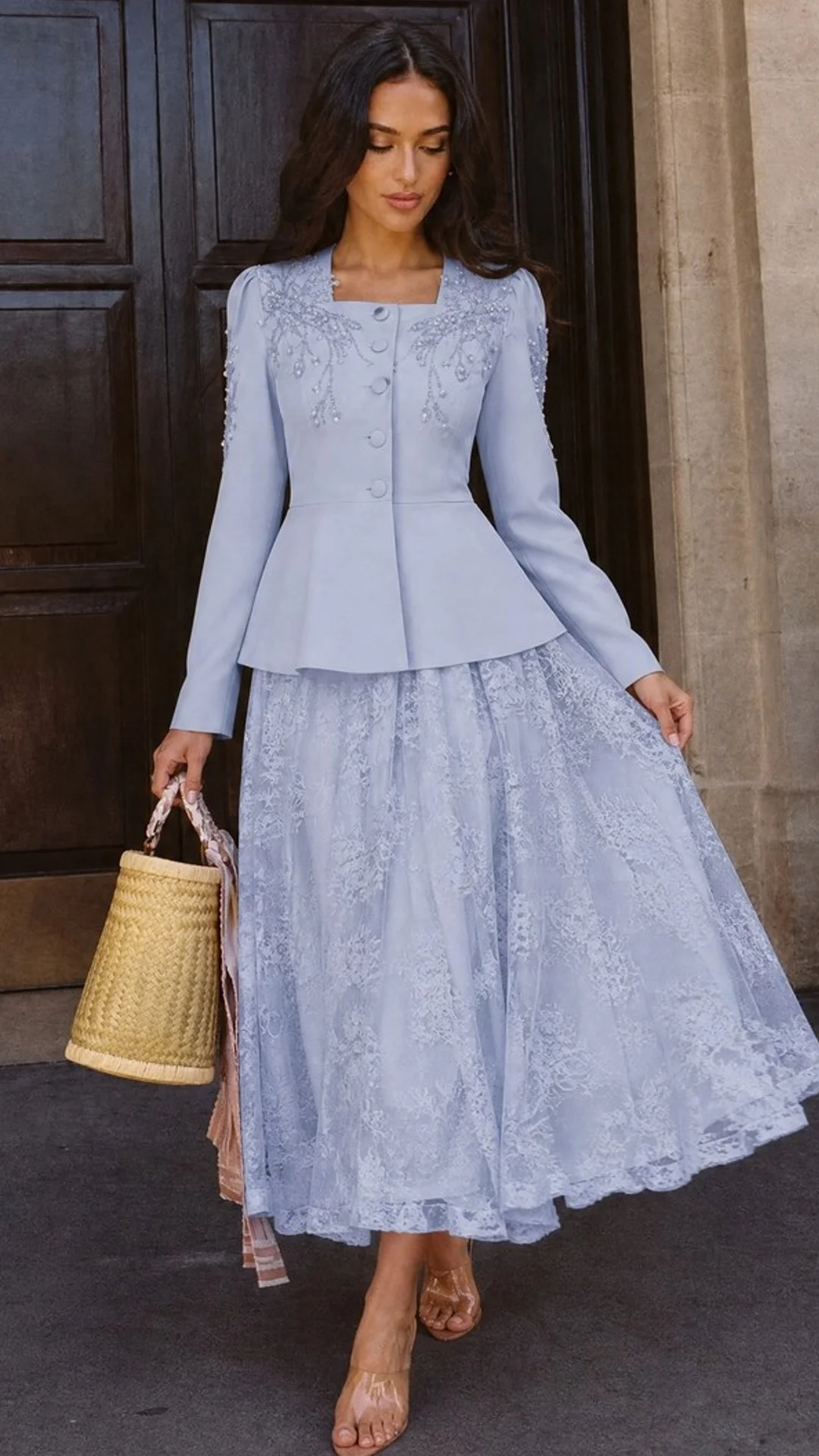
SHOP THE LOOK: Special Invitation Blue Pearl Embellished Jacket & Lace Dress Set
Give a Tailor a Specific Brief, or Choose Another Dress
Bring the dress, intended underlayers, and event shoes to the fitting. Describe when the movement starts, which part shifts, and what changes improved or worsened it. Show your comparison photos if the issue is difficult to reproduce. Ask the tailor to demonstrate the proposed adjustment before you approve permanent work. Agree on the result you need, such as a stable waist position or a lining that permits your normal stride.
Ask three practical questions: Is there enough usable fabric to make this change? Will it alter another part of the fit? Can the finished dress be tried on again before the event? Avoid assuming that a seam can be let out or a tight lining can be enlarged. Have the person doing the work inspect the available construction and explain the limits. Get an itemized quote and agreed timeline before committing to the alteration.
Keep the dress when the complete outfit stays comfortable and maintains the coverage you want through the relevant activities. Compare another size when the evidence points to insufficient room. Request a targeted alteration when the issue is local and a professional confirms it is workable. Choose another style when fixing one area consistently creates a new problem elsewhere. The goal is an outfit you can wear normally, without making hem management your main activity.
SHOP THE LOOK: Just Like Poetry Pink Textured Flare Sleeve Maxi Dress
Frequently Asked Questions
Does a dress riding up always mean it is too small?
No. Tightness is one possibility, but the lining, underlayers, and overall garment position also need checking. Compare what moves before deciding whether another size is appropriate.
Will a longer dress solve the problem?
A longer dress does not necessarily solve upward movement. Extra length can change your preferred coverage, but it does not establish why the garment moves. Test the new silhouette and its lining rather than relying on length alone.
Should I wear shapewear to stop a dress riding up?
Wear shapewear for this purpose only if your comparison shows that the outfit works better with it. Shapewear is not a universal fix, and an extra layer should not add discomfort or another unstable hem.
Can a tailor stop the skirt from riding up?
A tailor may resolve skirt movement when the cause and construction permit an alteration. Ask for an assessment of the specific area that moves; available fabric and the relationship between lining and outer skirt can limit the options.
How much movement is acceptable?
Acceptable movement is movement that preserves your preferred comfort and coverage during the activity. There is no single hem-shift measurement used here as a universal pass. Repeated tugging or restricted movement is a reason to reconsider the outfit.