

Slip vs. Shapewear Under a Satin Dress: Which Solves Visible Lines?
A slip is usually the better starting point when a satin dress catches on underwear or needs an extra layer of coverage. Shapewear makes more sense when you want compression and smoothing across a particular area. Neither guarantees an invisible finish: a slip can bunch, while shapewear can introduce its own waistband, seams, and leg openings.
The useful question is where the line comes from. A brief’s elastic edge needs a different solution from a shapewear hem. Horizontal pulling across the hips may require a dress-fit adjustment rather than another underlayer.
Start with the visible mark, then choose the lightest layer that addresses it while allowing the dress to move comfortably.
SHOP THE LOOK: Vivian Off Shoulder Flare Satin Midi Dress
Slip vs. Shapewear: What Does Each Actually Do?
Here, a slip means an undergarment worn beneath your dress, rather than a slip-style dress worn as the outfit itself. A traditional non-shaping slip adds a separate layer between your underwear and the outer fabric.
Shapewear uses compression to provide smoothing or shaping. It comes in briefs, shorts, bodysuits, and shaping slips, so the categories can overlap. A “control slip” is shapewear even though it has a dress-like shape.
Check the garment’s construction and compression level instead of choosing by name alone.
|
What you notice under the satin |
Useful starting point |
What to check |
|
A narrow outline around your underwear |
Flatter-edged underwear; consider a lightweight slip |
Whether the original elastic edge still shows |
|
Fabric catching over underwear |
A smooth, non-shaping slip |
Whether the slip hangs freely without bunching |
|
You want optional smoothing across the waist and hips |
Light or moderate shapewear |
Waistband, seams, and compression transitions |
|
A line across the thighs from shaping shorts |
A different leg finish or garment length |
Where the new hem sits beneath the dress |
|
Underwear color showing through pale satin |
An underlayer close to your skin tone |
Color contrast and actual opacity |
|
Horizontal pulling across the dress |
Reassess dress fit |
Whether the fabric has enough room to fall naturally |
These are fitting starting points. The final result depends on the particular dress and undergarment together.
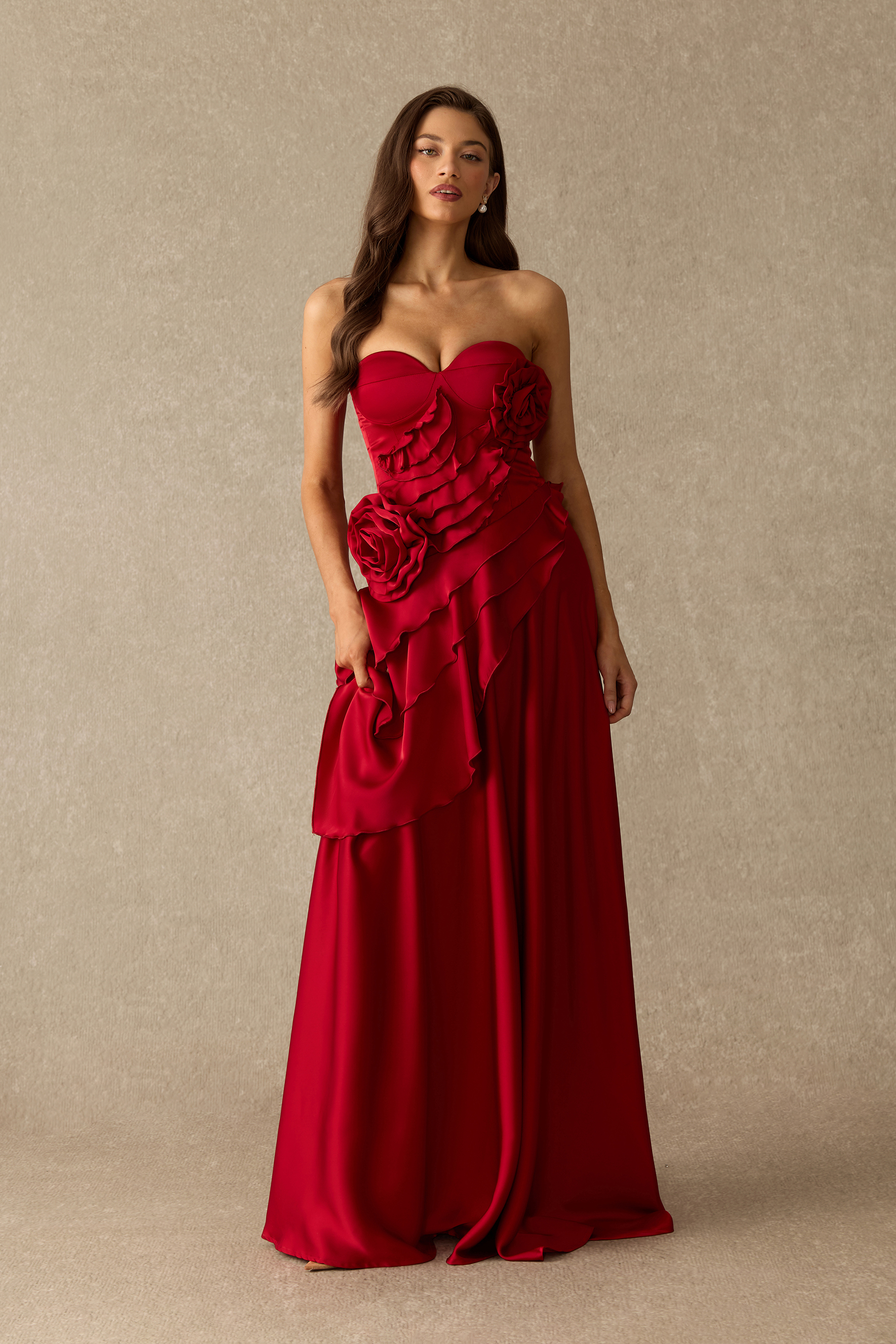
SHOP THE LOOK: Best Part Of Me Red Rose Applique Strapless Satin Mini Dress
Identify the Line Before Adding Another Layer
Put on the dress with your planned underwear and look at the front, side, and back in good light. Notice whether the mark follows an undergarment edge, appears only during movement, or remains in the same place regardless of what you wear underneath.
A narrow line following your underwear
If the outline traces the leg opening or waistband of your briefs, start there. Thick elastic, lace borders, folded hems, or an overly tight fit may create a visible edge.
Try underwear with flatter finishes before buying a more substantial foundation garment. A thong removes a brief-style edge across the seat, but its waistband or side seams can still show. Choose according to comfort and the actual result beneath your dress.
A broad line across your waist or thighs
If the line appeared after you added shapewear, inspect the shapewear itself. The waistband may be folding, a leg opening may be pressing in, or a panel seam may be visible through the satin.
Increasing compression is not automatically the answer. SPANX advises choosing the correct size rather than sizing down, since a smaller garment can cause rolling and uneven shaping.
Pulling that stays in the same place
If horizontal drag lines remain with different underwear, the dress may need more room through that area. Check whether the side seams pull forward, the skirt rides upward, or the fabric feels stretched when you sit.
An underlayer cannot reliably correct a dress that is too tight. Compare your measurements with the individual product information, and use the sunfere wedding guest dress fit and size guide when assessing the fit before an event. 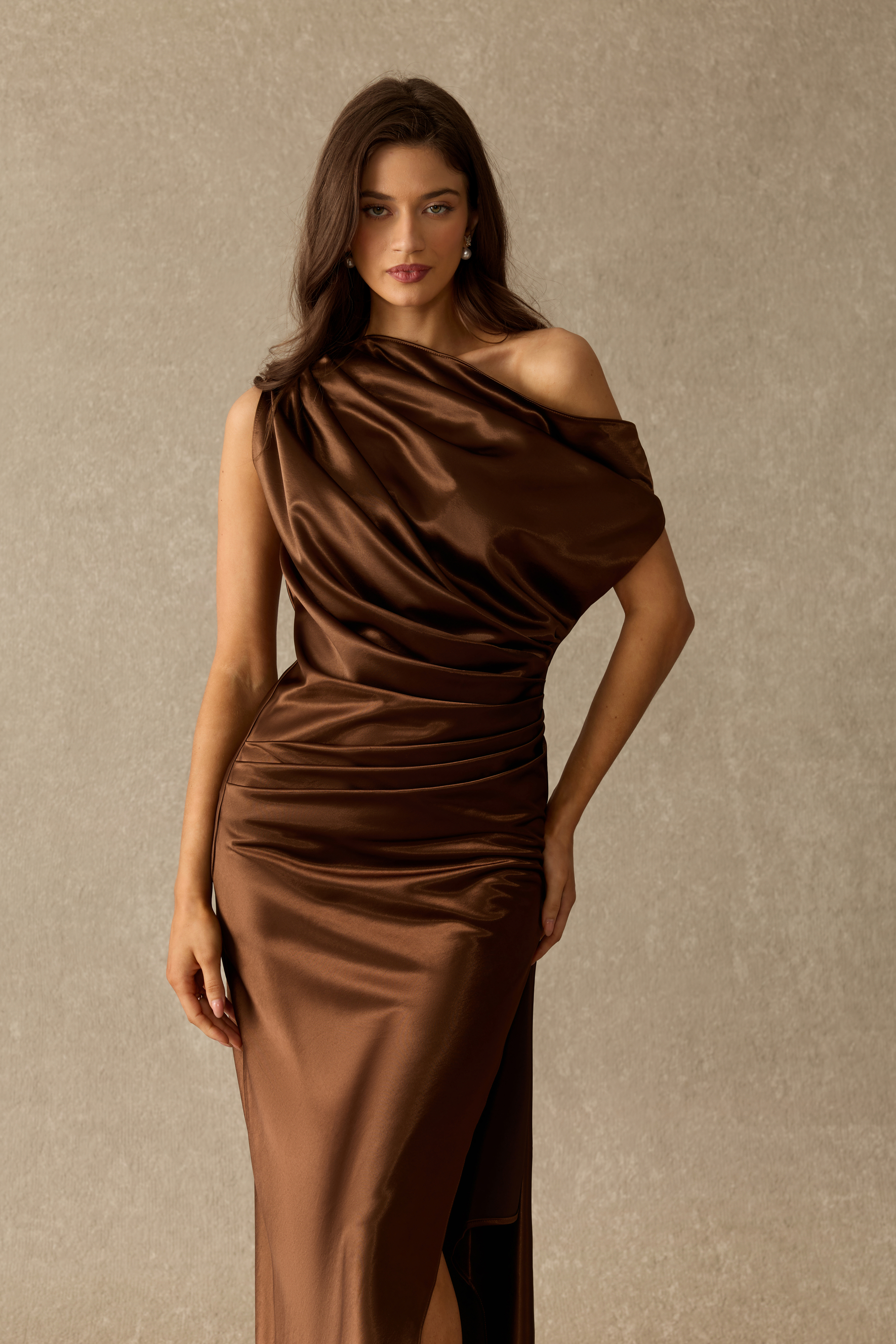
SHOP THE LOOK: Under Your Spell One Shoulder Ruched Satin Maxi Dress
When a Slip Is the Better Choice
A non-shaping slip is worth trying when you like the dress’s fit and want a smoother barrier underneath it without compression.
It can be particularly useful when the skirt has enough room for an additional layer. The aim is for the satin to fall over the slip while the slip remains smooth beneath it.
Choose simple construction
Look for a low-profile neckline, flat seams, and an unobtrusive hem. Decorative lace, bows, or thick bindings may create the very outlines you are trying to remove.
Raw-cut finishes are one option for reducing bulky edges. Commando, for example, describes its classic slip construction as using raw-cut microfiber to avoid bulky finishings. That is a construction feature to look for, rather than a guarantee that every slip will disappear beneath every dress.
Match the slip to the dress’s openings
A slip needs to stay concealed at the neckline, armholes, back, and hem. Check its position while sitting and walking, especially if the dress has a slit.
A full slip may work under a covered bodice, while a half slip can avoid adding straps or a second neckline. However, a half slip introduces a waistband. Under a closely fitted satin waist, that may become a new visible line.
Leave enough room for both layers
A slip should not gather beneath the dress or pull tightly across your hips. If you have to keep tugging it down, reconsider its size, cut, or compatibility with the outer dress.
When comparing satin dresses, check each style’s lining, silhouette, and openings. Those details determine whether an additional slip is practical; a satin finish alone does not tell you.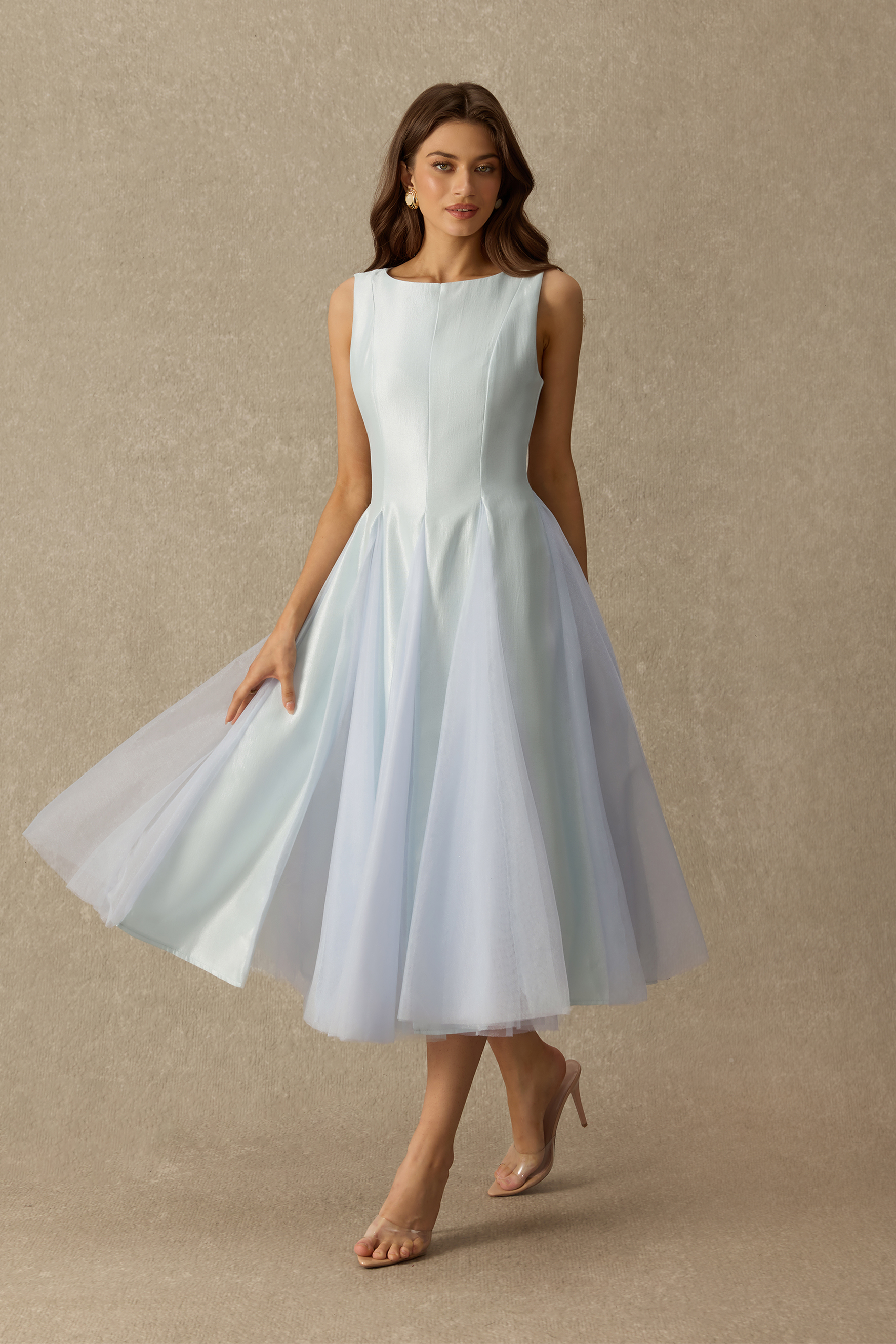
SHOP THE LOOK: Sweet Lullaby Sleeveless Tulle Panel Midi Dress
When Shapewear Is More Useful
Choose shapewear when you actively want compression or a supported feeling through a particular area. Wearing it is optional, and a smooth satin outfit does not require changing your natural silhouette.
The most useful piece covers the area you want to smooth while keeping its own edges discreet.
Choose coverage before compression
A shaping brief ends around the hips and seat. Shorts extend coverage farther down the thighs. A bodysuit can remove a separate waist opening, but adds its own neckline, straps, and closures.
Consider where each garment begins and ends beneath your dress. If the dress closely follows your thighs, a short leg opening may be more noticeable than it would be under a fuller skirt.
Longer coverage can move an edge to a less visible position, but it also needs to remain hidden beneath the hem and any slit.
Check the finish, even when the label says “seamless”
Treat “seamless” as a feature to inspect during fitting. Look for folded leg bands, central seams, reinforced panels, and closures that might show through your particular satin.
A garment can have few seams and still create an outline where compression stops.
Use the size chart for that specific garment
Choose your size from the manufacturer’s measurements and select the intended compression level separately. A smaller size is not a substitute for a different design.
Once dressed, sit down, bend, and walk. A foundation garment that stays smooth only while you stand still is unlikely to solve the problem throughout dinner or dancing. 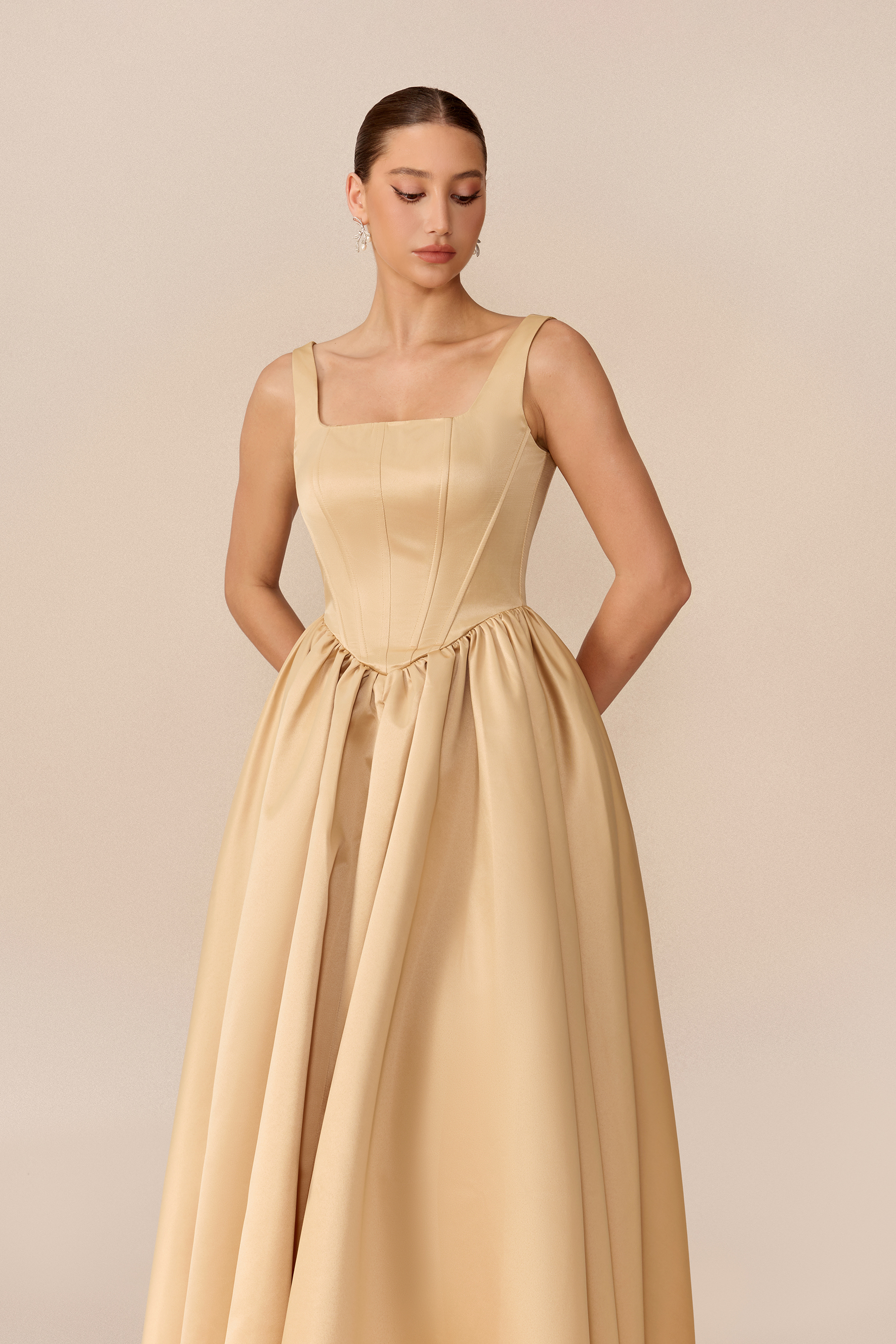
SHOP THE LOOK: Refined Romance Khaki Square Neck Corset Maxi Dress
What Changes With Pale Satin, a Low Back, or a High Slit?
The dress’s color and openings can rule out an otherwise useful underlayer.
Pale or slightly sheer satin
Separate color showing through from an edge showing through. An underlayer close to your skin tone is a useful starting point for reducing contrast, but it does not remove a raised seam.
Likewise, shapewear is not necessarily opaque. Some pieces include sheer panels, while some lightweight slips offer limited coverage. Check the complete outfit in daylight and under indoor lighting instead of relying on the undergarment’s color or category.
A low or open back
A full slip or high-backed bodysuit may show above the dress. Check the back opening before choosing a foundation garment, then test it while reaching forward and sitting.
If you are comparing backless dresses, consider undergarment coverage alongside the neckline and silhouette. A foundation that works beneath one open-back design may be exposed beneath another.
A high slit
Long shaping shorts may solve a thigh-edge problem but become visible through the slit. A slip can also appear as the skirt opens during movement.
Walk naturally, take a longer step, and sit down during the fitting. Do not judge slit coverage from a still, front-facing mirror view alone. 
SHOP THE LOOK: Sabrina Butterfly Embellished Draped Maxi Dress
Can You Wear a Slip Over Shapewear?
You can, provided the dress has enough room for both layers and the combination stays smooth. The shapewear supplies compression; the slip adds a separate surface beneath the dress.
However, layering also adds more fabric, edges, and opportunities for bunching. It may alter how a closely fitted dress hangs.
Try the shapewear alone, then add the slip and compare the result. Keep both only if the extra layer produces a clear improvement in appearance and comfort.
If one simple underlayer works, there is no need to add another. 
SHOP THE LOOK: A Little Mystery Sequin Embellished Corset Maxi Dress
Mistakes That Can Make Visible Lines More Noticeable
Buying stronger compression before checking the edge. A waistband or leg opening can remain visible regardless of how firmly the garment shapes elsewhere.
Using an outerwear slip dress as an underslip without checking its construction. A second dress may have substantial seams, embellishments, or a cut that gathers underneath your satin.
Treating every line as an underwear problem. A crease, lining seam, or dress-fit issue requires its own solution.
Checking only from the front. Waistbands, rear seams, and hems can be easier to see from the side or back.
Expecting every natural contour to disappear. Distinguish an unwanted garment edge from the way fabric follows your body. Your preferred finish and comfort should guide the choice.
SHOP THE LOOK: Always A Stunner Floral Applique Ruffle Maxi Dress
Make the Final Decision With a Movement Test
Before committing to an underlayer, compare it beneath the dress using the same lighting and movements.
- Start with your simplest underwear option. Identify the exact line you want to address.
- Change one item at a time. Try flatter-edged underwear, a slip, or shapewear separately.
- Inspect all angles. Check the neckline, back opening, waist, seat, thighs, and hem.
- Sit and walk. Notice rolling, riding up, exposed edges, and any need for repeated adjustment.
- Keep the least complicated option that works. Extra layers should earn their place.

SHOP THE LOOK: Most Beautiful Day Multi Floral Print Corset Maxi Dress
Choose the Layer That Lets the Dress Fall Naturally
For visible underwear edges or fabric catching, start with flatter underwear and consider a smooth, non-shaping slip. For optional compression across a particular area, try correctly sized shapewear whose edges stay discreet beneath the dress.
If either option adds new lines, reassess its construction before adding more layers. And if pulling remains regardless of the undergarment, return to the dress’s fit.
The right foundation is the one that supports your preferred finish, stays concealed during movement, and feels comfortable enough to leave alone. 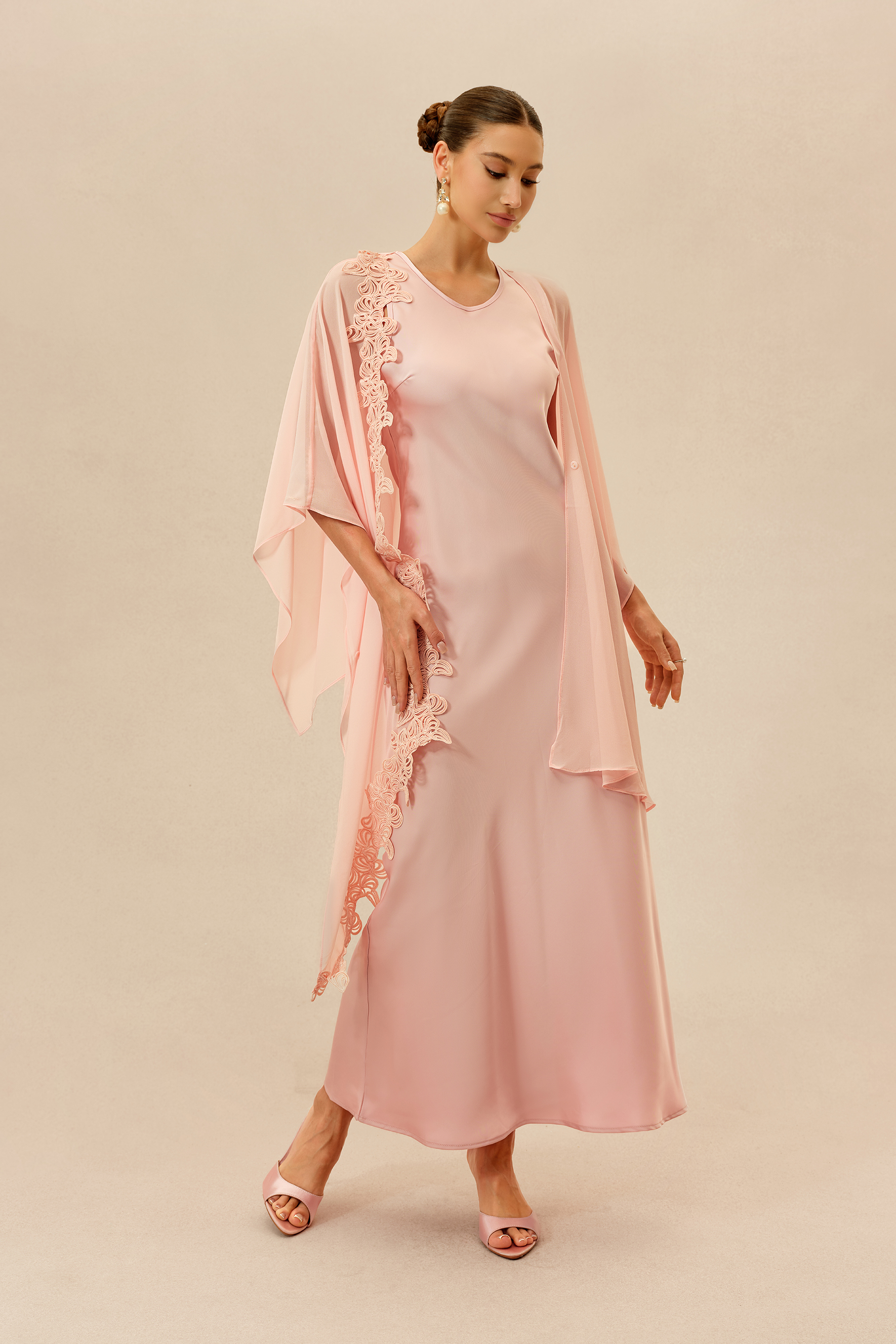
SHOP THE LOOK: Own The Night Pink Sleeveless Maxi Dress With Embellished Cape
FAQs About Slips and Shapewear Under Satin Dresses
Can a tailor add a lining instead of wearing a separate slip?
A tailor may be able to add a lining, depending on the dress’s construction and fit. Ask whether the added fabric would change the drape, show at the neckline or slit, or make the dress feel tighter before proceeding.
Should you wear underwear beneath shapewear with a satin dress?
Follow the instructions for the specific shapewear, since some styles are designed to replace underwear while others are intended for layering. If you add underwear, check that its waistband and leg openings do not create extra ridges beneath the satin.
Will a black satin dress hide underwear lines better than a light-colored one?
Black satin may make color contrast less noticeable, but raised seams and elastic edges can still show. Check the outfit under direct light and from the side, where an undergarment’s outline may be easier to see.